The best padel balls: how to choose between pro and club balls, and the five we stock
By the Lobwell Padel team. Updated 1 November 2026.
Short answer: The best padel ball depends on how you play: a faster pro ball such as HEAD Padel Pro+, Wilson Premier or Bullpadel Premium Pro for competitive and attacking games, and a slightly slower club ball such as HEAD Padel Pro S+ or Dunlop Pro for social play, learning and longer rallies. All five are pressurised three ball tubes within FIP size and weight rules, priced £4.49 to £5.49 a tube.

What to look for in a padel ball
Every padel ball sold for adult play has to sit inside tight FIP limits: 6.35 to 6.77 cm across, 56.0 to 59.4 g, and a rebound of 135 to 145 cm when dropped from 2.54 m. So the differences between quality balls are subtle. They come down to speed off the racket and the glass, how long the ball holds its pressure once the tube is opened, and how hard wearing the felt is on sandy turf.
For official competition, only balls on the FIP approved list can be used, so check which ball your league or tournament names. For club games, choose by speed and value.
| Factor | What to look for | Why it matters |
|---|---|---|
| Speed | Pro (faster) or club (slightly slower) | Matches your style and level |
| Pressure retention | Keeps bounce for several sessions | Fewer tubes per month |
| Felt durability | Dense felt that does not go bald fast | Consistent bounce off the glass |
| Approval | On the FIP approved list for competition | Needed for official events |
| Price per tube | £4.49 to £5.49 in our range | Balls are the main running cost after court hire |
The five balls we stock
| Ball | Type | Best for | Price |
|---|---|---|---|
| HEAD Padel Pro+ | Pro | Match play, quick and consistent bounce | £5.49 |
| HEAD Padel Pro S+ | Club | Club and league play, slightly slower | £4.99 |
| Wilson Premier Padel | Pro | Regular play with a premium feel | £4.99 |
| Dunlop Pro Padel | Club | Weekly games on a budget | £4.49 |
| Bullpadel Premium Pro | Pro | Lively, tournament style bounce | £5.49 |

Best for match play: HEAD Padel Pro+
HEAD Padel Pro+ is one of the most used balls in UK clubs. It is a pressurised match ball with a quick, consistent bounce that rewards attacking play: smashes get out of the court more easily and the ball comes off the back glass with pace. Choose it for leagues, competitive friendlies and players who like a faster game. Bullpadel Premium Pro is a similar choice with a lively, tournament style bounce, and Wilson Premier gives a premium feel for regular play at £4.99.
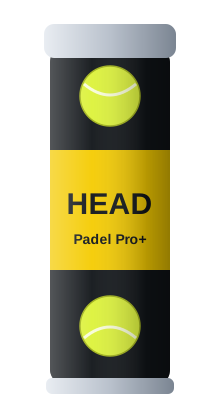
HEAD Padel Pro+ Padel Balls (3 Ball Tube)
Pressurised match ball with a quick, consistent bounce. One of the most used balls in UK clubs.
- HEAD
£5.49

Bullpadel Premium Pro Padel Balls (3 Ball Tube)
Bullpadel tournament style ball with a lively bounce.
- Bullpadel
£5.49
Best for club play and learning: HEAD Pro S+ and Dunlop Pro
HEAD Padel Pro S+ is slightly slower than the Pro+, which gives you more time on each ball and longer rallies. It is popular for club nights, leagues that prefer a steadier ball, and coaching. It is the ball in our Starter Kit and Pair Kit. Dunlop Pro is the value pick at £4.49 a tube, a pressurised ball that suits weekly games and drills and comes in the First Racket Kit and Family Kit.
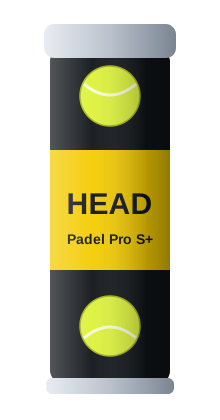
HEAD Padel Pro S+ Padel Balls (3 Ball Tube)
A slightly slower ball than the Pro+, popular for club and league play.
- HEAD
£4.99

Dunlop Pro Padel Balls (3 Ball Can)
Pressurised Dunlop padel ball, good value for weekly games.
- Dunlop
£4.49

How many tubes you need
Once a tube is opened, pressure starts to drop. For a weekly 90 minute game, most club players find a tube feels flat after three or four sessions; competitive players open a new tube every match. A group playing twice a week might get through two or three tubes a month. Buying in multiples saves money: our tubes are 6% off when you buy three and 12% off when you buy six.
| How often you play | Tubes per month (approx.) |
|---|---|
| Once a week, social | 1 |
| Twice a week, social | 2 |
| Weekly league match plus practice | 2 to 3 |
| Several matches a week | 4 or more |
Make each tube last
Our Ball Saver Tube (£14.99) holds three or four balls and pumps up to keep them closer to match pressure. See the padel balls range for multi buy prices.
- Keep tubes indoors at room temperature, not in the car.
- Use a pressuriser tube between sessions to slow pressure loss.
- Keep the freshest tube for matches and older balls for drills and warm ups.
- Retire bald balls: they skid off the glass and change the rhythm of the game.
Padel balls, tennis balls and the cold
Tennis balls are not a substitute: they are slightly bigger and higher pressure, so they bounce higher off the glass and speed up the game. See padel balls vs tennis balls. In UK winters, any ball feels slower outdoors because the rubber stiffens; a pro ball can make up for some of that. Our padel balls guide has the full FIP specification and the signs a ball has gone flat.
Questions people ask
What padel balls are best for beginners?
A club ball such as HEAD Padel Pro S+ or Dunlop Pro. They are slightly slower, which gives more time and longer rallies.
What is the difference between HEAD Pro and Pro S padel balls?
The Pro S+ is slightly slower than the Pro+, and is popular for club and league play. The Pro+ has a quicker bounce suited to match play.
How long do padel balls last?
For weekly club play, a tube usually feels flat after three or four sessions. Competitive players open a fresh tube every match.
Are all padel balls the same size?
Within limits. FIP rules require a diameter of 6.35 to 6.77 cm and a weight of 56.0 to 59.4 g.
Sources
Keep reading
 GuidePadel balls: what makes them different, which to buy and how long they lastPadel balls must be 6.35 to 6.77 cm across, weigh 56.0 to 59.4 g and bounce 135 to 145 cm when dropped from 2.54 m, under FIP rules.
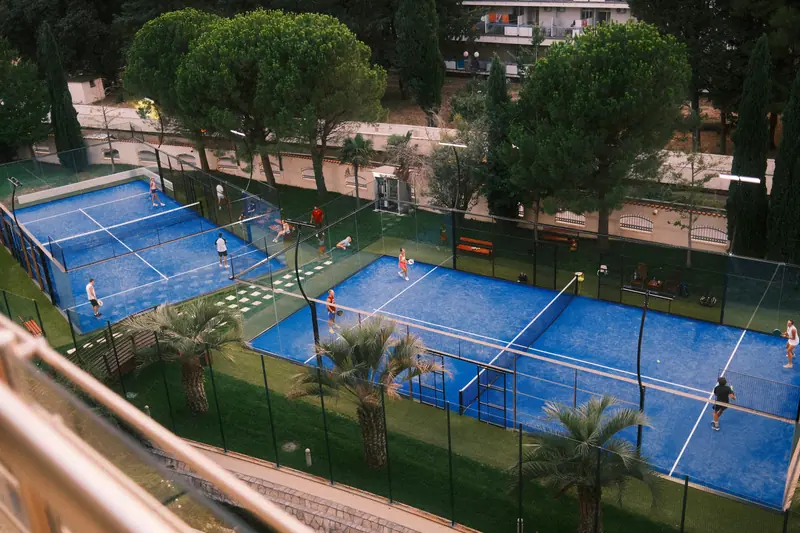 ComparisonPadel balls vs tennis balls: size, pressure, bounce and why you should not swap themA padel ball is slightly smaller than a tennis ball (6.35 to 6.77 cm across against 6.54 to 6.86 cm) and has lower internal pressure, though both weigh 56.0 to 59.4 g.
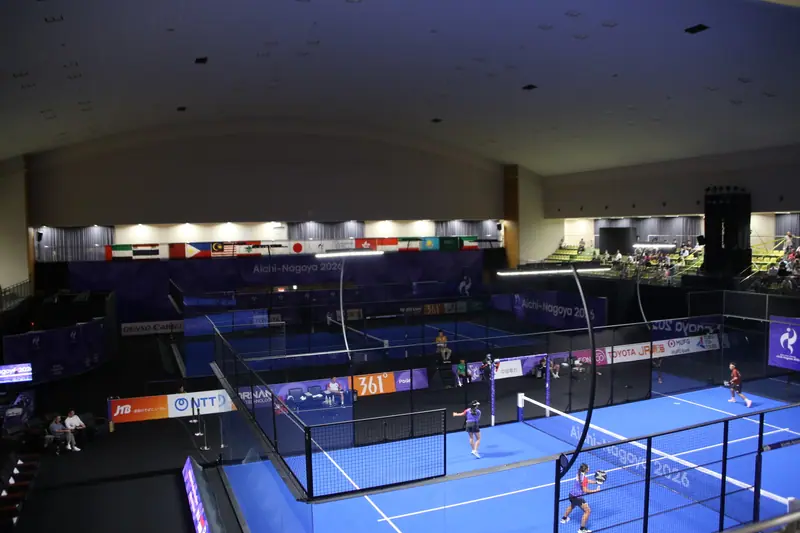 Buying guideThe best padel starter kits: one player, two players, a family or an upgradeA good padel starter kit contains a round, soft cored racket of about 340 to 365 g, at least one tube of pressurised balls and a few overgrips; a thermal cover is a useful extra.
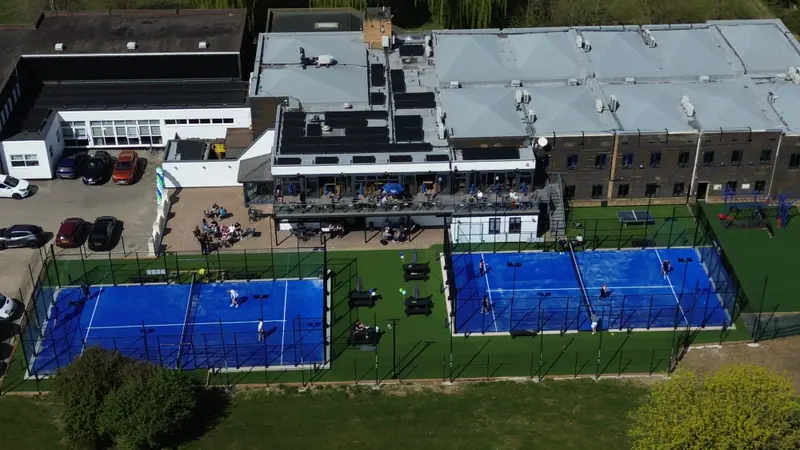 GuideHow much does a padel court cost to hire in the UK? Prices by region and timeHiring a padel court in the UK costs a median of £28 per court per hour off-peak, £40 at peak times and £36 at weekends, based on the published price lists of 79 venues we checked on 1 November 2026.
 Buying guidePadel gifts: useful ideas for every budget, for him, for her and for juniorsThe best padel gifts are things players use up or replace often: overgrips (£5.99 for three), tubes of balls (£4.49 to £5.49), a ball pressuriser (£14.99), a thermal racket cover (£12.99) or a bag (£29 to £69).