How to choose a padel racket: shape, weight, core and face in six decisions
By the Lobwell Padel team. Updated 1 November 2026.
Short answer: Choose a padel racket by your level first, then shape, weight and core. Most beginners and improvers should pick a round racket of 340 to 365 g with a soft EVA core and a low balance; regular intermediate players can move to a teardrop of 360 to 370 g; only advanced players who smash well gain from a diamond with a high balance and a hard core.
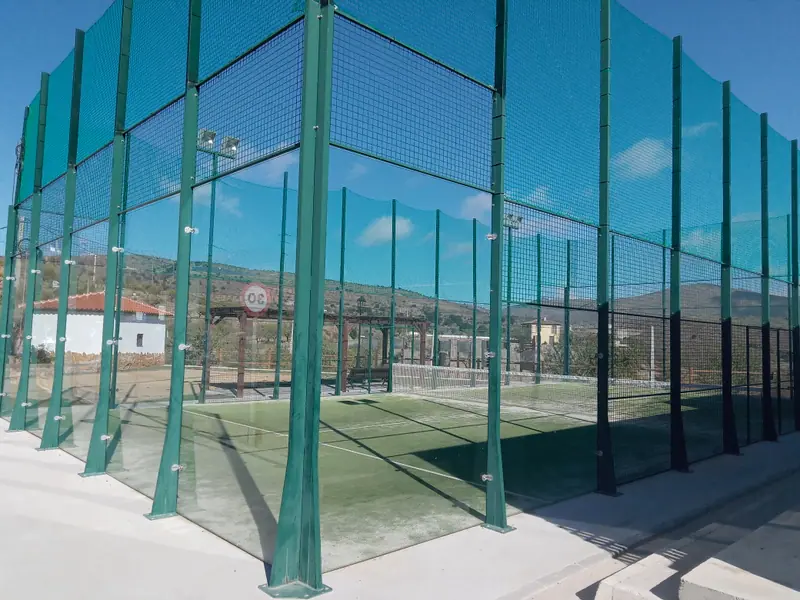
Step 1: be honest about your level
Every other choice follows from this one. A racket that suits a strong left side player who finishes points with flat smashes will make a beginner miss more balls, not hit harder. Use the number of sessions you play and how comfortable you are off the back glass rather than your tennis rating. A good tennis player still starts padel as a beginner on the walls.
A useful rule from coaching: if you still try to hit most balls before they reach the back glass, you are a beginner for racket purposes. If you choose when to let the ball pass and play it off the wall, you are an improver. If you regularly play bandejas and viboras on purpose, you are intermediate.
| Level | Shape | Weight | Balance | Core | Face |
|---|---|---|---|---|---|
| First months | Round | 340 to 360 g | Low | Soft EVA | Glass fibre or 3K carbon |
| Improver, 1 to 2 games a week | Round or teardrop | 345 to 365 g | Low to even | Soft or medium EVA | 3K carbon |
| Intermediate | Teardrop | 360 to 370 g | Even | Medium EVA | 3K or 12K carbon |
| Advanced attacker | Diamond | 365 to 375 g | High | Hard EVA | 12K or 18K carbon |
Step 2: pick a shape
Shape decides where the sweet spot sits and how the weight is spread. A round head keeps the sweet spot low and central, which is where new players actually make contact. A teardrop lifts it a little for more reach and pace on overheads. A diamond pushes it up towards the tip and puts weight in the head. The padel racket shapes guide covers this in detail, and the side by side breakdown is in round vs teardrop vs diamond.

Step 3: choose a weight you can swing in the second hour
Rackets usually weigh 340 to 375 g. The FIP sets no weight limit, but almost everything in the shops sits in that band. Heavier rackets hit through the ball more and feel stable on blocks; lighter ones react faster at the net and tire you less. Pick the weight you can still swing with good form at the end of a 90 minute booking, not the one that feels best for five practice swings in your kitchen.
Lighter adults, juniors moving up and anyone who has had arm trouble should look at 335 to 350 g. More in the padel racket weight guide.
Step 4: understand balance
Two rackets of the same weight can feel completely different because of where that weight sits. A low, or head light, balance feels quick and easy to manoeuvre. A high, or head heavy, balance gives more momentum on smashes but asks more of your wrist and shoulder. Balance usually follows shape: round rackets are head light, diamonds head heavy. See the padel racket balance guide.
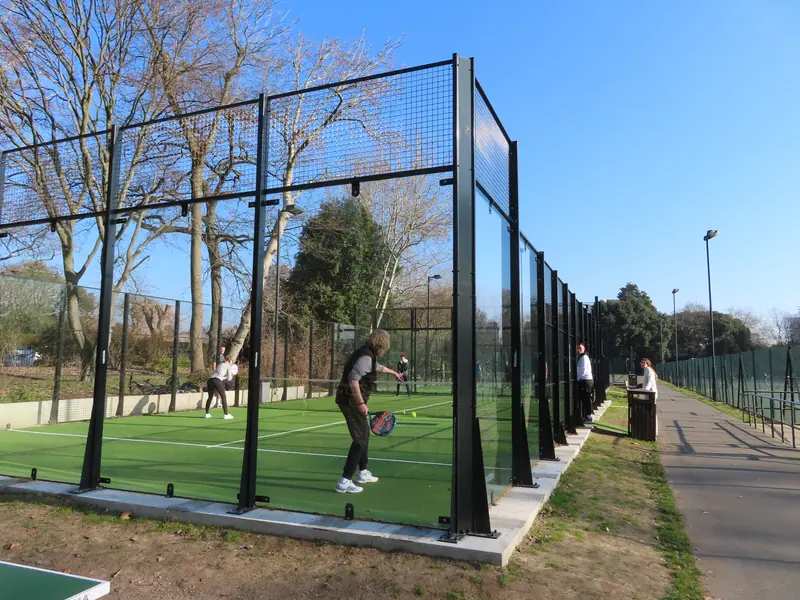
Step 5: core and face material
The core is the foam inside the racket, usually EVA rubber. Soft EVA gives an easy, springy push on slower shots and feels comfortable. Hard EVA feels firm and gives back more energy only when you swing fast. The face is a skin of glass fibre or carbon. Glass fibre flexes more and feels forgiving; carbon is stiffer, more precise and keeps its feel longer. Carbon is labelled by weave, 3K, 12K or 18K, which we explain in 3K vs 12K vs 18K carbon.
- Soft EVA with glass fibre: the most forgiving combination, ideal for first months.
- Soft EVA with 3K carbon: forgiving but crisper, a good one racket answer for most club players.
- Medium EVA with 12K carbon: more precise, rewards a full swing.
- Hard EVA with 18K carbon: stiff and powerful, needs speed and clean contact.
Step 6: the small things that matter
Check the grip size feels comfortable once an overgrip is on, because you will add one. A rough or sand textured face grips the ball for slice; a smooth face is easier to control for beginners. Budget a few pounds for frame protector tape, since most damage happens when the top of the frame scrapes the glass or the turf. And do not overspend: the differences between a £79 and a £249 racket matter far less for a weekly player than choosing the right shape and weight.
If you would rather answer a few questions than read, the racket finder maps your answers to a racket from our range.
Where the Lobwell range fits
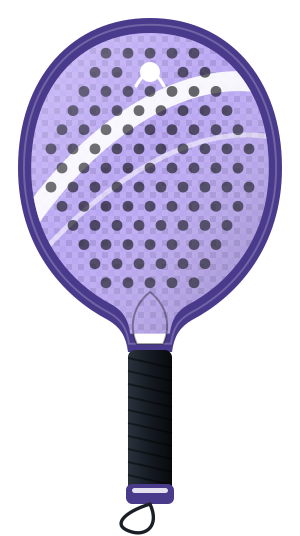
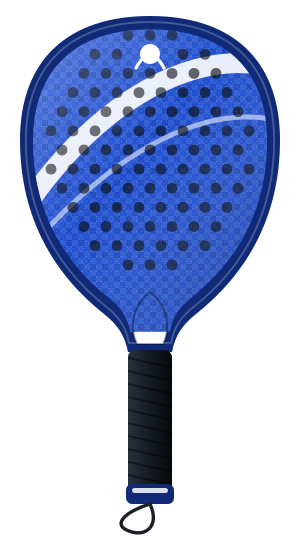
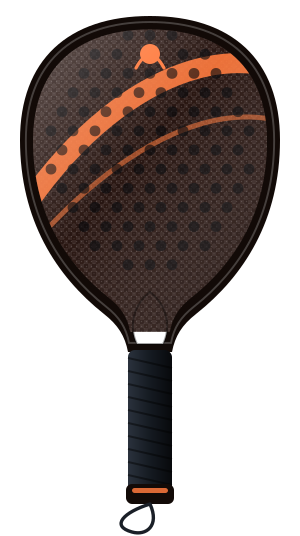
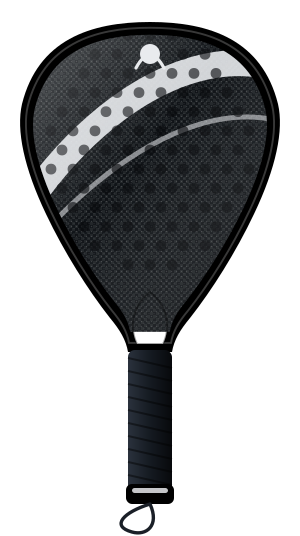
Our seven rackets follow the table above. Fen and Tor are round, soft and head light for the first months and beyond; Lark is the same idea at about 340 g; Ridge and Arc are teardrops for improvers and intermediates; Crag is a diamond for advanced attackers; Pip is the junior option. If you play at a high competitive level and want a specific tour player's racket, a specialist brand will suit you better than our range.
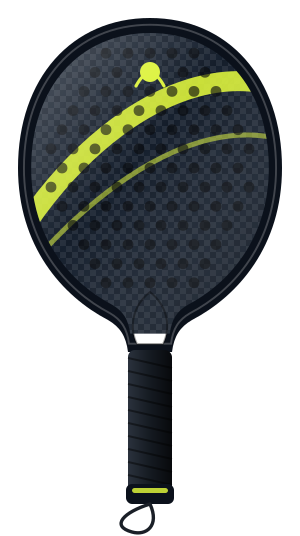
Lobwell Tor
Round 3K carbon racket for your first year and well beyond it
- Round
- 3K carbon
- 355 to 365 g
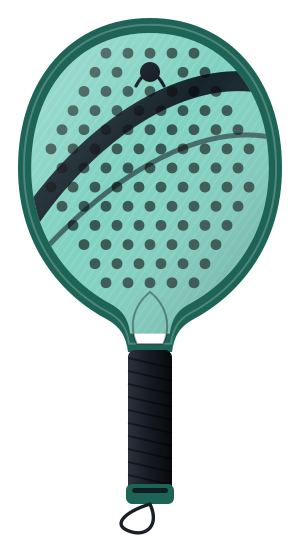
Lobwell Ridge
Teardrop 3K carbon racket for players moving off a round head
- Teardrop
- 3K carbon
- 360 to 370 g
Questions people ask
What padel racket should a beginner buy?
A round racket of about 340 to 365 g with a soft EVA core and a low balance. It has the largest, most central sweet spot and needs the least swing speed.
Does a more expensive padel racket make you better?
Not on its own. For club players, the right shape, weight and core make far more difference than price. Expensive rackets are often stiffer and less forgiving.
How do I know if a padel racket is too heavy?
If your volleys get late and your shoulder or forearm feels tired by the end of a 90 minute session, try something 10 to 20 g lighter.
Can I use a tennis racket for padel?
No. Padel rackets are solid, stringless and no longer than 45.5 cm under the FIP rules, and the courts expect padel rackets with a wrist cord.
Sources
Keep reading
 GuidePadel racket shapes explained: round, teardrop, diamond and what each does to the ballPadel rackets come in three main shapes.
 GuidePadel racket weight: how heavy should your racket be?Most adult padel rackets weigh between 340 and 375 g; the FIP rules set no weight limit.
 GuidePadel racket balance: head light, even or head heavy, and how it changes your gameBalance is where a padel racket's weight sits along its length.
 GuidePadel racket cores: what is inside your racket and why it decides the feelThe core is the foam slab inside a padel racket, usually EVA rubber, sitting between the two faces in a racket no thicker than 38 mm.
 Buying guideThe best padel racket for beginners: the spec to look for after three sessions on a hire racketThe best padel racket for a beginner has a round head, a soft EVA core, a weight of about 340 to 365 g and a low (head light) balance.
 Buying guideThe best padel rackets for 2026: what actually matters, and the right racket for each levelThe best padel racket is the one that matches your level: a round, soft cored racket of 340 to 365 g for beginners and improvers, a teardrop of 360 to 370 g with a medium core for intermediates, and a diamond with a hard core and high balance for advanced attackers.