Padel rules: every rule you need for doubles, from the serve to the fence
By the Lobwell Padel team. Updated 1 November 2026.
Short answer: Padel rules come from the International Padel Federation. The serve is underarm, after a bounce, struck at or below the waist and sent diagonally into the opposite box; the ball must then bounce on the receiving side before it touches any wall. You lose the point if the ball bounces twice on your side, hits the other side's walls before their floor, or touches you or your partner.

The rules of the serve
Every point starts with an underarm serve. The server must be behind their service line and between the centre line and the side wall. They drop the ball and let it bounce on their own side before hitting it, and at contact the ball must be at or below waist height with at least one foot on the ground. Serves go diagonally, starting from the right hand side at the beginning of each game.
Each player gets two attempts. A serve is a fault if it misses the box, if the server hits it above the waist or jumps, or if the ball bounces in the box and then hits the mesh. A serve that bounces in the box and then hits the glass is good. A serve that clips the net and lands in the box is a let and is replayed. The padel serve guide goes deeper.
| Serve | Call |
|---|---|
| Bounces in the box, then hits the glass | Good |
| Bounces in the box, then hits the mesh | Fault |
| Touches the net, lands in the box | Let, replay that serve |
| Lands outside the box or on the wrong side | Fault |
| Struck above waist height | Fault |
| Hits the receiver's partner before bouncing | Point to the server |
The bounce rule and the walls
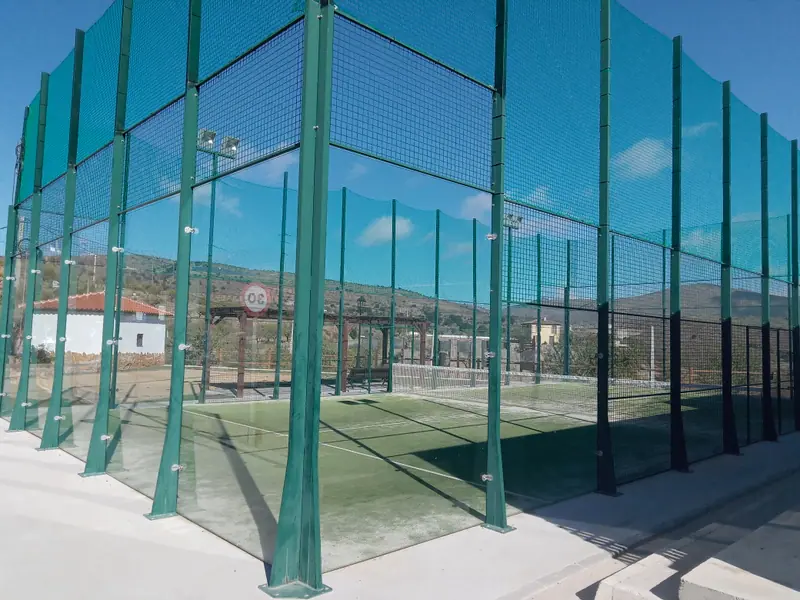
After the serve, the ball can be volleyed or played after one bounce. Once it has bounced on your floor, it can touch your walls any number of times before you hit it. The one thing it cannot do is touch the other side's walls or mesh before bouncing on their floor. If your shot does that, the point is lost.
You can play the ball into your own walls so that it travels back over the net. This contra pared shot is legal, though it is hard to do well. Shots that hit the top of a wall and drop back, or land on a joint between panels, are still in play: you just get an awkward bounce.

How a point is lost
- The ball bounces twice on your side before you return it.
- Your shot goes into the net or lands outside the other side's court.
- Your shot hits their glass, wall or mesh before bouncing on their floor.
- The ball touches you, your partner or your clothing, unless it is a serve that hits the receiver's partner, which is a point to the server.
- You hit the ball twice, or both partners hit it.
- You touch the net, or the other side of the court, while the ball is in play.
- You volley the ball before it has crossed the net to your side.
Out of court play
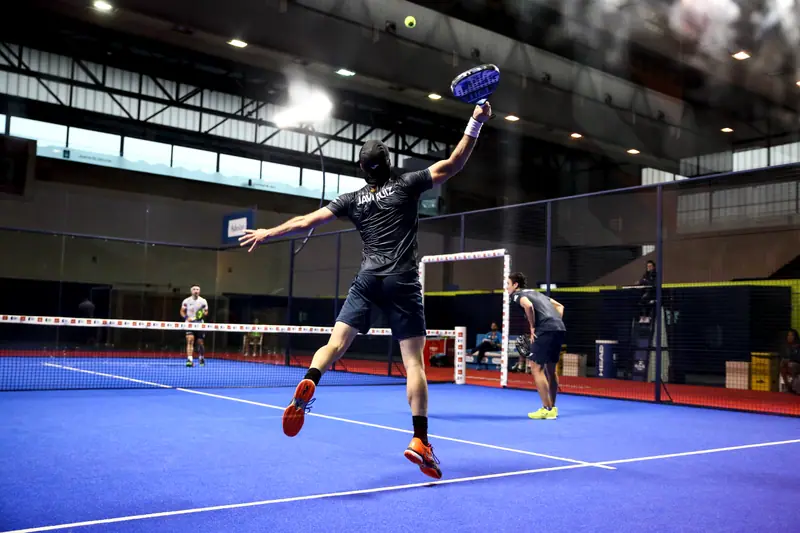
A smash that bounces high can fly out of the court over the side walls or through the open doorways. If the venue allows it and there is space, you may run outside the court and play the ball back in, as long as it has not bounced twice. Outdoor clubs in the UK often have hedges or fencing close by, so many courts are not set up for this. If you cannot leave the court, the point goes to the side that hit the ball out.
These big out of court smashes have names: por tres when the ball leaves over the side wall, por cuatro when it goes over the back fence. Both are explained in the padel glossary.
Changing ends and rotating serve
Serve passes from one player to the next each game, so all four players serve in turn. Pairs change ends after the first game and then every two games, which balances out wind and low sun on outdoor courts. In a tie-break, sides change every six points. In casual UK club games many players skip end changes indoors, but you should agree it before you start.
- 1Game 1
Pair A serves, player one. Change ends after it.
- 2Game 2
Pair B serves, player one.
- 3Game 3
Pair A, player two. Change ends after game 3, 5, 7 and so on.
- 4Game 4
Pair B, player two. Then the order repeats.
Rules about the kit
The FIP sets limits on the racket: no more than 45.5 cm long, no wider than 26 cm, no thicker than 38 mm, with holes of 9 to 13 mm in the centre of the face. There is no weight limit. Every racket must have a non elastic wrist cord no longer than 35 cm, and you are expected to wear it. Balls must be 6.35 to 6.77 cm across and weigh 56.0 to 59.4 g, and only FIP approved balls can be used in official competition.
For club games, any decent pressurised ball is fine. See the padel balls guide and the all padel rackets page for rule compliant kit.
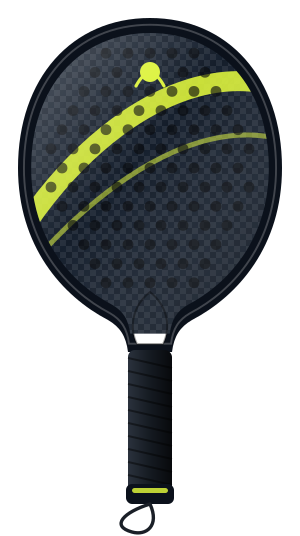
Lobwell Tor
Round 3K carbon racket for your first year and well beyond it
- Round
- 3K carbon
- 355 to 365 g
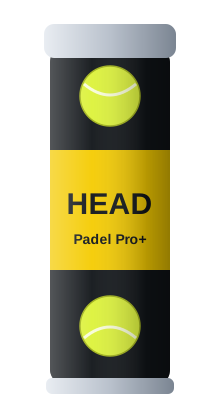
HEAD Padel Pro+ Padel Balls (3 Ball Tube)
Pressurised match ball with a quick, consistent bounce. One of the most used balls in UK clubs.
- HEAD
£5.49
Scoring rules
Padel uses tennis scoring: 15, 30, 40 and game, sets to six games with a two game lead and a tie-break at 6 all. At 40 all, the FIP allows advantage, golden point or the newer Star Point. Agree which one before the first ball. Full examples are in our padel scoring guide.
Questions people ask
Can the receiver volley the serve in padel?
No. The serve must bounce in the receiver's box before it is returned. Volleying the serve loses the point.
Is it a fault if the serve hits the side glass?
If it bounces in the correct box first, then hits the side or back glass, the serve is good. If it hits the mesh after bouncing, it is a fault.
What happens if the ball hits the net post?
A ball that hits the post or the net and drops on the other side's floor is in play. If it then lands outside the court, the point goes to the receiving pair.
Can you touch the net in padel?
No. Touching the net or the posts with your body, racket or clothing while the ball is in play loses the point.
Sources
Keep reading
 GuideThe padel serve: the rules, the faults and a serve that gets you to the netIn padel you serve underarm: bounce the ball behind your service line, hit it at or below waist height with at least one foot on the ground, and send it diagonally into the receiver's box.
 GuidePadel scoring: points, golden point, Star Point, tie-breaks and setsPadel is scored like tennis: 15, 30, 40, then game, with sets won at six games by a two game margin and a tie-break at 6-6 (first to 7 points, two clear).
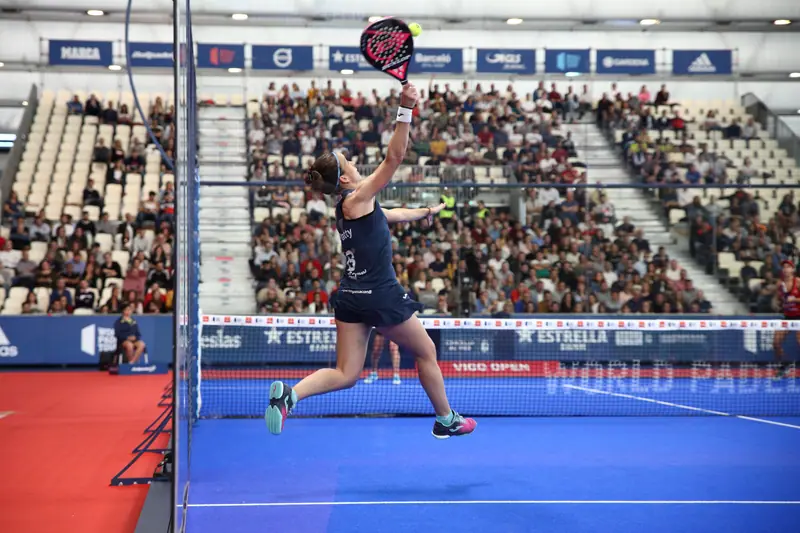 GuideHow to play padel: the serve, the walls and the first ralliesTo play padel, two pairs face each other on a 10 by 20 metre walled court.
 GuidePlaying off the walls: how to read the back and side glass in padelTo play off the back glass in padel, turn sideways early, let the ball pass you, move with it towards the wall and hit it as it comes back off the glass, usually upwards into a lob or a low ball to the middle.
 GuidePadel glossary: 50 terms, from americano to vibora, with the Spanish shot namesMost padel terms are Spanish: globo is a lob, remate a smash, bandeja a sliced overhead, vibora a faster side spun one, chiquita a soft ball to the feet, and salida de pared a shot played after the ball comes off the wall.