How to play padel: the serve, the walls and the first rallies
By the Lobwell Padel team. Updated 1 November 2026.
Short answer: To play padel, two pairs face each other on a 10 by 20 metre walled court. You serve underarm into the diagonal box, the ball must bounce once on the other side, and after that bounce it can come off the glass and still be returned. Scoring is 15, 30, 40, game, with sets to six games.
Where to stand
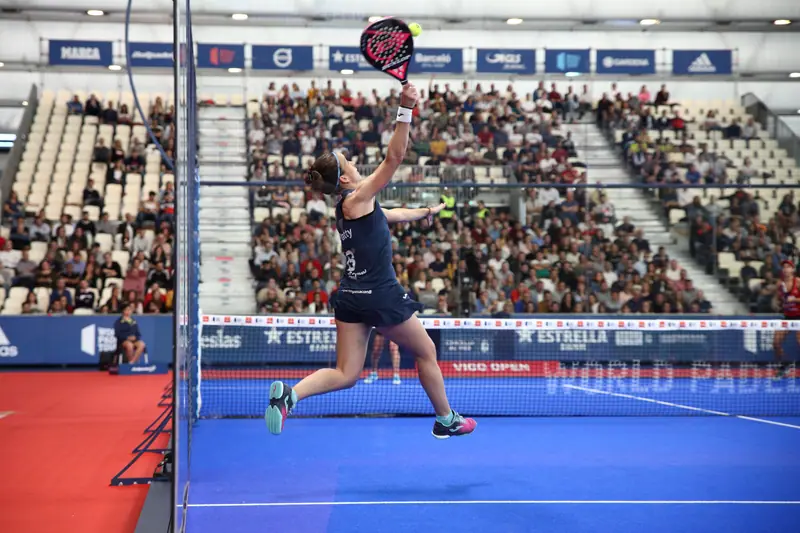
Each pair splits the court down the middle. One player covers the left half, the other the right, and you keep that split for the whole set. The right side player usually plays more of the balls down the centre with their forehand, while the left side player, often the stronger smasher, takes the overheads in the middle. In your first weeks this matters less than one simple habit: move with your partner, side by side, as if tied with a two metre rope.
There are two positions you will spend most time in. At the back, about a metre in front of the back glass, you defend. At the net, roughly two to three metres from it, you attack with volleys. Good padel is mostly about getting both players to the net together and staying there.
Serving and returning
The server stands behind their service line, between the centre line and the side wall. They bounce the ball, then hit it underarm at or below waist height with at least one foot on the ground. The serve goes diagonally into the receiver's box and must bounce there. It may then hit the glass, but if it hits the wire mesh after bouncing it is a fault. You get two attempts, as in tennis.
The receiver must let the serve bounce before playing it. A good beginner return is a slow, deep ball to the server's feet or a lob over the player at the net. Our padel serve guide covers technique and the fault rules in full.
- 1Stand behind the service line
On the right half for the first point, then alternate each point.
- 2Bounce the ball
Drop it beside your front foot, a little in front of your body.
- 3Hit at waist height or lower
A short, smooth swing. Aim deep into the diagonal box.
- 4Follow it to the net
After serving, walk forward to join your partner near the net.

The bounce and the walls
This is the rule that confuses tennis players for about ten minutes. Your shot must land on the floor of the other side first. If it hits their glass or mesh before bouncing, you lose the point. Once it has bounced, it can rebound off any wall and your opponents can still play it, as long as they hit it before it bounces a second time.
On your own side, you can use your walls too. Let a deep ball pass you, wait for it to come off the back glass, then hit it. Beginners usually try to hit everything before it reaches the glass. Learning to turn, wait and play the rebound is the biggest step you will make in your first month. Our guide to playing off the walls has drills for it.
| What happens | Result |
|---|---|
| Bounces on their floor, then hits their glass | In play, they can return it |
| Hits their glass or mesh before bouncing | Out, you lose the point |
| Bounces twice on their side | You win the point |
| You hit it into your own back glass and it goes over | Legal, play on |
| Ball touches you or your partner | You lose the point |
The four shots to learn first
You do not need a full shot library to enjoy padel. Four shots will carry you through your first season, and they are worth practising in that order.
- The lob: a high ball over the players at the net that pushes them back. It is the most important shot in padel, not a defensive cop out.
- The volley: a short punch at the net with the racket face slightly open. Keep it compact and aim at feet.
- The back glass return: let the ball rebound, turn your shoulders, and hit up and over the net.
- The bandeja: a controlled overhead with slice that keeps you at the net instead of smashing for glory.

Scoring in plain English
Points go 15, 30, 40, then game. At 40 all, many UK clubs play golden point: one deciding point, and the receiving pair choose which side to receive on. Others play advantage, as in tennis. The FIP rules for 2026 also allow a Star Point format. A set is won at six games with a two game lead, with a tie-break at 6 all. Our padel scoring guide has worked examples.
Kit for your first sessions
You can hire a racket for your first few visits. Wear trainers with a grippy sole, because running shoes slide on the sand of artificial grass. When you buy your own racket, start with a round head, a soft core and a weight of 340 to 365 g. That combination forgives mishits and keeps the ball moving without a big swing. The beginner padel racket range is built around exactly those specs.
Lobwell Tor
Round 3K carbon racket for your first year and well beyond it
- Round
- 3K carbon
- 355 to 365 g
Questions people ask
Can you hit the ball before it bounces in padel?
Yes, you can volley any ball except the serve. The receiver must let the serve bounce first.
Can you hit the ball off your own wall?
Yes. You can play the ball into your own glass so that it rebounds over the net. It just must not touch the other side's walls before bouncing on their floor.
Can the ball go out of the court?
Yes, a hard smash can bounce and fly out over the walls. Where the venue allows it, players can run out of the court through the doors to play it back.
Who serves first in padel?
The pair that wins the racket spin or coin toss chooses to serve, receive or pick an end. Serve then rotates between all four players, one game each.
Sources
Keep reading
 GuidePadel rules: every rule you need for doubles, from the serve to the fencePadel rules come from the International Padel Federation.
 GuidePadel scoring: points, golden point, Star Point, tie-breaks and setsPadel is scored like tennis: 15, 30, 40, then game, with sets won at six games by a two game margin and a tie-break at 6-6 (first to 7 points, two clear).
GuideThe padel serve: the rules, the faults and a serve that gets you to the netIn padel you serve underarm: bounce the ball behind your service line, hit it at or below waist height with at least one foot on the ground, and send it diagonally into the receiver's box.
 GuideYour first padel session: what to bring, what to expect and 10 tips from the first hourFor your first padel session, bring grippy trainers, sportswear, water and a friend or three: most venues hire rackets for a few pounds and sell balls at reception.
 GuidePadel shots explained: the 16 strokes you will hear about, and when to play eachThe core padel shots are the groundstroke, the volley, the lob, the bandeja (a controlled sliced overhead), the vibora (a faster, more side spun overhead), the smash, the chiquita (a soft, low ball to the feet of net players) and the back glass return.