Padel shots explained: the 16 strokes you will hear about, and when to play each
By the Lobwell Padel team. Updated 1 November 2026.
Short answer: The core padel shots are the groundstroke, the volley, the lob, the bandeja (a controlled sliced overhead), the vibora (a faster, more side spun overhead), the smash, the chiquita (a soft, low ball to the feet of net players) and the back glass return. Most club points are won with lobs, volleys and bandejas rather than smashes, because the walls give defenders time to recover.

Shots from the back of the court
At the back you are defending. Your job is to get the ball past or over the net players and buy time to move forward. The two main shots are the groundstroke, hit after the bounce before the ball reaches the glass, and the wall return, hit after it rebounds. Both use short, compact swings and a continental grip.
The aim is rarely to hit hard. A firm, low ball to the middle forces the net players to volley up, and a high lob pushes them back. That lob is the most important shot in padel, and the one most new players undervalue.
| Shot | What it is | When to use it |
|---|---|---|
| Groundstroke (forehand and backhand) | Hit after one bounce, before the glass | Ball sits up in front of you |
| Back glass return (salida de pared) | Played after the ball rebounds off the back wall | Deep balls you cannot take early |
| Side glass return | Played after the ball comes off the side wall | Angled shots into the corners |
| Double wall return | Ball hits back then side glass, or the reverse | Corner balls; read the second angle |
| Lob (globo) | High, deep ball over the net players | Whenever you need time to move forward |
| Chiquita | Soft, low ball dipping at the net players' feet | When opponents are close to the net |
| Contra pared | You hit the ball into your own back wall and it goes over | Emergency only, when the ball has passed you |
Shots at the net
At the net you are attacking, but patiently. Volleys should be short punches with the face slightly open, aimed deep or at the feet of the opponents. Big swings at the net send the ball into the back glass where the defenders can play it easily.
The block volley, a firm face with almost no swing, is the shot you will play most against hard drives. The drop volley, or dejada, softly kills the ball just over the net and works when both opponents are pinned at the back.
- Volley (volea): punch, short, at feet or deep to the glass.
- Block volley: firm face, no swing, use the pace of the ball.
- Drop volley (dejada): soft and short, opponents pinned at the back.
- Bajada: an attacking overhead after the ball has come off your own back glass high.

Overheads: bandeja, vibora and smash
This is where padel differs most from tennis. A lob that drops near your service line could be smashed, but a smash that bounces off the back glass sits up nicely for the defenders. So padel players use controlled overheads instead.
The bandeja, named after a waiter's tray, is a flat to sliced overhead hit at about shoulder to head height. Its job is to keep you at the net by sending the ball deep and low off the back glass. The vibora is faster and more side spun, so the ball skids low off the side glass. The smash proper, the remate, is for short balls: hit flat to bounce high out of the court, or with topspin to kick back towards the net. Rackets with a higher balance help here; see padel rackets for power.
| Shot | Spin | Pace | Aim |
|---|---|---|---|
| Bandeja | Slice | Medium | Keep the net position, ball dies low off the glass |
| Vibora | Side slice | Medium to fast | Ball skids off the side glass |
| Rulo | Topspin | Fast | Kicks up high, back to your side |
| Flat smash (por tres) | Flat | Fast | Bounces high out over the side wall |
| Gancho | Hooked side spin | Medium | Short, angled finish near the net |
Which shots to learn first
- 1Lob
Practise high, deep lobs to the back third. It is your main way out of defence.
- 2Volley
Short punch with a continental grip. Aim at feet or deep middle.
- 3Back glass return
Turn sideways, let the ball rebound, hit it up and over the net.
- 4Bandeja
Controlled sliced overhead that keeps you at the net.
- 5Everything else
Chiquita, vibora and smash come once these four feel natural.

Matching your racket to your shots
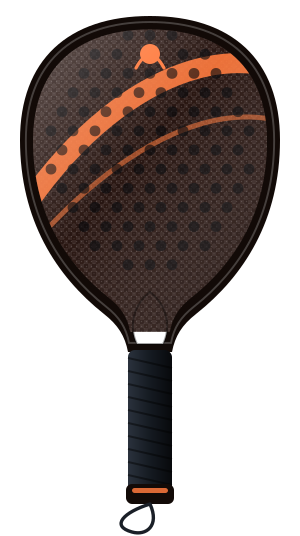
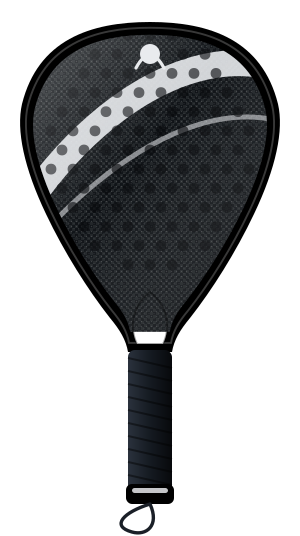
Players who mostly defend, lob and block do best with round, soft rackets that help depth and forgive mishits: see padel rackets for control. Players who finish points with viboras and smashes benefit from a teardrop or diamond with a firmer core and a rough face for spin. A textured surface does help slice shots grip, which is why our Arc and Crag both have sand textured faces.
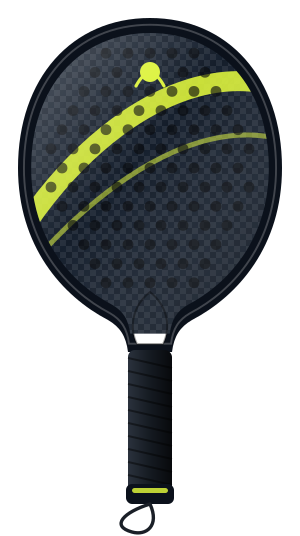
Lobwell Tor
Round 3K carbon racket for your first year and well beyond it
- Round
- 3K carbon
- 355 to 365 g
Words you will hear on court
Padel's vocabulary is mostly Spanish, because the modern game grew up in Spain and Argentina. You will hear globo for lob, remate for smash, salida de pared for a wall return and por tres for a smash out over the side wall. Our padel glossary has more than 40 terms. For the walls in particular, read playing off the walls.
A simple practice plan
Thirty minutes before a game is enough. Spend ten minutes on volleys in pairs across the net, ten on lobs and bandejas with one player at the back and one at the net, then swap, and ten on balls off the back glass. Four players can rotate so everyone feeds and everyone hits. Use slightly older balls for drills and keep a fresh tube for the match. Over a month, this pattern improves club players more than any amount of hitting smashes.
Questions people ask
What is a bandeja in padel?
A controlled overhead hit with slice at about head height, used to send the ball deep and low while keeping your position at the net.
What is the difference between a bandeja and a vibora?
A vibora is faster and has more side spin, so the ball skids low off the side glass. A bandeja is steadier and aims mainly for depth.
What is a chiquita in padel?
A soft, low shot that dips at the feet of opponents at the net, forcing them to volley up.
Can you smash in padel?
Yes, but only on short balls. A smash that bounces off the back glass sits up for the defenders, which is why controlled overheads are more common.
Sources
Keep reading
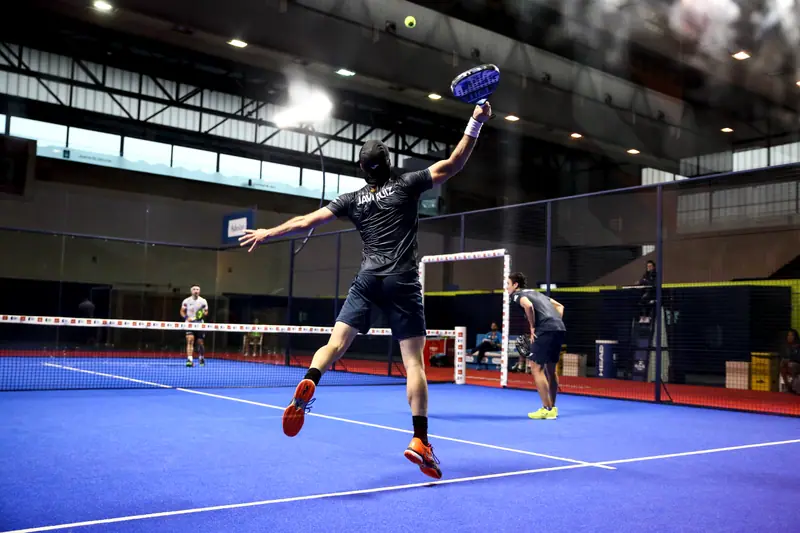 GuidePadel glossary: 50 terms, from americano to vibora, with the Spanish shot namesMost padel terms are Spanish: globo is a lob, remate a smash, bandeja a sliced overhead, vibora a faster side spun one, chiquita a soft ball to the feet, and salida de pared a shot played after the ball comes off the wall.
 GuidePlaying off the walls: how to read the back and side glass in padelTo play off the back glass in padel, turn sideways early, let the ball pass you, move with it towards the wall and hit it as it comes back off the glass, usually upwards into a lob or a low ball to the middle.
 GuidePadel doubles tactics: positioning, the net, the lob and the middleThe core padel tactic is simple: the pair at the net usually wins the point, so get both players to the net together and use lobs to push opponents back when they hold it.
GuideThe padel serve: the rules, the faults and a serve that gets you to the netIn padel you serve underarm: bounce the ball behind your service line, hit it at or below waist height with at least one foot on the ground, and send it diagonally into the receiver's box.
 Buying guideThe best padel rackets for power: the specs behind a heavy smash, and who should use themA power padel racket combines a diamond or high teardrop head, a high (head heavy) balance, a hard EVA core and a stiff 12K or 18K carbon face, usually at 365 to 375 g.