Padel doubles tactics: positioning, the net, the lob and the middle
By the Lobwell Padel team. Updated 1 November 2026.
Short answer: The core padel tactic is simple: the pair at the net usually wins the point, so get both players to the net together and use lobs to push opponents back when they hold it. Hit to the middle of the court more than the sides, keep your volleys low and deep, move as a unit about three metres apart, and avoid standing on the service line, where you are neither attacking nor defending.
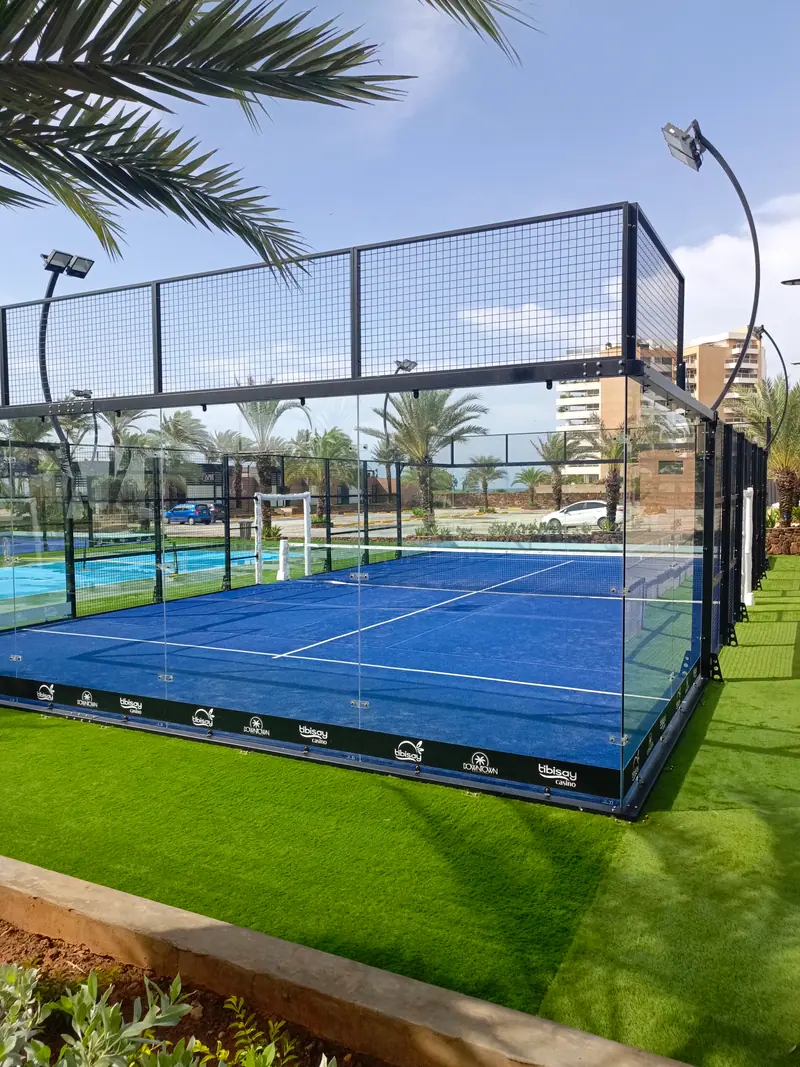
The net is the high ground
Padel is a game of territory. On a 20 metre court, a pair standing two to three metres from the net can cut off most shots before they get going, angle volleys away and smash anything short. A pair at the back, by contrast, has to wait for the ball to bounce, maybe off the glass, and lift it over the net players. So most points follow the same story: one pair holds the net, the other tries to win it back.
Your tactical life in padel comes down to two questions. If you are at the net, how do you stay there? If you are at the back, how do you get there?
Taking the net with the lob
From the back, the lob is how you change places. A high, deep lob that lands in the last third of the court forces both net players to turn and chase or play a defensive overhead. As soon as you see the lob is good, walk forward together. If they get back in time, you have swapped positions and now hold the net.
Aim lobs over the player on their backhand side, usually over the left side player's head for a right handed pair, and higher rather than faster. On low ceilinged indoor courts with only 6 metres of clear height, the FIP minimum, keep it flatter or it clips the roof.
- 1Defend low first
Keep the ball low at their feet until you get a ball you can lift with control.
- 2Lob deep
High and into the back third, over the backhand side.
- 3Read it
If the lob is good, both players step forward straight away.
- 4Arrive together
Split step as they hit, level with each other, two to three metres from the net.

Staying at the net
- Volley deep or at feet. A volley that lands mid court sits up for the defenders.
- Use the bandeja, not the smash, on lobs that drop near the service line. It keeps you forward.
- Smash only short balls you can put away, out of the court or down at the feet.
- Cover the lob: when your partner moves back for an overhead, you shift towards the middle.
- Take one step back as the defender prepares to lob, one step in as they prepare to drive.
Why the middle works
A ball down the middle between the two opponents creates doubt about who takes it, reduces the angles they can find, and means your own pair has less court to cover on the reply. Coaches tell club pairs to send most of their balls through the middle for a reason: it is the lowest risk target on the court, and pairs who aim there make fewer errors than pairs going for the lines. Save the side glass and the angles for balls you can really attack.
The middle also suits the walls. A ball into the middle of the back glass rebounds straight back into the middle, keeping the defenders in a predictable spot.
| You are | They are | Best target |
|---|---|---|
| At the back | At the net | Low to their feet, or a deep lob |
| At the net | At the back | Deep middle, or angled volley if the ball is high |
| At the net | At the net | Low at the body, or a lob over the backhand |
| At the back | At the back | Take the net: low and deep, then follow it in |
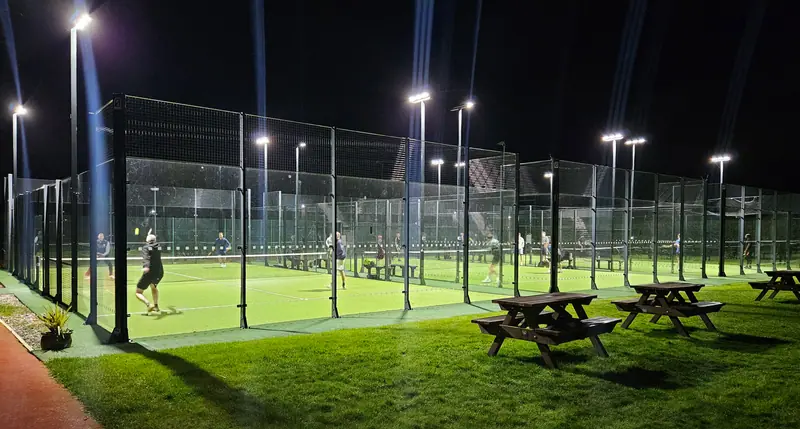
Moving as a pair
Imagine a rope about three metres long between you and your partner. When one moves forward, sideways or back, the other follows. Gaps open when one player rushes the net while the other stays at the back, which leaves a hole straight through the middle. When a lob goes over one of you, call "cambio" (switch): the partner nearest the ball runs back to cover it diagonally and the other slides across.
Talk constantly: "mine", "yours", "lob", "stay". Silent pairs lose the balls in the middle.
Right side or left side?
The right side (drive side for right handers) plays more balls through the middle with the forehand and builds points patiently. The left side (revés) takes more overheads in the centre, because their forehand covers the middle, and tends to finish points. In a right handed pair, the stronger smasher usually plays left. A left and right handed pair often puts the left hander on the left so both forehands cover the middle.
Your racket can follow your side: a control racket for the builder and a more powerful one for the finisher. See padel rackets for control and padel rackets for power.
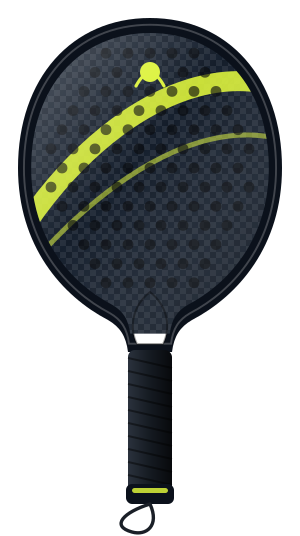
Lobwell Tor
Round 3K carbon racket for your first year and well beyond it
- Round
- 3K carbon
- 355 to 365 g
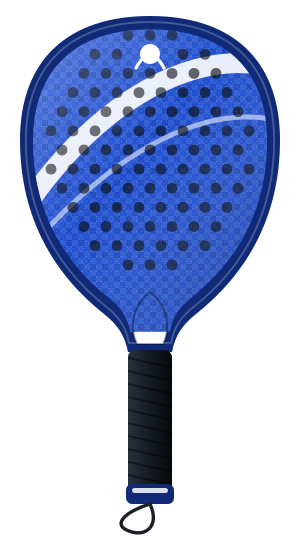
Lobwell Ridge
Teardrop 3K carbon racket for players moving off a round head
- Teardrop
- 3K carbon
- 360 to 370 g
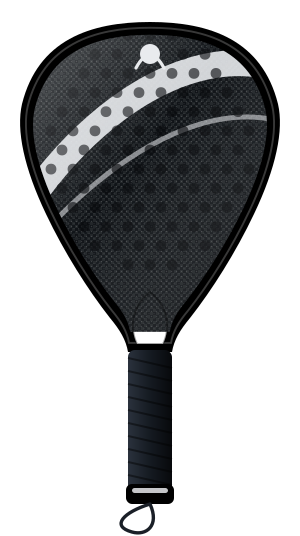
The no man's land trap
The service line area, about 7 metres from the net, is where padel points go to die. From there the ball arrives at your feet when you are at the net and drops behind you when you are at the back. If you find yourself there, either keep moving forward or go back to the glass. Never stop and wait on that line.
For more on what to hit from each part of the court, read padel shots explained and playing off the walls. For the rules behind each scenario, see padel rules.
Questions people ask
What is the most important tactic in padel?
Getting both players to the net and staying there, and using the lob to win the net back when your opponents hold it.
Should the better player play left or right in padel?
Usually the stronger overhead player takes the left (for right handers), because their forehand covers the middle on overheads. The right side player builds points.
Why do padel players lob so much?
Because the pair at the net usually wins the point. A good lob pushes them back and lets you take the net.
Where should I stand when my partner serves?
At the net on the other half of the court, about two to three metres from it, ready to volley the return.
Sources
Keep reading
 GuidePadel shots explained: the 16 strokes you will hear about, and when to play eachThe core padel shots are the groundstroke, the volley, the lob, the bandeja (a controlled sliced overhead), the vibora (a faster, more side spun overhead), the smash, the chiquita (a soft, low ball to the feet of net players) and the back glass return.
 GuidePlaying off the walls: how to read the back and side glass in padelTo play off the back glass in padel, turn sideways early, let the ball pass you, move with it towards the wall and hit it as it comes back off the glass, usually upwards into a lob or a low ball to the middle.
 GuideThe padel serve: the rules, the faults and a serve that gets you to the netIn padel you serve underarm: bounce the ball behind your service line, hit it at or below waist height with at least one foot on the ground, and send it diagonally into the receiver's box.
 Buying guideThe best padel rackets for control: specs for defenders, builders and right side playersA control padel racket has a round head, a low (head light) balance, a soft to medium EVA core and a 3K carbon or glass fibre face, usually at 340 to 365 g.
 Buying guideThe best padel rackets for power: the specs behind a heavy smash, and who should use themA power padel racket combines a diamond or high teardrop head, a high (head heavy) balance, a hard EVA core and a stiff 12K or 18K carbon face, usually at 365 to 375 g.