Playing off the walls: how to read the back and side glass in padel
By the Lobwell Padel team. Updated 1 November 2026.
Short answer: To play off the back glass in padel, turn sideways early, let the ball pass you, move with it towards the wall and hit it as it comes back off the glass, usually upwards into a lob or a low ball to the middle. A ball that bounces deep will rebound to roughly the same distance from the wall as it bounced, so stand about one and a half metres from the glass and let it come to you.

Why the walls matter
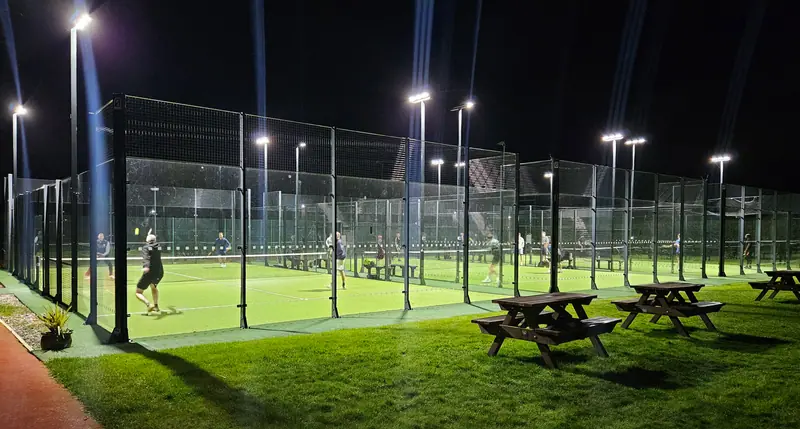
The walls are the reason padel exists as its own sport. Once your opponent's shot has bounced on your floor, it can rebound off your glass and you can still play it. That means a deep ball you could never reach in tennis is often easier to play in padel, because the wall slows it and sends it back towards you.
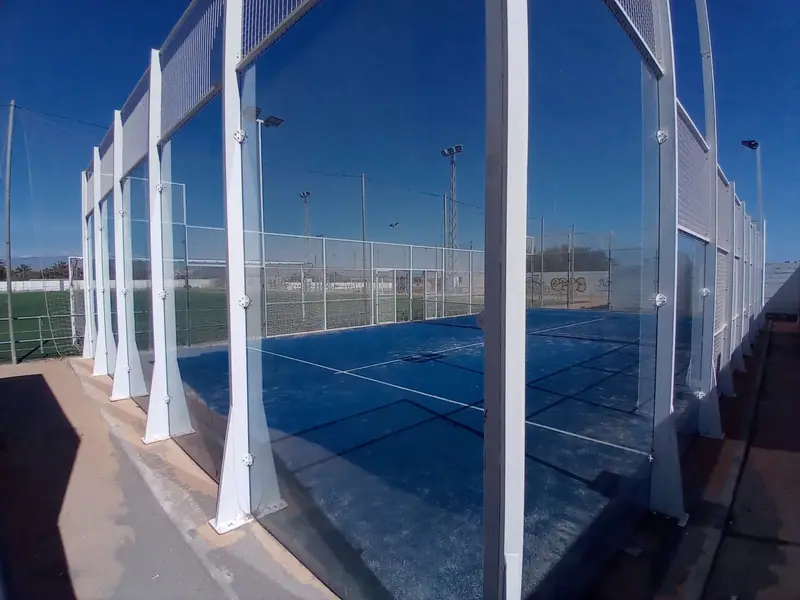
Under the FIP rules the back wall is 3 metres of glass topped with 1 metre of mesh, and the side walls are glass for the first 2 to 4 metres from the back, then mesh. Glass gives a clean, predictable rebound. Mesh gives a dead, unpredictable one. Learning which surface the ball will hit is half the skill.
The back glass, step by step
The most common mistake is backing into the glass and then getting cramped. Stand roughly one and a half metres in front of the back wall in your ready position, so you have room to let the ball come to you.
- 1Read early
As the opponent hits, decide if the ball will reach the glass. If it is deep and fast, it will.
- 2Turn, do not back up
Turn your shoulders and hips sideways towards the side wall, racket already back.
- 3Move with the ball
Step back towards the glass as the ball goes past, keeping it in front of your body.
- 4Let it come off
Wait for the rebound. It comes back with less pace than it went in.
- 5Hit up and over
Play a lob or a low, firm ball to the middle. Finish facing the net.
Reading the rebound
A useful rule of thumb: a ball rebounds off the back glass to roughly the distance from the wall at which it bounced, adjusted for pace and spin. A ball that bounces a metre from the glass comes back about a metre. A ball that bounces in the middle of the back third comes off further and higher. Slice makes it stay lower and come off slower; topspin makes it jump up and out.
Height matters too. A ball that hits the glass high, near the 3 m mark, drops steeply as it comes off. A ball that hits low comes off flat and fast.
| Incoming ball | Rebound off the back glass | Best reply |
|---|---|---|
| Flat, medium pace, deep | Comes back about as far as it bounced | Lob or firm ball to the middle |
| Sliced (bandeja) | Stays low and dies | Get low, lift it gently |
| Topspin | Jumps up and out towards the net | Let it drop, then play it |
| Fast smash | Comes off high, may go out of court | Run out if allowed, or let it go |
| Hits the mesh | Drops dead or skews sideways | React; play it early if you can |
Side glass and double walls
Balls into the corners hit two walls. If the ball hits the side glass first, then the back, it will usually come out towards the middle of the court. If it hits the back glass first, then the side, it often comes out along the side wall, close to you. The key is to stay patient and keep the ball in front of you. Turn towards the corner, wait for the second wall and play it when it settles.
Off the side glass alone, the ball comes back at a mirrored angle, like a snooker ball off the cushion. Stand back a little more than you think, because it comes towards your body.
When not to wait for the wall
- The ball will hit the mesh. Mesh rebounds are unpredictable; play it before it gets there if you can.
- The ball is short and sitting up. Take it early and move forward.
- The ball is a low slice that will die on the glass. Take it before the wall.
- You are already at the net. Do not drop back to play the wall; volley or lob.
Drills to learn the walls
Feed and let go: one player at the net feeds a medium pace ball deep; the other lets it hit the back glass and plays it back as a lob. Twenty balls each side, forehand then backhand. Corners: feed into the corner so it hits two walls; the player lets it settle and plays it to the middle. Drop and play: stand a metre from the glass, throw the ball against it underarm, turn and hit the rebound. This one you can do alone.
Use slightly older balls for drills; they come off the glass a little slower, which gives you more time to learn. A soft core racket also helps, because it adds depth to the gentle lob you play off the wall. See the round padel rackets and the padel shots explained guide.
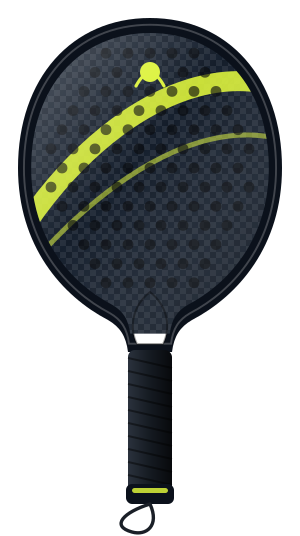
Lobwell Tor
Round 3K carbon racket for your first year and well beyond it
- Round
- 3K carbon
- 355 to 365 g

Dunlop Pro Padel Balls (3 Ball Can)
Pressurised Dunlop padel ball, good value for weekly games.
- Dunlop
£4.49
Protect the frame
Wall play means your racket will sooner or later scrape the glass or the turf on low balls. A strip of frame protector tape over the top of the head takes the scuffs instead of the paint and carbon. Our guide to the padel racket protector explains fitting, and the tape is in the padel accessories range.

Lobwell Frame Protector Tape
Clear tape that saves the frame from wall and floor scrapes
- Lobwell
- 2 colours
Questions people ask
Can you hit the ball off your own wall in padel?
Yes. After the ball bounces on your floor, it can hit your walls and you can still play it. You can also hit it into your own wall so it goes over the net.
Is a ball off the mesh still in play?
Yes, if it bounced on your floor first. It just bounces unpredictably.
How far from the back wall should I stand?
About one and a half metres in your ready position, so you have room to let the ball come off the glass to you.
Sources
Keep reading
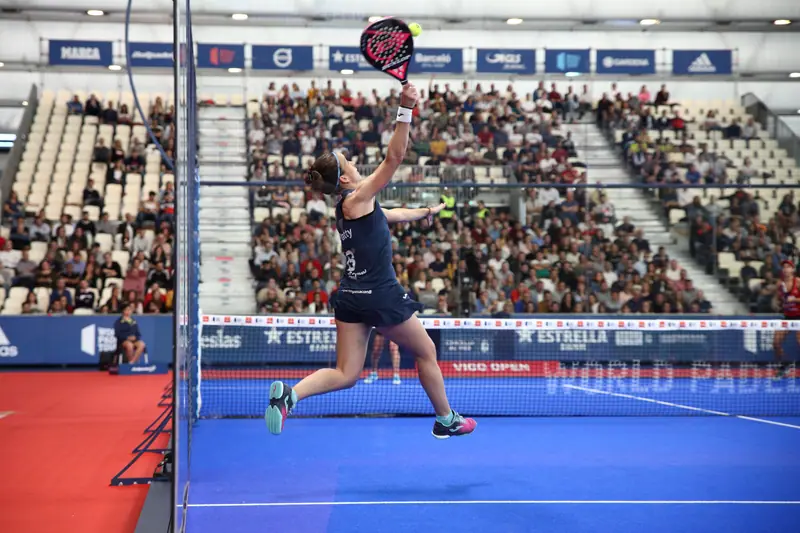
 GuidePadel shots explained: the 16 strokes you will hear about, and when to play eachThe core padel shots are the groundstroke, the volley, the lob, the bandeja (a controlled sliced overhead), the vibora (a faster, more side spun overhead), the smash, the chiquita (a soft, low ball to the feet of net players) and the back glass return.
 GuideHow to play padel: the serve, the walls and the first ralliesTo play padel, two pairs face each other on a 10 by 20 metre walled court.
 GuidePadel court size: every dimension in metres, from the net to the roofA padel court is 10 metres wide and 20 metres long, measured inside the walls, with a 0.5% tolerance.
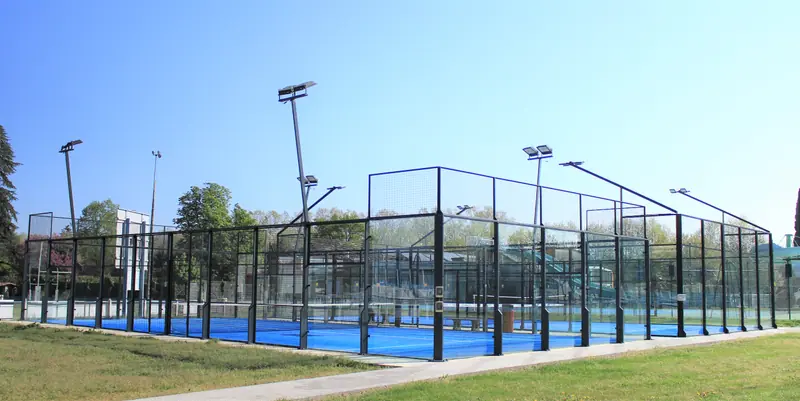 GuidePadel racket protector tape: why it is worth it and how to fit it neatlyA padel racket protector is a strip of tough, clear or coloured film that you stick over the top of the frame, where most damage happens when the racket scrapes the glass or the turf.
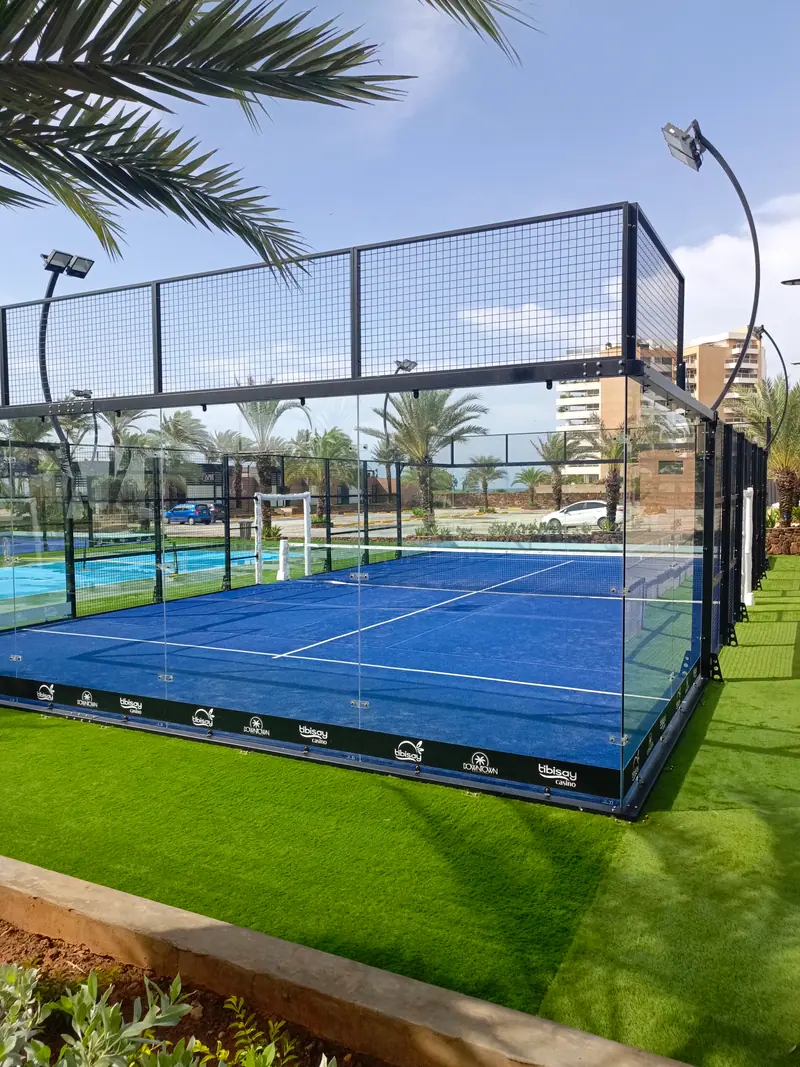 GuidePadel doubles tactics: positioning, the net, the lob and the middleThe core padel tactic is simple: the pair at the net usually wins the point, so get both players to the net together and use lobs to push opponents back when they hold it.