Round vs teardrop vs diamond: which padel racket shape wins, shot by shot
By the Lobwell Padel team. Updated 1 November 2026.
Short answer: Round rackets win on control, forgiveness and speed at the net; diamond rackets win on overhead power; teardrops sit in between and are the most common choice for intermediate players. If you are in your first year or mostly defend, choose round. If you play twice a week and want more on overheads, choose teardrop. Choose diamond only if your smash already wins you points.

The short verdict
| Round | Teardrop | Diamond | |
|---|---|---|---|
| Sweet spot | Large, central, low | Medium, slightly higher | Small, high |
| Balance | Low (head light) | Even | High (head heavy) |
| Control | Best | Good | Fair |
| Overhead power | Fair | Good | Best |
| Forgiveness | Best | Good | Lowest |
| Speed at the net | Fastest | Medium | Slowest |
| Arm load | Lowest | Medium | Highest |
| Typical player | Beginner to improver, right side builder | Improver to intermediate | Advanced, left side finisher |
Shot by shot: where each shape wins
Shapes do not win or lose overall; they win particular shots. Looking at the shots you play most is the quickest way to decide.
| Shot | Round | Teardrop | Diamond | Why |
|---|---|---|---|---|
| Lob from the back | Best | Good | Fair | Central sweet spot and soft response give depth |
| Reflex volley at the net | Best | Good | Fair | Head light racket gets in front of the ball faster |
| Ball off the back glass | Best | Good | Fair | Mishits low on the face still clear the net |
| Bandeja | Good | Best | Good | Teardrop combines reach and control |
| Vibora | Fair | Good | Best | Higher mass at contact adds bite |
| Flat smash (por tres) | Fair | Good | Best | High balance and high sweet spot carry pace |
| Chiquita | Best | Good | Fair | Fine touch needs a forgiving face |

Round: the case for
A round head has its widest point around the middle of the face, so the sweet spot is large and close to your hand. That suits how most club points are played: lobs, low balls, blocks and returns off the glass, many of them struck slightly off centre while you are moving. The low balance makes the racket feel lighter than its weight and quick to bring back to the ready position.
The case against is power on overheads. A round racket rewards a well placed bandeja far more than a big smash. If most of your points end with you smashing, you will feel the limit. Browse round padel rackets.
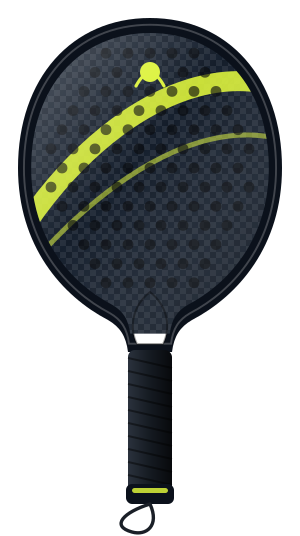
Lobwell Tor
Round 3K carbon racket for your first year and well beyond it
- Round
- 3K carbon
- 355 to 365 g
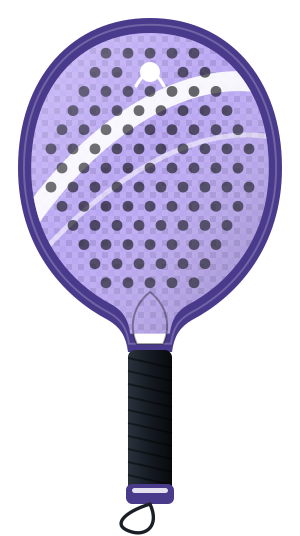
Teardrop: the case for
A teardrop widens towards the top and narrows gently at the throat, so the sweet spot moves up a little and the balance moves towards even. You gain reach and more pace on overheads without giving up much forgiveness. That is why the teardrop is the natural second racket, and why many intermediate and some advanced players never leave it.
The case against: it does nothing perfectly. A pure defender will prefer a round racket and a pure finisher a diamond. But for players who switch sides in americanos or do a bit of everything, that balance is the point. See teardrop padel rackets.
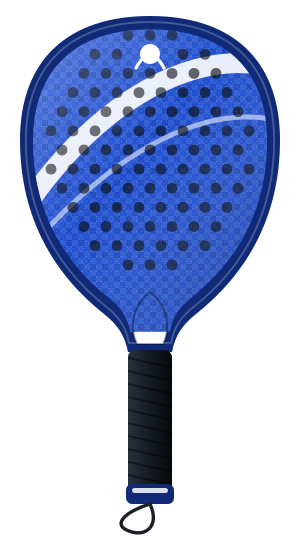
Lobwell Ridge
Teardrop 3K carbon racket for players moving off a round head
- Teardrop
- 3K carbon
- 360 to 370 g
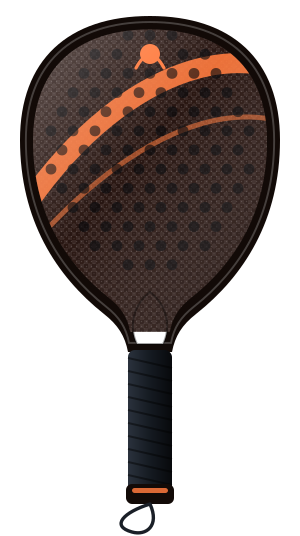

Diamond: the case for
A diamond's widest part sits high on the face and its balance is head heavy, so more mass is moving where you strike overheads. In the hands of a player who gets under the ball and swings fast, that means heavier viboras and smashes that leave the court. Many attacking left side players use one.
The case against is everything else. The smaller, higher sweet spot punishes low contact on balls off the glass, the head heavy feel is slower at the net, and the extra mass puts more load through the arm over a long session. See diamond padel rackets.
Choose by level and side
- 1First year, or once a week
Round. You will win more points with depth and consistency.
- 2Twice a week, comfortable off the glass
Teardrop, starting with one that stays close to round.
- 3Right side builder at any level
Round or teardrop. Your job is to set up points.
- 4Left side finisher with a reliable smash
Teardrop with a slightly high balance, or diamond.
- 5Arm discomfort or long sessions
Round, and consider a lighter racket.
What the shape cannot change
Shape sets where the sweet spot sits and how the weight is spread, but it does not decide everything. Two teardrops can play very differently if one has a soft EVA core and a 3K face and the other a hard core and 18K carbon. A round racket with a stiff face can feel firmer than a teardrop with a soft one. So once you have chosen a shape, check the core and face before you buy, and read them as a set rather than one at a time.
The same goes for weight. A heavy round racket can tire the arm as much as a light diamond, even though the round one is head light. Shape first, then core and face, then weight is the order that saves most players from buying twice.
Moving between shapes
Step one shape at a time. Going from round to teardrop feels natural within a session or two. Going from round straight to diamond often feels like learning again, because the sweet spot has moved up the face and the racket arrives later at the net. In our range, Tor to Ridge is the gentlest step, Ridge to Arc adds precision, and Crag is the last step for strong attackers.
For the theory behind shape, read padel racket shapes explained. For the specs that travel with each shape, see padel racket balance. Or let the racket finder choose.
Questions people ask
Is a round or teardrop padel racket better?
Round is better for control, forgiveness and learning. Teardrop is better if you want more on overheads while keeping a reasonable sweet spot.
Is a diamond padel racket good for beginners?
No. Its small, high sweet spot and head heavy balance make it hard to control while learning the walls.
Which racket shape do most club players use?
Most club players are best served by round or teardrop rackets; diamonds suit a smaller group of advanced attackers.
Does shape matter more than weight?
Shape usually matters more, because it sets the sweet spot and the balance, which change how heavy the racket feels.
Which shape is best for a left side player?
Many attacking left side players choose a diamond or a teardrop with a slightly high balance for extra pace on overheads. A defensive left side player may still prefer a teardrop.
Sources
Keep reading
 GuidePadel racket shapes explained: round, teardrop, diamond and what each does to the ballPadel rackets come in three main shapes.
 GuidePadel racket balance: head light, even or head heavy, and how it changes your gameBalance is where a padel racket's weight sits along its length.
 Buying guideThe best padel rackets for control: specs for defenders, builders and right side playersA control padel racket has a round head, a low (head light) balance, a soft to medium EVA core and a 3K carbon or glass fibre face, usually at 340 to 365 g.
 Buying guideThe best padel rackets for power: the specs behind a heavy smash, and who should use themA power padel racket combines a diamond or high teardrop head, a high (head heavy) balance, a hard EVA core and a stiff 12K or 18K carbon face, usually at 365 to 375 g.
 Buying guideThe best padel rackets for intermediate players: when to move up and what to move toMost intermediate padel players suit a teardrop racket of 360 to 370 g with a medium EVA core, an even balance and a 3K or 12K carbon face.