The best padel rackets for intermediate players: when to move up and what to move to
By the Lobwell Padel team. Updated 1 November 2026.
Short answer: Most intermediate padel players suit a teardrop racket of 360 to 370 g with a medium EVA core, an even balance and a 3K or 12K carbon face. That adds pace and precision on overheads without the small sweet spot of a diamond. In our range, Ridge (£89) is the step up from a round racket, Arc (£109) suits established intermediates, and Crag (£149) is for strong players who finish points at the net.

Are you an intermediate player?
Level in padel is less about how long you have played and more about what you can do on purpose. You are probably intermediate if most of these are true: you let deep balls come off the back glass rather than lunging at them, you play bandejas to keep the net instead of smashing everything, you and your partner move together, and you play at least twice a week.
At that point, a soft, round beginner racket can start to feel a little too forgiving: your overheads lack bite, and attacking volleys float. That is the moment to move up.
- You choose when to play off the glass.
- You have a reliable bandeja and are learning the vibora.
- You play two or more times a week.
- Your round racket feels soft on hard hit volleys and smashes.
What to look for in an intermediate racket
| Spec | Look for | Why |
|---|---|---|
| Shape | Teardrop | Slightly higher sweet spot for overheads, still forgiving |
| Weight | 360 to 370 g | More stability and drive |
| Balance | Even, or slightly high | Adds momentum without hurting manoeuvrability too much |
| Core | Medium EVA | More bite on full swings, some help on slow balls |
| Face | 3K or 12K carbon | Firmer, more precise strike |
| Surface | Lightly to fully textured | Grip on slice for bandeja and vibora |

The step up from round: Ridge
Ridge (£89) is designed for the transition. It is a teardrop, but one that stays close to a round racket in feel: even balance, a medium EVA core and a lightly textured 3K carbon face. You gain reach and a little more pace on overheads, and the textured face helps your bandeja grip, but mishits are still forgiven. If you are coming from Tor or another round, soft racket, Ridge will feel familiar within a session or two.
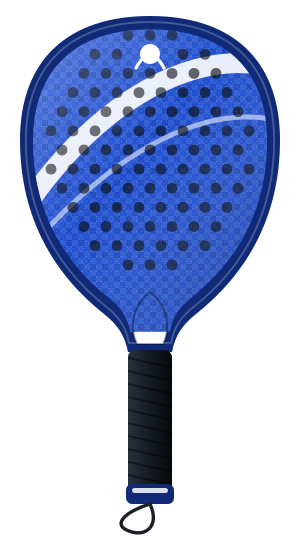
Lobwell Ridge
Teardrop 3K carbon racket for players moving off a round head
- Teardrop
- 3K carbon
- 360 to 370 g
For established intermediates: Arc
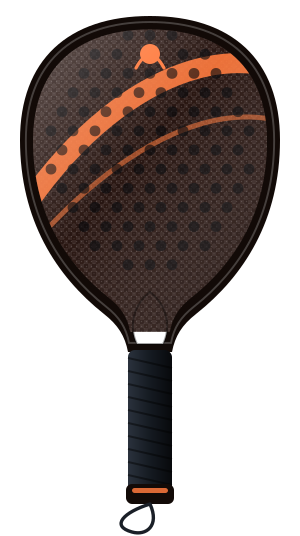
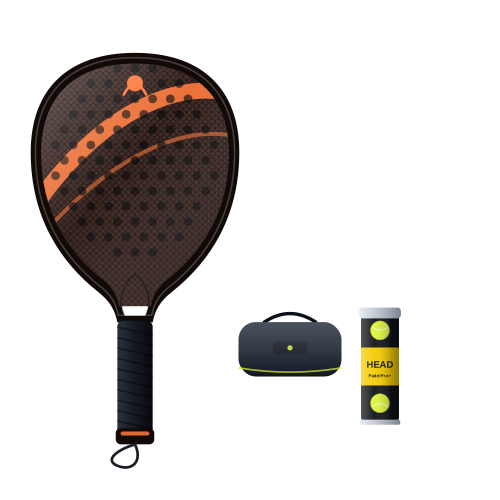
Arc (£109) is firmer and more precise. Its 12K carbon face has a tighter weave than 3K, so the ball leaves the racket exactly where you point it. The sand textured surface gives real grip on slice and kick serves, and the even to slightly high balance adds weight to overheads. It rewards a full swing and clean technique, and it is less forgiving than Ridge on balls caught near the frame. Choose it if you play several times a week and can already place your bandeja. The Upgrade Kit at £169 pairs Arc with the Tour bag and two tubes of Pro+ balls.
For strong left side players: Crag
Some players move from intermediate to advanced through their overhead. If you take the left side, your smash is a genuine weapon and you want more from it, Crag (£149) puts a high balance, hard EVA core and 18K carbon face behind every overhead. Be honest about it, though: Crag punishes late contact, and most intermediates will win more games with Arc or Ridge. See best padel rackets for power.
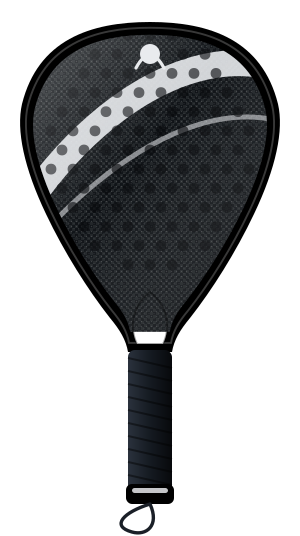
Ridge, Arc and Crag compared
| Ridge | Arc | Crag | |
|---|---|---|---|
| Price | £89 | £109 | £149 |
| Shape | Teardrop | Teardrop | Diamond |
| Weight | 360 to 370 g | 360 to 370 g | 365 to 375 g |
| Balance | Even | Even to slightly high | High |
| Core | Medium EVA | Medium EVA | Hard EVA |
| Face | 3K carbon | 12K carbon | 18K carbon |
| Surface | Lightly textured | Rough | Rough |
| Choose if | Moving off a round racket | Settled intermediate, wants precision | Strong smasher, left side |
What a new racket will not fix
A stiffer racket amplifies what you already do. If your bandeja is struck cleanly but floats a little, a teardrop with a firmer face will sharpen it. If your bandeja is late because your feet are slow to get under the ball, a new racket will make that miss bigger, not smaller. The same goes for positioning: no racket helps a pair who stand on the service line.
So before you upgrade, it is worth one honest look at where you lose points. If most errors come from footwork and court position, a few coached sessions or an hour of drilling with your partner will do more than a new racket. If you are consistently in position and the ball is not doing what you ask, that is when the racket is the limit.
Making the switch
Give a new racket a few sessions before judging it. A firmer core and face will feel harder at first, and a higher sweet spot means you may catch some balls low on the face until you adjust. Many players keep their old round racket as a spare for social games and use the new one for leagues. The intermediate padel rackets range lists these options, the teardrop padel rackets page shows the shape on its own, and 3K vs 12K vs 18K carbon explains the face materials.
Questions people ask
What racket shape is best for intermediate padel players?
A teardrop. It adds pace on overheads while keeping more forgiveness than a diamond.
When should I upgrade my padel racket?
When you play twice a week or more, choose your wall shots on purpose and your round racket feels soft on volleys and overheads.
Is 12K carbon better than 3K for intermediates?
12K is stiffer and more precise, which suits players with a clean, full swing. 3K is more forgiving and suits players moving up from round rackets.
Should an intermediate player use a diamond racket?
Only if they have strong overhead technique and play an attacking left side role. Most intermediates do better with a teardrop.
Is a heavier racket better for intermediate players?
Slightly heavier, around 360 to 370 g, adds stability. Going above that only helps strong players with fast swings.
Sources
Keep reading
 Buying guideThe best padel rackets for power: the specs behind a heavy smash, and who should use themA power padel racket combines a diamond or high teardrop head, a high (head heavy) balance, a hard EVA core and a stiff 12K or 18K carbon face, usually at 365 to 375 g.
 Comparison3K vs 12K vs 18K carbon: what the numbers mean on a padel racketThe K number is how many thousand carbon filaments are bundled into each strand of the weave: 3K is 3,000, 12K is 12,000 and 18K is 18,000.
 ComparisonRound vs teardrop vs diamond: which padel racket shape wins, shot by shotRound rackets win on control, forgiveness and speed at the net; diamond rackets win on overhead power; teardrops sit in between and are the most common choice for intermediate players.
 GuideWhen to replace a padel racket: seven signs it has had its dayReplace a padel racket when the frame is cracked through, the face is lifting from the core, or the racket has lost so much liveliness that your lobs land short and it sounds dull.
 Buying guideThe best padel rackets for 2026: what actually matters, and the right racket for each levelThe best padel racket is the one that matches your level: a round, soft cored racket of 340 to 365 g for beginners and improvers, a teardrop of 360 to 370 g with a medium core for intermediates, and a diamond with a hard core and high balance for advanced attackers.