3K vs 12K vs 18K carbon: what the numbers mean on a padel racket
By the Lobwell Padel team. Updated 1 November 2026.
Short answer: The K number is how many thousand carbon filaments are bundled into each strand of the weave: 3K is 3,000, 12K is 12,000 and 18K is 18,000. Higher numbers generally make a tighter, stiffer face, which gives a firmer, more precise strike but less help on slow balls. 3K suits most beginner to improver club players, 12K suits intermediates with a full swing, and 18K suits advanced players who hit fast and clean.
What the K actually means
Carbon fibre comes as extremely fine filaments, which are bundled into strands, or tows, and then woven into a cloth. The K tells you how many thousand filaments are in each strand. A 3K cloth uses strands of 3,000 filaments, giving a fine, tight looking weave. A 12K or 18K cloth uses thicker strands of 12,000 or 18,000 filaments, giving a bolder, larger check pattern.
In padel rackets, higher K faces are generally made to feel stiffer. That is partly the weave and partly how manufacturers build and laminate the face around it, so the K number is a guide to the feel a brand is aiming for rather than an exact stiffness measurement.
The comparison
| 3K | 12K | 18K | |
|---|---|---|---|
| Weave look | Fine, tight | Larger check | Largest check |
| Stiffness | Lowest of the three | Medium to high | Highest |
| Feel | Crisp but forgiving | Firm and precise | Very firm, direct |
| Help on slow balls | Most | Less | Least |
| Precision at speed | Good | Better | Best |
| Comfort | Highest | Medium | Lowest |
| Suits | Beginners to improvers | Intermediates | Advanced |
| Lobwell racket | Tor, Lark, Ridge | Arc | Crag |
3K: the club player's carbon
3K carbon is the most common carbon face on rackets for newer and improving players, and for good reason. It is firmer and more precise than glass fibre and keeps its feel longer, but it still flexes enough to help gentle shots. Paired with a soft EVA core, as on Tor and Lark, it gives clean volleys without a harsh feel. Paired with medium EVA, as on Ridge, it becomes a capable all rounder for improvers.
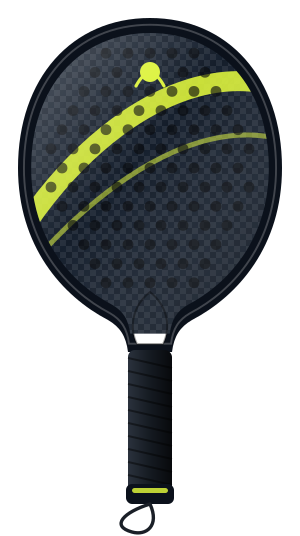
Lobwell Tor
Round 3K carbon racket for your first year and well beyond it
- Round
- 3K carbon
- 355 to 365 g
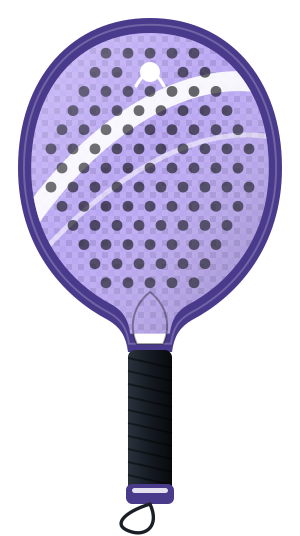
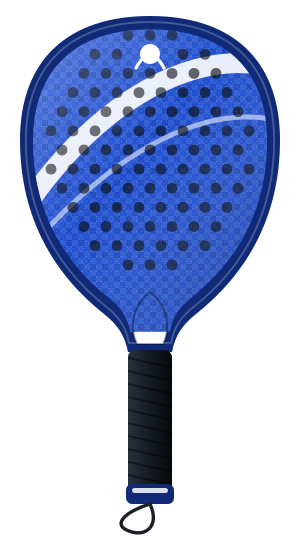
Lobwell Ridge
Teardrop 3K carbon racket for players moving off a round head
- Teardrop
- 3K carbon
- 360 to 370 g
12K: precision for intermediates
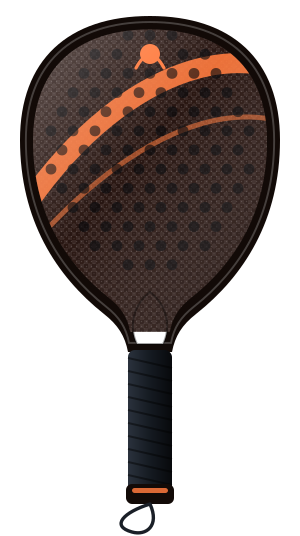
A 12K face is stiffer, so the ball comes off with a more direct, controlled response. For players who swing fully and hit cleanly, that means attacking volleys and bandejas go exactly where they aim. For players who rely on the racket to help slow shots, it means more work. Arc pairs 12K faces with medium EVA, a teardrop head and a sand textured surface: a combination for settled intermediates who now play shots on purpose.
18K: stiff and fast
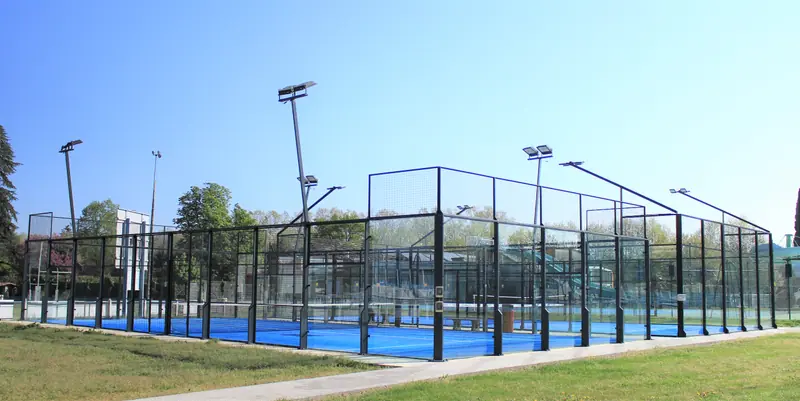
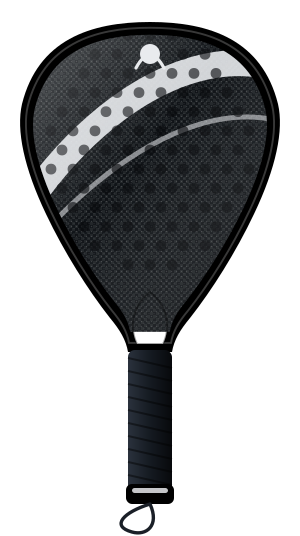
An 18K face is the stiffest of the three. It suits advanced players whose swings are fast enough to load the racket, typically paired with a hard core and a diamond head. The strike is very direct, with little give, and overheads carry real pace. On a slow lob the face offers little help, and the racket transmits more of each impact. Crag pairs 18K carbon with hard EVA and a high balance for attacking left side players.
More K is not automatically better
Higher K faces usually cost more and appear on more expensive rackets, which leads people to assume they are better. They are better for the players they are designed for and worse for everyone else. A stiff 18K face on a beginner's racket makes the first months harder: less depth on lobs, less forgiveness off the glass and a firmer feel on mishits.
The core matters just as much. A 12K face over soft EVA feels very different from 12K over hard EVA. Always read face and core together. The core side of the story is in soft vs hard EVA.
Our racket prices follow the weave. The 3K rackets run from £79 (Tor and Lark) to £89 (Ridge), the 12K Arc is £109 and the 18K Crag is £149. Part of that gap is the carbon itself and part is the rest of the build: Arc and Crag also add textured faces and firmer cores. For most players the right question is not which weave they can afford but which weave their swing can use.
Surface finish often comes with the weave
Higher K faces in many ranges are paired with rough, sand textured finishes, which is why 12K and 18K rackets are often described as spin rackets. The texture, not the weave, is what grips the ball on a bandeja or vibora. In our range, the 3K Tor and Lark are smooth, the 3K Ridge is lightly textured, and the 12K Arc and 18K Crag are rough.
The FIP rules allow faces to be smooth or rough as long as they are flat. A rough finish wears down over months of play, so its extra grip fades, while the stiffness of the carbon underneath stays much the same. If spin is what you want, a textured 3K face can give you some of it without the firmer strike of a stiffer weave.
Which should you choose?
If you are choosing between glass fibre and carbon in the first place, start with carbon vs fibreglass. Browse carbon padel rackets, or read padel racket materials for how every layer fits together.
- Playing once or twice a week, still learning the walls: 3K, or glass fibre if comfort comes first.
- Twice a week or more, confident bandeja, want more precision: 12K.
- Advanced, fast overheads, playing several times a week: 18K.
Questions people ask
What does 3K mean on a padel racket?
The face uses carbon strands of 3,000 filaments each. 3K faces are firm but still forgiving.
Is 18K carbon better than 12K?
It is stiffer, which suits advanced players with fast swings. For most intermediates, 12K gives a better balance of precision and help.
Is 3K carbon good for beginners?
Yes. Paired with a soft EVA core, a 3K face is forgiving while feeling crisper than glass fibre.
Do higher K rackets last longer?
Not necessarily. All carbon faces tend to hold their feel longer than glass fibre; durability depends on construction and care.
Does the K number affect weight?
Not much on its own. Racket weight depends mostly on the core, frame and overall build, so compare stated weights directly.
Sources
Keep reading
 ComparisonCarbon vs fibreglass padel rackets: feel, power, durability and who should choose whichFibreglass (glass fibre) faces flex more, so they feel soft, springy and forgiving, which suits beginners and occasional players.
 ComparisonSoft vs hard EVA: how the core changes a padel racket, and which one you should playSoft EVA cores compress easily and give the ball a lively push on slow and medium shots, which helps lobs, blocks and defence and feels comfortable.
 GuideWhat are padel rackets made of? Faces, frames, cores and finishesA padel racket is a solid sandwich: two faces of glass fibre or carbon fibre over a foam core, usually EVA rubber, held in a tubular frame of carbon or glass fibre.
 Buying guideThe best padel rackets for intermediate players: when to move up and what to move toMost intermediate padel players suit a teardrop racket of 360 to 370 g with a medium EVA core, an even balance and a 3K or 12K carbon face.
 Buying guideThe best padel rackets for power: the specs behind a heavy smash, and who should use themA power padel racket combines a diamond or high teardrop head, a high (head heavy) balance, a hard EVA core and a stiff 12K or 18K carbon face, usually at 365 to 375 g.