Soft vs hard EVA: how the core changes a padel racket, and which one you should play
By the Lobwell Padel team. Updated 1 November 2026.
Short answer: Soft EVA cores compress easily and give the ball a lively push on slow and medium shots, which helps lobs, blocks and defence and feels comfortable. Hard EVA cores barely compress on slow shots, so they feel firm, but on fast swings they return more energy and more precision. Most club players are better off with soft or medium EVA; hard EVA suits advanced players with fast, clean swings.

The quick comparison
| Soft EVA | Medium EVA | Hard EVA | |
|---|---|---|---|
| Slow ball rebound | High, lively | Medium | Low, firm |
| Fast swing power | Medium | Good | Highest |
| Control at speed | Lower | Good | Highest |
| Comfort | Highest | Medium | Lowest |
| In cold weather | Stays playable | Firms up | Can feel very hard |
| Suits | Beginners, improvers, defenders | Improvers, intermediates | Advanced, fast swingers |
| Lobwell rackets | Fen, Tor, Lark | Ridge, Arc | Crag |
How a core works
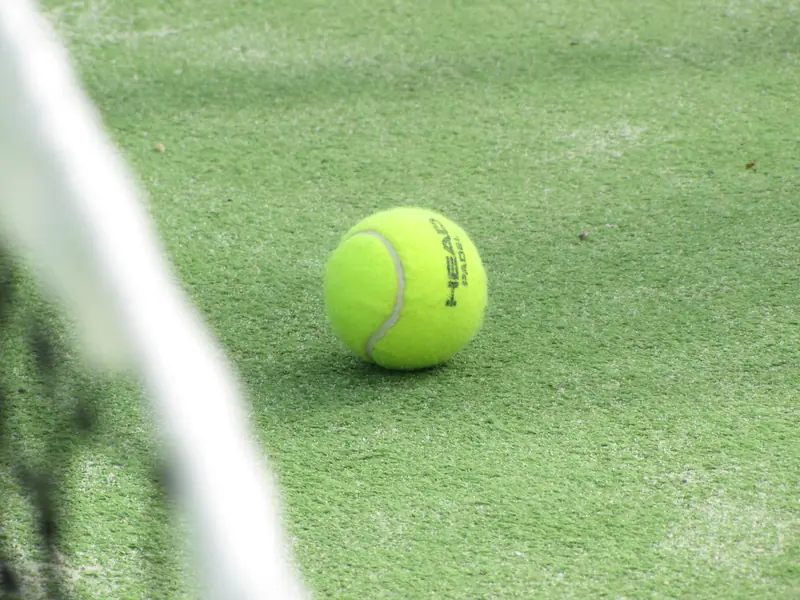
EVA is a rubber foam. When the ball strikes the racket, the core compresses and then springs back. A soft EVA compresses easily even on a gentle shot, so the ball sinks into the face a little and is pushed back out. That push is free depth: your lob travels further than your swing alone would send it. A hard EVA needs a lot of force before it compresses, so on gentle shots it behaves almost like a solid board. On a full speed smash, though, it compresses and returns that energy quickly, with less of the mushy feel a soft core can have at high speed.
Where soft EVA wins
Most padel shots are played at slow or medium pace, so soft cores help on most of the shots most players hit. That is why our beginner and improver rackets, Fen, Tor and Lark, all use soft EVA.
- Lobs from the back: more depth with a compact swing.
- Balls off the glass: rescues mishits and late contact.
- Block volleys: absorbs pace and sends the ball back deep.
- Long sessions: kinder feel over 90 minutes.
- Cold outdoor courts: stays livelier when temperatures drop.
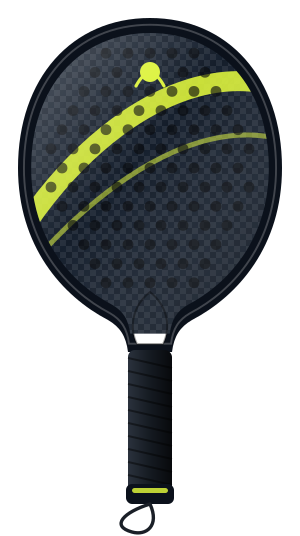
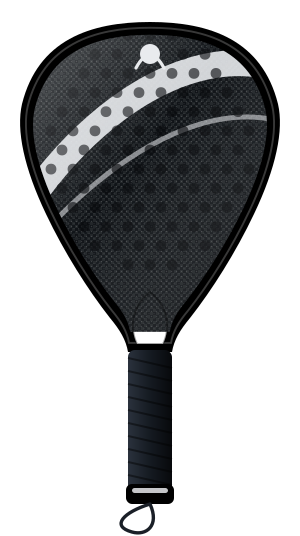
Lobwell Tor
Round 3K carbon racket for your first year and well beyond it
- Round
- 3K carbon
- 355 to 365 g
Where hard EVA wins
The catch is that you only get these gains if you swing fast and hit cleanly. A slow or late swing on a hard core just feels dead. Our Crag pairs a hard EVA core with a diamond head and 18K carbon for exactly that player.
- Flat smashes: more energy return and a better chance of the ball leaving the court.
- Viboras and attacking volleys: the ball goes where you aim, with less wobble from the core.
- Fast exchanges at the net: a predictable, firm response when the ball arrives hard.
Medium EVA: the middle path
Medium cores are what most intermediate rackets use. They give enough help on lobs and blocks that you are not working for every ball, and enough firmness on attacking shots that the ball does not feel like it sinks into the face. Ridge and Arc both use medium EVA. If you play twice a week and your round, soft racket starts to feel mushy on volleys and smashes, medium is the logical next step.
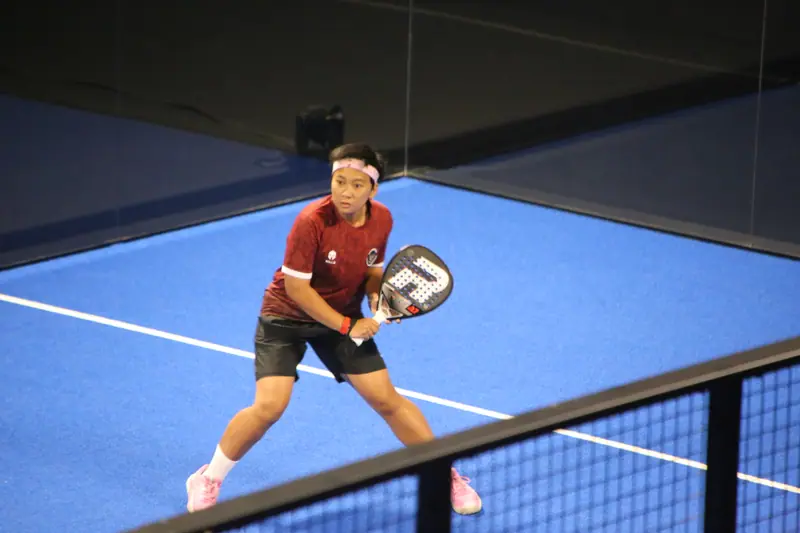
The quickest way to feel the gap between cores is to borrow. At a club night or americano, ask to hit a few balls with a partner's racket and pay attention to two shots: a gentle lob from the back and a firm volley at the net. A soft core sends the lob deep with almost no effort and absorbs the volley. A hard core needs a fuller swing for the same lob but punches the volley back with more bite. Ten balls each is enough to tell which suits the way you play.
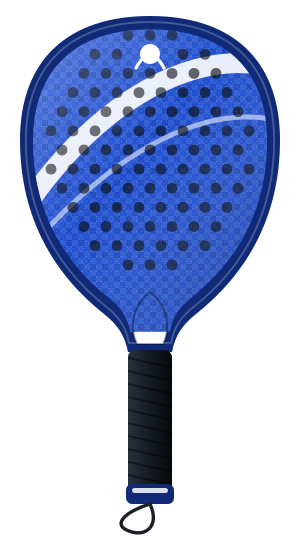
Lobwell Ridge
Teardrop 3K carbon racket for players moving off a round head
- Teardrop
- 3K carbon
- 360 to 370 g
UK conditions change the answer
EVA stiffens as it gets colder. On a frosty outdoor court a medium core can feel hard and a hard core can feel like a plank, while on a warm indoor court in summer a soft core can feel almost too lively. Only about 42.5% of the venues in our UK court data have an indoor court, so most players spend at least part of the year outdoors. If you play outdoors through the winter, lean one step softer than you would indoors.
How soft and hard cores age
Cores lose liveliness as the foam is compressed thousands of times. Soft EVA compresses more on each hit, so it tends to show wear sooner: lobs gradually fall shorter and the racket sounds duller. Hard EVA compresses less and usually holds its feel longer, though it can still go flat with heavy use.
That is not a reason to avoid soft cores. For a weekly player, a soft core still gives a long run of useful sessions, and the help it gives along the way is worth more than an extra few months of life. Heat speeds up the process for any core, so keep rackets out of hot cars. Our guide on when to replace a padel racket lists the signs a core has gone.
Which should you choose?
For more on cores and how they age, read the padel racket core guide. For face materials, which interact with the core, see carbon vs fibreglass. Compare all our cores in all padel rackets, or ask the racket finder.
- 1First year, or once a week
Soft EVA.
- 2Twice a week, confident off the glass
Soft or medium EVA.
- 3Intermediate with a full swing
Medium EVA.
- 4Advanced attacker with fast overheads
Hard EVA.
- 5Lots of winter outdoor play
One step softer than your indoor choice.
Questions people ask
Is soft or hard EVA better for beginners?
Soft EVA. It adds depth to slow shots and forgives mishits, which is most of what a beginner hits.
Does a hard EVA padel racket give more power?
On fast swings, yes. On slow shots it gives less help than a soft core.
Is soft EVA more comfortable?
Generally yes. It absorbs more of the impact, which many players find kinder over long sessions.
Do brands use the same scale for soft and hard EVA?
No. The labels are not standardised, so one brand's medium may be another's soft.
Sources
Keep reading
 GuidePadel racket cores: what is inside your racket and why it decides the feelThe core is the foam slab inside a padel racket, usually EVA rubber, sitting between the two faces in a racket no thicker than 38 mm.
 ComparisonCarbon vs fibreglass padel rackets: feel, power, durability and who should choose whichFibreglass (glass fibre) faces flex more, so they feel soft, springy and forgiving, which suits beginners and occasional players.
 GuideWhat are padel rackets made of? Faces, frames, cores and finishesA padel racket is a solid sandwich: two faces of glass fibre or carbon fibre over a foam core, usually EVA rubber, held in a tubular frame of carbon or glass fibre.
 Buying guideThe best padel rackets for power: the specs behind a heavy smash, and who should use themA power padel racket combines a diamond or high teardrop head, a high (head heavy) balance, a hard EVA core and a stiff 12K or 18K carbon face, usually at 365 to 375 g.
 Buying guideThe best padel rackets for control: specs for defenders, builders and right side playersA control padel racket has a round head, a low (head light) balance, a soft to medium EVA core and a 3K carbon or glass fibre face, usually at 340 to 365 g.