Carbon vs fibreglass padel rackets: feel, power, durability and who should choose which
By the Lobwell Padel team. Updated 1 November 2026.
Short answer: Fibreglass (glass fibre) faces flex more, so they feel soft, springy and forgiving, which suits beginners and occasional players. Carbon faces are stiffer and lighter for their strength, so they feel crisper, place the ball more precisely and keep their feel for longer, which suits players who play weekly or more. In our range Fen (£59) is glass fibre and Tor (£79) is the same shape and core with 3K carbon faces.
The quick comparison
| Glass fibre | Carbon | |
|---|---|---|
| Flex | More | Less |
| Feel | Soft, springy | Firm, crisp |
| Help on slow balls | More | Less (depends on core) |
| Precision | Good | Better |
| Comfort | Higher | Medium to high with a soft core |
| Keeps its feel | Softens sooner | Holds its feel longer |
| Typical price | Lower | Higher |
| Suits | First months, occasional play | Weekly play and up |
Why the face material matters
A padel racket has no strings. When the ball hits, the face flexes a fraction and the foam core behind it compresses and springs back. The face material decides how much of that flex happens in the skin and how quickly it returns. Glass fibre bends more readily, so more of the work is done for you on gentle shots and the ball leaves the racket easily. Carbon resists bending, so the response is more direct and the ball goes closer to where the face points.
The core still matters a great deal. A carbon face over a soft EVA core can feel comfortable, while a carbon face over hard EVA feels firm. When comparing, keep the core the same, as with Fen and Tor.

A fair test: Fen vs Tor
Fen and Tor are a useful pair because they differ mainly in the face. Both are round, both use soft EVA, both have a low balance and similar weights. Fen uses glass fibre faces and a glass fibre and carbon frame; Tor uses 3K carbon faces and a tubular carbon frame.
On court, the difference shows on volleys and on how the racket ages. Fen feels softer and helps lobs travel with little effort. Tor feels a touch firmer, so volleys come off cleaner and with more direction, and the carbon face keeps its shape longer over months of play.
| Fen | Tor | |
|---|---|---|
| Face | Glass fibre | 3K carbon |
| Frame | Glass fibre and carbon | Tubular carbon |
| Core | Soft EVA | Soft EVA |
| Shape | Round | Round |
| Weight | 350 to 360 g | 355 to 365 g |
| Balance | Low | Low |
| Price | £59 | £79 |
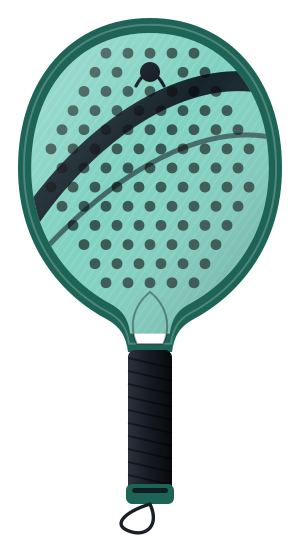
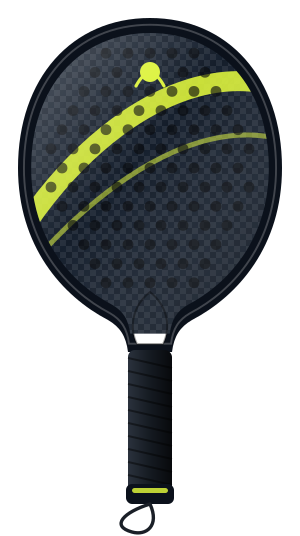
Lobwell Tor
Round 3K carbon racket for your first year and well beyond it
- Round
- 3K carbon
- 355 to 365 g
Durability
Both materials are bonded with resin and both can crack if the racket hits the glass hard enough. The difference is in how the feel changes over time. Glass fibre faces tend to soften with use, so a glass fibre racket that felt lively at first can feel noticeably softer after a season of regular play. Carbon faces hold their stiffness better, so the racket feels more like it did on day one for longer.
For an occasional player, that softening may never matter. For someone on court twice a week, it is a good reason to choose carbon. Either way, frame tape and a thermal cover help; see padel racket care.

Comfort and the cold
Glass fibre's extra flex makes it the more comfortable choice for players who are new to racket sports or sensitive to vibration. On cold UK outdoor courts, every racket feels harder because EVA cores stiffen, and a glass fibre face takes a little of that edge off. A carbon face over a soft core is a good compromise for players who want precision without a harsh feel. If you have an existing arm problem, take advice from a professional before changing rackets.
Who should choose which
The carbon weaves are compared in 3K vs 12K vs 18K carbon. Browse carbon padel rackets or the beginner padel rackets, which include both materials.
- Glass fibre: first months of padel, playing once a week or less, buying for someone still trying the sport, comfort first.
- Carbon (3K): weekly players, improvers, anyone who wants cleaner volleys and a racket that keeps its feel.
- Stiffer carbon (12K, 18K): intermediate and advanced players with fast, clean swings.
Price and value
Carbon costs more to make, so carbon faced rackets sit higher in the price ladder. In our range the step from glass fibre to 3K carbon is £20, Fen at £59 against Tor at £79, with the same shape, core and balance. Whether that is worth it depends mostly on how often you play.
If you play once a fortnight, glass fibre will feel good for a long time and the softer response suits players who are still learning. If you play every week, the carbon face feels crisper from day one and holds that feel for longer, which spreads the extra £20 over many more sessions. For twice weekly players, carbon is usually the better buy.
What about hybrid frames?
Many rackets mix materials: a carbon frame with glass fibre faces, or glass fibre faces with carbon reinforcement. Fen's frame, for example, combines glass fibre and carbon. The face material has the biggest effect on feel, so judge a hybrid mainly by what the hitting surface is made of. For the full layer by layer breakdown, read padel racket materials.
Questions people ask
Is carbon or fibreglass better for a padel racket?
Neither for everyone. Fibreglass is softer and more forgiving; carbon is firmer, more precise and keeps its feel longer.
Are fibreglass padel rackets good for beginners?
Yes. Their flexible faces make slow shots travel easily and feel comfortable, which suits the first months.
Do carbon padel rackets last longer?
They usually hold their feel longer. Both materials can crack from hard knocks, so frame tape helps either way.
Why are carbon padel rackets more expensive?
Carbon fibre costs more to produce than glass fibre, and carbon faces are usually paired with carbon frames.
Can you tell carbon from fibreglass by looking?
Not reliably once a racket is painted. Check the stated face material in the specs.
Sources
Keep reading
 GuideWhat are padel rackets made of? Faces, frames, cores and finishesA padel racket is a solid sandwich: two faces of glass fibre or carbon fibre over a foam core, usually EVA rubber, held in a tubular frame of carbon or glass fibre.
 Comparison3K vs 12K vs 18K carbon: what the numbers mean on a padel racketThe K number is how many thousand carbon filaments are bundled into each strand of the weave: 3K is 3,000, 12K is 12,000 and 18K is 18,000.
 ComparisonSoft vs hard EVA: how the core changes a padel racket, and which one you should playSoft EVA cores compress easily and give the ball a lively push on slow and medium shots, which helps lobs, blocks and defence and feels comfortable.
 Buying guideThe best padel racket for beginners: the spec to look for after three sessions on a hire racketThe best padel racket for a beginner has a round head, a soft EVA core, a weight of about 340 to 365 g and a low (head light) balance.
 Buying guideThe best padel rackets under £100: where the value is, and what you give upUnder £100 you can buy a properly specified padel racket for beginners, improvers and many intermediates: round or teardrop heads, soft or medium EVA cores and 3K carbon faces.