The best padel racket for beginners: the spec to look for after three sessions on a hire racket
By the Lobwell Padel team. Updated 1 November 2026.
Short answer: The best padel racket for a beginner has a round head, a soft EVA core, a weight of about 340 to 365 g and a low (head light) balance. That combination gives the biggest sweet spot, adds depth to slow shots and is quick at the net. From our range, Tor (£79, 3K carbon) suits most beginners, Fen (£59, glass fibre) suits occasional players, and Lark (£79, about 340 g) suits lighter players.
The moment to buy your own
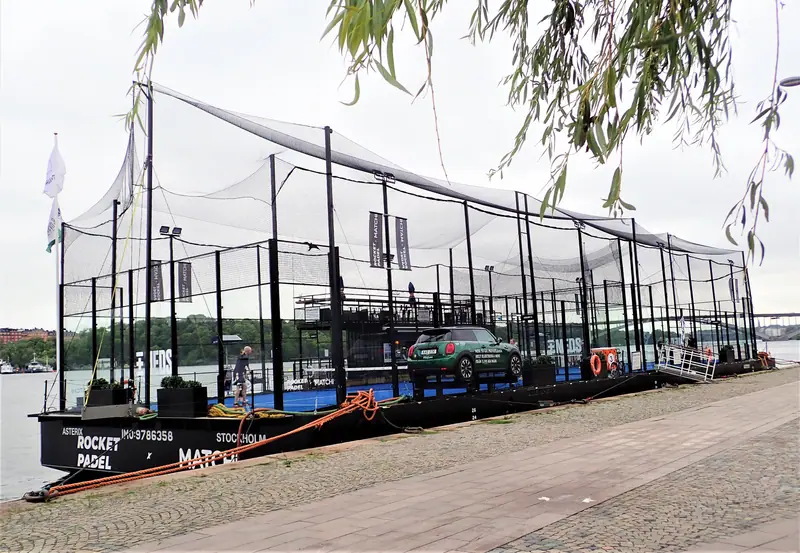
Most people buy their first racket after three or four sessions on a hire racket. By then you know you enjoy padel, and you have noticed that the hire racket is heavy, chipped, and hard as a plank. That last point matters more than you might think: many hire rackets are old, with cores that have gone dead and stiff, which makes the ball harder to control and lobs fall short.
A racket built for beginners fixes that. It does not need to be expensive, it needs the right shape and core.
What to look for
Avoid diamond rackets, hard cores and high balance for now. They are built for fast, clean swings and punish mishits, which is the opposite of what you need while learning the walls.
| Spec | Look for | Why |
|---|---|---|
| Shape | Round | Largest, most central sweet spot, where beginners hit the ball |
| Core | Soft EVA | Gives depth on lobs and slow balls without a big swing |
| Weight | 340 to 365 g | Stable enough to block, light enough for the second hour |
| Balance | Low (head light) | Quick at the net, easier on the wrist |
| Face | Glass fibre or 3K carbon | Forgiving; 3K is crisper and holds its feel longer |
| Surface | Smooth | Predictable while you learn to control the face |
| Price | About £55 to £95 | Enough for good materials without paying for pro stiffness |

Our pick for most beginners: Tor
Tor (£79) ticks every box in the table. The round head keeps the sweet spot central. The soft EVA core pushes the ball deep with a compact swing. The 3K carbon faces are a real step up from the glass fibre on hire rackets: slightly firmer, so volleys feel cleaner, and they keep their shape longer. It weighs 355 to 365 g with a low balance. Tor is the racket in our Starter Kit for that reason, and many players will happily keep it well into their second year.
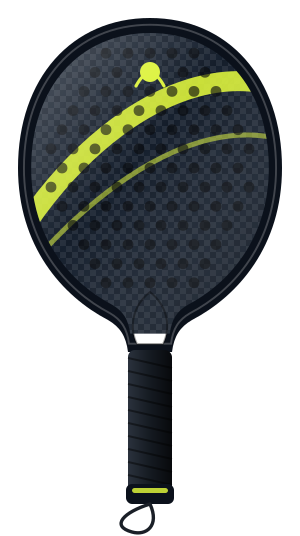
Lobwell Tor
Round 3K carbon racket for your first year and well beyond it
- Round
- 3K carbon
- 355 to 365 g
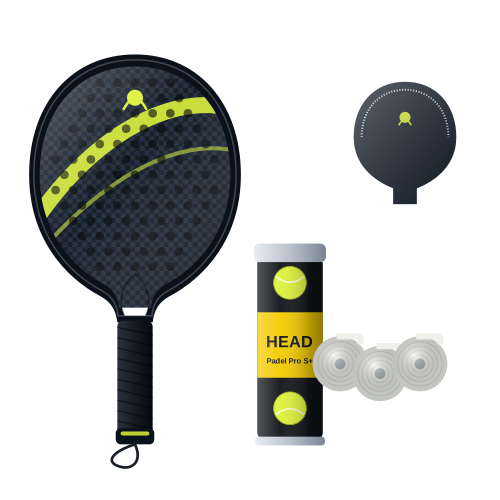
For occasional players and tight budgets: Fen
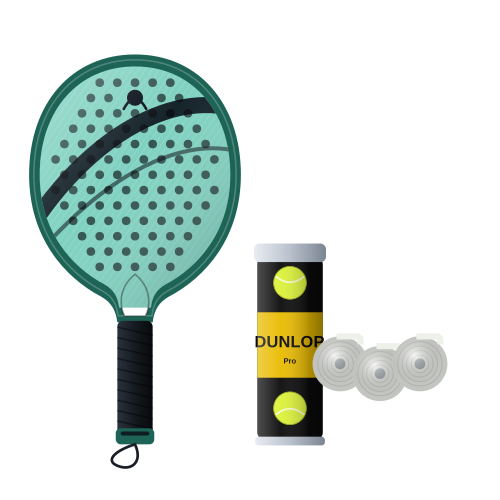
Fen (£59) is softer and more flexible than Tor because its faces are glass fibre rather than carbon. The ball leaves the racket easily and it is the most comfortable feel in our range. It weighs 350 to 360 g with a low balance. Choose Fen if you play once a week or less, if you are buying for a partner who is still deciding whether padel is for them, or if you want the lowest price racket that is not a toy. The First Racket Kit at £64 adds a tube of balls and three overgrips.
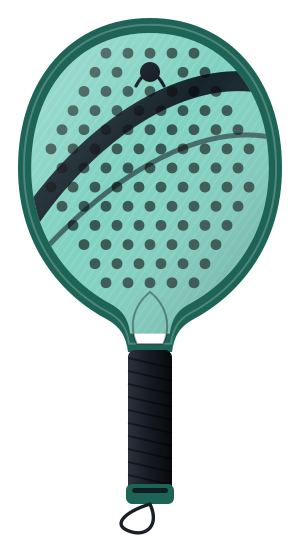

For lighter players: Lark
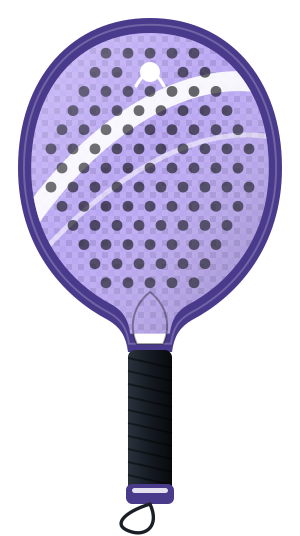
Lark (£79) takes the Tor recipe and trims it to about 335 to 345 g. That 20 g makes a real difference late in a long session and at the net, where a lighter racket reacts faster. It suits lighter adults, older juniors moving up, players returning to sport and anyone who finds Tor tiring. The trade-off is a little less weight behind smashes, which few beginners miss. See best lightweight padel rackets.
Beginner picks side by side
| Fen | Tor | Lark | |
|---|---|---|---|
| Price | £59 | £79 | £79 |
| Face | Glass fibre | 3K carbon | 3K carbon |
| Weight | 350 to 360 g | 355 to 365 g | 335 to 345 g |
| Core | Soft EVA | Soft EVA | Soft EVA |
| Feel | Softest, most flexible | Soft with a crisp strike | Soft, fastest to move |
| Choose if | Occasional play, lowest price | Weekly play, want to keep it | Lighter player, comfort first |
Getting the most from a first racket
Fit a strip of frame protector tape before your first session and a fresh overgrip once the factory one starts to shine. Keep the racket in a cover and out of the car between games, because heat softens the EVA core that makes a beginner racket forgiving in the first place.
Then give it time. A new racket with a livelier core than the hire racket you are used to can send a few lobs long in the first session. That is a good sign: it means the core is doing its job. Shorten the swing a touch and within an hour the extra depth starts to work for you, pushing opponents back instead of handing them easy smashes.
When a beginner racket is not the right choice
If you come from years of competitive tennis or squash, you will still be a beginner on the walls, so a round racket is still a sensible start. But if you progress quickly and play three or four times a week, you may want a teardrop within months. In that case, starting with Ridge, our teardrop for players moving off a round head, can save you buying twice. See best padel rackets for tennis players.
Browse all beginner padel rackets, or use the racket finder to get a single recommendation.
Questions people ask
What weight padel racket should a beginner use?
About 340 to 365 g. Lighter players and juniors moving up may prefer 335 to 345 g.
Should beginners use carbon or fibreglass rackets?
Both work. Glass fibre is softer and more forgiving; 3K carbon is slightly firmer, more precise and keeps its feel for longer.
Is a £60 padel racket good enough for a beginner?
Yes, if the spec is right: round head, soft core, sensible weight. Avoid very cheap rackets with unspecified foam and no stated weight.
How long will a beginner racket last?
For weekly play, commonly one to two years before the core feels noticeably flatter, longer with good care.
Should a beginner buy a padel racket or keep hiring?
Hiring is fine for the first three or four sessions. After that, your own racket with a fresh core and grip makes learning easier and usually pays for itself within a few months of hire fees.
Sources
Keep reading
 GuideHow to choose a padel racket: shape, weight, core and face in six decisionsChoose a padel racket by your level first, then shape, weight and core.
 Buying guideThe best padel rackets under £100: where the value is, and what you give upUnder £100 you can buy a properly specified padel racket for beginners, improvers and many intermediates: round or teardrop heads, soft or medium EVA cores and 3K carbon faces.
 Buying guideThe best lightweight padel rackets: who should go light, and how light is too lightA lightweight padel racket weighs roughly 335 to 350 g, against the usual 355 to 375 g, and is best for lighter players, older juniors, players returning to sport and anyone who tires late in a session.
 GuideYour first padel session: what to bring, what to expect and 10 tips from the first hourFor your first padel session, bring grippy trainers, sportswear, water and a friend or three: most venues hire rackets for a few pounds and sell balls at reception.
 Buying guideThe best padel starter kits: one player, two players, a family or an upgradeA good padel starter kit contains a round, soft cored racket of about 340 to 365 g, at least one tube of pressurised balls and a few overgrips; a thermal cover is a useful extra.