The best padel starter kits: one player, two players, a family or an upgrade
By the Lobwell Padel team. Updated 1 November 2026.
Short answer: A good padel starter kit contains a round, soft cored racket of about 340 to 365 g, at least one tube of pressurised balls and a few overgrips; a thermal cover is a useful extra. Our Starter Kit (£92) bundles the Tor racket, a tube of HEAD Pro S+ balls, three overgrips and a cover, saving £10.97 on the parts. There are also kits for two players (£169), a family of four (£209), a first racket on a budget (£69) and an upgrade (£169).
What a starter kit should include
A padel kit is only as good as the racket in it. Many starter sets pair a basic racket with a lot of extras to look generous, which is backwards: the racket is the item you will use every session for a year or more. So check its specs first. For a new player, that means a round head, a soft EVA core and a weight of 340 to 365 g. Then look for balls, which you need every session, overgrips, which you will change monthly, and a cover or bag to protect the racket.
Shoes are worth buying separately, because sizing matters and you may already have trainers that will do for the first few sessions.
| Item | Essential? | What to look for |
|---|---|---|
| Racket | Yes | Round, soft EVA, 340 to 365 g, low balance |
| Balls | Yes | At least one pressurised 3 ball tube |
| Overgrips | Yes | Two or three thin, tacky grips |
| Thermal cover | Very useful | Foil lined, padded |
| Frame tape | Useful | Clear protector strip for the top of the frame |
| Shoes | Soon | Herringbone sole, bought by size |
Our five kits compared
| Kit | Price | What is in it | Separate price | You save |
|---|---|---|---|---|
| First Racket Kit | £64 | Fen, Dunlop Pro tube, 3 overgrips | £69.48 | £5.48 |
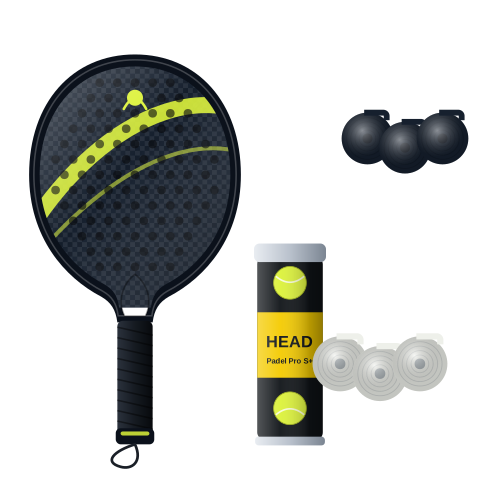
| Starter Kit | £92 | Tor, HEAD Pro S+ tube, 3 overgrips, thermal cover | £102.97 | £10.97 |
| Pair Kit | £169 | 2 Tor, 2 HEAD Pro S+ tubes, 6 overgrips | £179.96 | £10.96 |
| Family Kit | £209 | 2 Tor, 2 Pip Junior, 2 Dunlop Pro tubes | £244.98 | £35.98 |
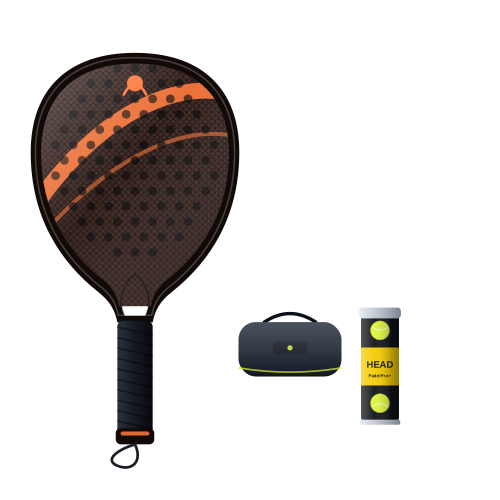
| Upgrade Kit | £169 | Arc, Tour bag, 2 HEAD Pro+ tubes | £188.98 | £19.98 |
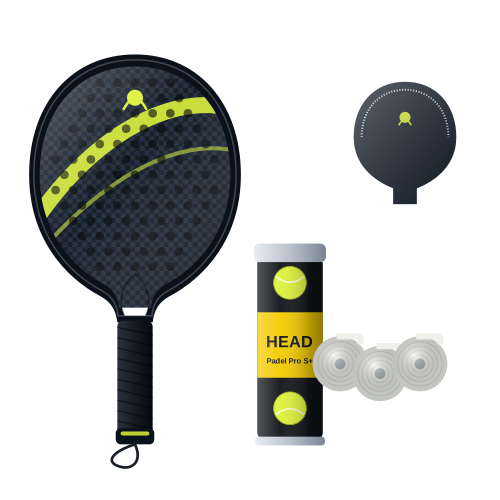
Best for one new player: Starter Kit
The Starter Kit (£92) is the one we would point most new players to. Tor is a round 3K carbon racket with a soft EVA core and a low balance, built for the first year and well beyond it. You choose the colour. The kit adds a tube of HEAD Padel Pro S+, a club ball with a slightly slower bounce, three white Tack overgrips and a foil lined thermal cover. That is everything you need to stop hiring, apart from shoes.
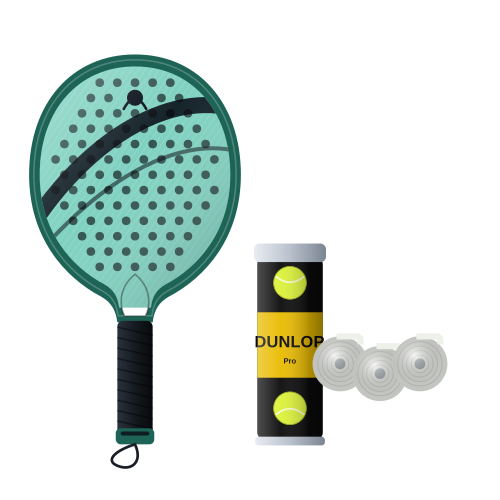
Best on a budget: First Racket Kit
The First Racket Kit (£64) is the lowest price way into your own racket. Fen has glass fibre faces that flex more than carbon, the softest feel in our range and a low balance, which suits players who play once a week or less, or partners still deciding whether padel is for them. A tube of Dunlop Pro balls and three overgrips complete it. The saving is £5.48, but the real point of this kit is simplicity.

Best for couples and doubles partners: Pair Kit
Padel is a doubles game, and many people start as a pair. The Pair Kit (£169) has two Tor rackets, each in the colour you choose, two tubes of HEAD Pro S+ and six overgrips. It saves £10.96 against buying the items separately and means both players start on the same, well specified racket.
Best for families: Family Kit
The Family Kit (£209) fills a court: two adult Tor rackets, two Pip Junior rackets of about 280 to 300 g for children of roughly 7 to 12, and two tubes of Dunlop Pro balls. It has the biggest saving of our kits at £35.98. A family of four sharing an off-peak court at the UK median of £28 an hour pays £7 each, as shown in our court price index. See junior padel rackets for when children should move up.

Best for your second racket: Upgrade Kit
The Upgrade Kit (£169) is for players moving up after a year or so: Arc, a teardrop with a 12K carbon face and a sand textured surface, the Tour bag with two thermal compartments to carry both your old and new racket, and two tubes of HEAD Pro+ match balls. It saves £19.98. See best intermediate padel rackets to check Arc is the right step.
Want to swap items or choose a different racket? The kit builder lets you put your own set together, and all bundles are listed on padel starter kits.
What to add to any kit
Two small extras round off any of these kits. Frame protector tape (£6.99) goes on before the first session, because the first scrape on the glass usually comes early. And once you play every week, court shoes make the biggest difference to how you move on sand: the Grip shoe (£69) has a herringbone sole and comes in UK sizes 4 to 12.
After that, the running costs are balls and grips. A weekly group gets through roughly one tube a month and one overgrip each a month, which is why the multi buy prices on ball tubes are worth knowing about.
Questions people ask
What do I need to start playing padel?
A racket, balls and grippy shoes. A starter kit adds overgrips and a cover so the racket lasts longer.
Is a padel starter kit worth it?
If the racket in it suits a beginner, yes. Check the racket's shape, core and weight before the extras.
Can I choose the racket colour in a kit?
Yes. Each racket in our kits comes in the colours listed for that racket, and you pick when you order.
Do starter kits include shoes?
Ours do not, because shoes need the right size. Our Grip shoe is sold separately in UK sizes 4 to 12.
Sources
Keep reading
 Buying guideThe best padel racket for beginners: the spec to look for after three sessions on a hire racketThe best padel racket for a beginner has a round head, a soft EVA core, a weight of about 340 to 365 g and a low (head light) balance.
 Buying guidePadel gifts: useful ideas for every budget, for him, for her and for juniorsThe best padel gifts are things players use up or replace often: overgrips (£5.99 for three), tubes of balls (£4.49 to £5.49), a ball pressuriser (£14.99), a thermal racket cover (£12.99) or a bag (£29 to £69).
 GuideYour first padel session: what to bring, what to expect and 10 tips from the first hourFor your first padel session, bring grippy trainers, sportswear, water and a friend or three: most venues hire rackets for a few pounds and sell balls at reception.
 GuideJunior padel rackets: what size and weight a child needs, and when to move upMost children aged about 7 to 12 play best with a junior padel racket of around 280 to 300 g, with a round head, a soft core and a slightly shorter handle.
 Buying guideThe best padel balls: how to choose between pro and club balls, and the five we stockThe best padel ball depends on how you play: a faster pro ball such as HEAD Padel Pro+, Wilson Premier or Bullpadel Premium Pro for competitive and attacking games, and a slightly slower club ball such as HEAD Padel Pro S+ or Dunlop Pro for social play, learning and longer rallies.