The best lightweight padel rackets: who should go light, and how light is too light
By the Lobwell Padel team. Updated 1 November 2026.
Short answer: A lightweight padel racket weighs roughly 335 to 350 g, against the usual 355 to 375 g, and is best for lighter players, older juniors, players returning to sport and anyone who tires late in a session. Look for a round head and low balance too, because balance changes how heavy a racket feels as much as the scales do. In our range, Lark (about 340 g, £79) is the lightweight adult racket and Pip Junior (280 to 300 g, £39) is for children.

Who should choose a lightweight racket
A lighter racket is not a beginner's compromise. It is the right choice for a lot of club players, and many strong players use one for the speed it gives at the net. The question is not "am I strong enough for a heavy racket?" but "which weight lets me swing well for the whole session?"
If your volleys get late in the second hour, your forearm feels tired the next day, or you find yourself holding the racket further up the handle to control it, a lighter racket is worth trying.
- Lighter adults and smaller players.
- Older juniors moving up from a junior racket.
- Players returning to sport after a long break.
- Anyone who has had arm or shoulder discomfort and wants an easier racket to swing.
- Net players who rely on fast reflexes more than power.
What counts as lightweight
The FIP rules set no weight limit, so these bands are shop conventions. Each manufacturer quotes a range because foam and resin vary slightly from one racket to the next. An overgrip adds a few grams on top.
| Band | Weight | Typical player |
|---|---|---|
| Junior | About 280 to 300 g | Children of about 7 to 12 |
| Ultralight adult | Around 335 g or less | Very light players, comfort first |
| Lightweight adult | About 335 to 350 g | Lighter adults, older juniors, net players |
| Standard | About 350 to 365 g | Most club players |
| Heavy | About 365 to 375 g | Strong players wanting stability and power |
Balance matters as much as weight
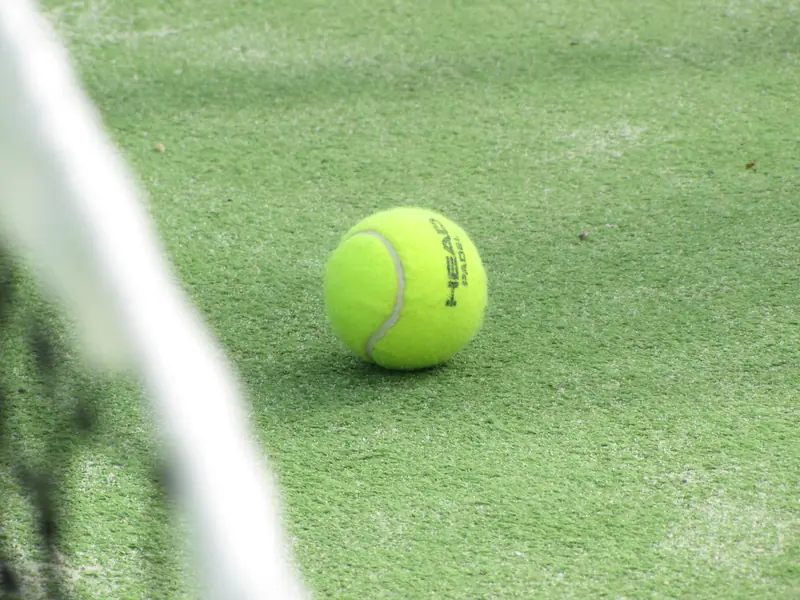
A racket's balance point changes how heavy it feels when you swing it. A 345 g racket with a high balance can feel heavier than a 360 g racket with a low balance, because more of its mass sits away from your hand. So a genuinely light feeling racket combines a modest weight with a low, head light balance, which in practice usually means a round head. The padel racket balance guide shows how to find the balance point at home.
Our lightweight pick: Lark
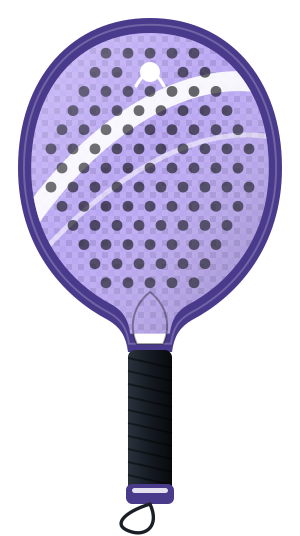
Lark (£79) is our lightweight adult racket, at about 335 to 345 g. It takes the same recipe as Tor, a round head, a soft EVA core, 3K carbon faces and a tubular carbon frame, and trims around 20 g. With a low balance, it is quick at the net and easy to bring back to the ready position after a lob, and it is less tiring over a long americano.
The trade-off is a little less mass behind smashes and blocks against hard hit balls. Most players below intermediate level never miss it. If you want a lighter racket with more pace on overheads, there is no teardrop in our range at this weight, so a specialist brand may be worth a look.
Light alternatives in the range
Fen (£59) weighs 350 to 360 g, so it is not ultralight, but its glass fibre faces and soft core make it one of the easiest rackets in our range to swing. It suits players who want comfort and a soft feel more than a minimum weight. For children, Pip Junior (£39) at 280 to 300 g has a shorter handle and a soft foam core. See junior padel rackets for when to move a child up to Lark.
| Pip Junior | Lark | Fen | Tor (for reference) | |
|---|---|---|---|---|
| Weight | 280 to 300 g | 335 to 345 g | 350 to 360 g | 355 to 365 g |
| Balance | Low | Low | Low | Low |
| Face | Glass fibre | 3K carbon | Glass fibre | 3K carbon |
| Core | Soft foam | Soft EVA | Soft EVA | Soft EVA |
| Price | £39 | £79 | £59 | £79 |
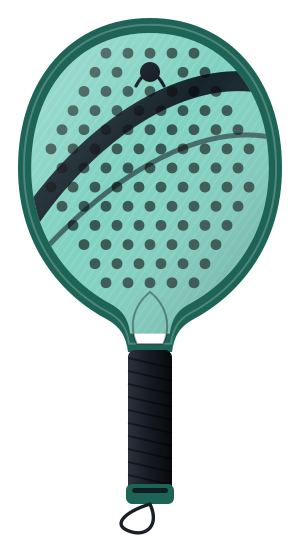
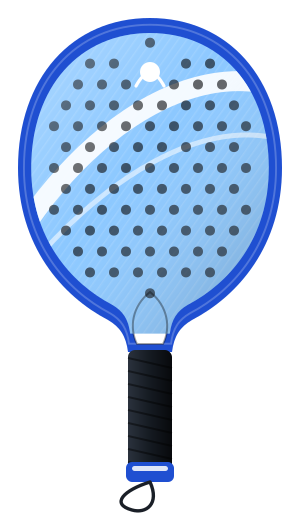
Lobwell Pip Junior
Lighter, shorter racket for juniors aged about 7 to 12
- Round
- Glass fibre
- 280 to 300 g
How light is too light?
Lighter is not always better. A very light racket gets pushed around by hard hit balls, so blocks at the net fly long and you have to swing harder to make pace, which can tire the arm in a different way. For most adults, going much below about 335 g gives back the problem you were trying to solve. If Lark feels too light, try adding a second overgrip: it moves weight to the handle without changing the head, so the racket feels more solid while staying quick.
Getting used to a lighter racket
Expect your timing to change for a session or two. A lighter racket arrives earlier, so you may hit some volleys slightly early or wide. Keep the swing short and let the soft core supply depth. Most players notice the benefit at the net first, then in the second half of a session when they would normally start to tire.
Browse lightweight padel rackets, compare against all padel rackets, or read the padel racket weight guide for a fuller weight chart.
Questions people ask
What is the lightest adult padel racket you sell?
Lark, at about 335 to 345 g. Pip Junior is lighter at 280 to 300 g but is sized for children.
Are lightweight padel rackets good for women?
They suit many women, but choose by strength and experience rather than gender. Plenty of women play best with 355 to 365 g.
Do lightweight padel rackets have less power?
A little less mass goes into the ball on smashes and blocks, but the extra swing speed and control mean most club players do not lose points because of it.
Is a lighter racket easier on the arm?
Many players find a lighter, head light racket less tiring to swing over a long session. If you have an injury, take advice from a professional.
Sources
Keep reading
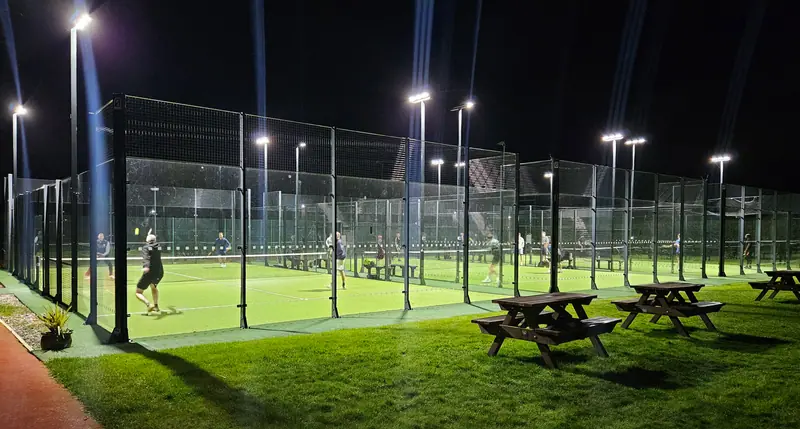 GuidePadel racket weight: how heavy should your racket be?Most adult padel rackets weigh between 340 and 375 g; the FIP rules set no weight limit.
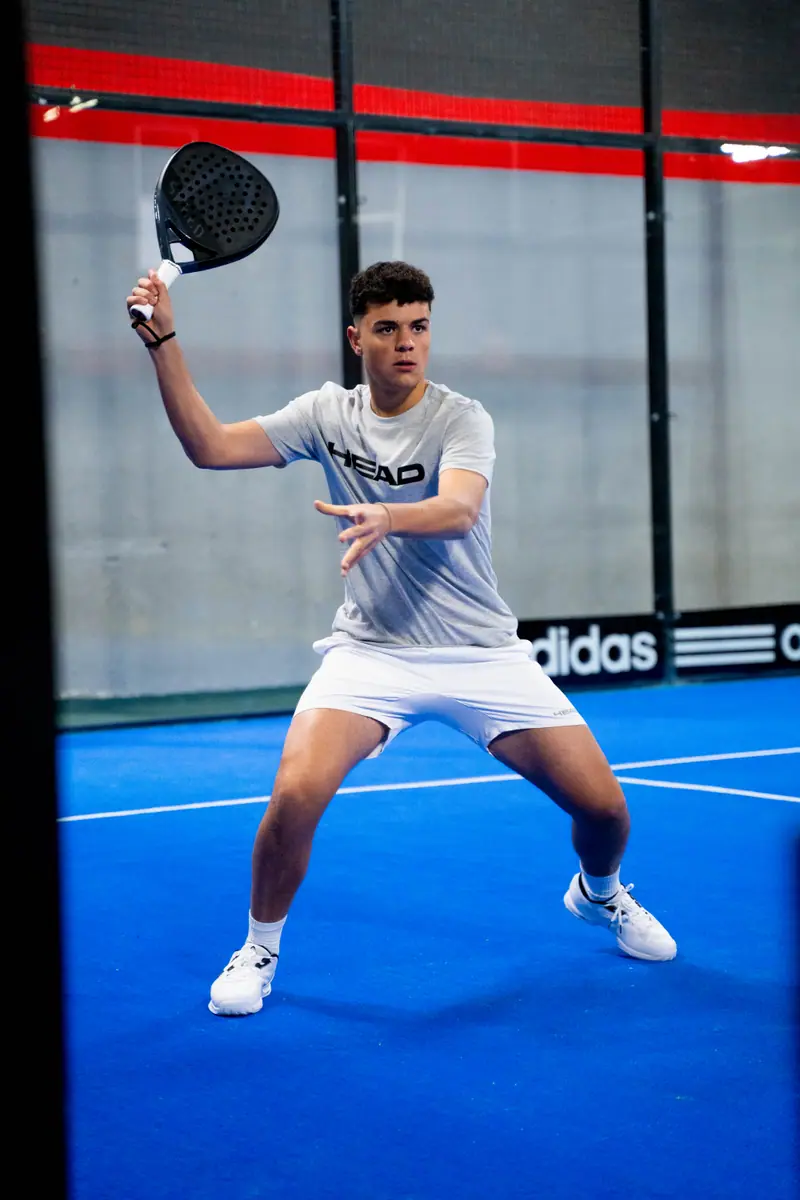 GuidePadel racket balance: head light, even or head heavy, and how it changes your gameBalance is where a padel racket's weight sits along its length.
 GuideJunior padel rackets: what size and weight a child needs, and when to move upMost children aged about 7 to 12 play best with a junior padel racket of around 280 to 300 g, with a round head, a soft core and a slightly shorter handle.
 Buying guideThe best padel racket for beginners: the spec to look for after three sessions on a hire racketThe best padel racket for a beginner has a round head, a soft EVA core, a weight of about 340 to 365 g and a low (head light) balance.
 Buying guideThe best padel rackets for control: specs for defenders, builders and right side playersA control padel racket has a round head, a low (head light) balance, a soft to medium EVA core and a 3K carbon or glass fibre face, usually at 340 to 365 g.