Padel racket weight: how heavy should your racket be?
By the Lobwell Padel team. Updated 1 November 2026.
Short answer: Most adult padel rackets weigh between 340 and 375 g; the FIP rules set no weight limit. As a guide, lighter adults and those wanting comfort suit 335 to 355 g, most club players 355 to 365 g, and strong, experienced attackers 365 to 375 g. Junior rackets are lighter again, around 280 to 300 g.
The usual weight range
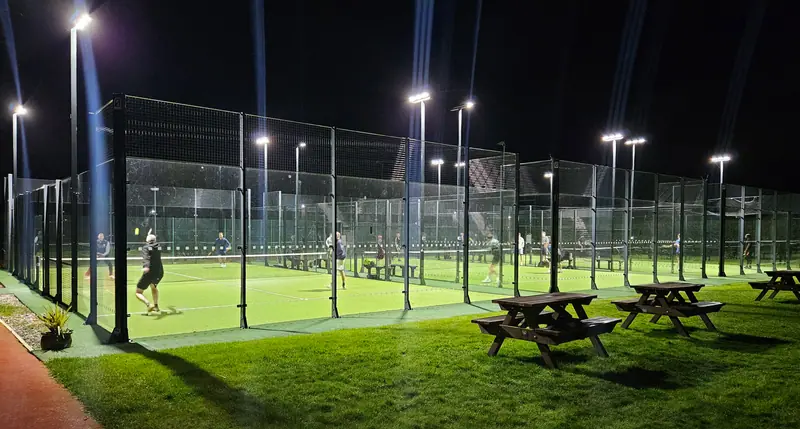
Padel rackets are heavier than tennis rackets for their size because they are solid: a foam core between two layers of glass fibre or carbon. Almost every adult racket sold in the UK falls between 340 and 375 g before you add an overgrip, which adds a few grams more. The FIP rulebook limits length, width, thickness and hole size, but not mass, so the range is set by what players can comfortably swing.
Manufacturers usually quote a band, such as 355 to 365 g, because foam and resin vary slightly from one racket to the next. Expect the actual racket to fall somewhere in that band.
What extra weight gives you
Mass behind the ball. A heavier racket keeps moving through contact, so a block volley against a hard hit ball comes back with less effort, and a flat smash carries more pace. Heavier rackets also feel more stable when you catch the ball off centre, because the face twists less in your hand.
The cost is speed and stamina. Each extra gram has to be accelerated on every swing and brought back to the ready position at the net. Over a 90 minute game with long rallies, that adds up.

What a lighter racket gives you
Reaction time. At the net, padel exchanges are fast, and a lighter racket lets you get the face in front of a ball fired at your body. It is easier to defend low balls that come off the side glass and quicker to reset after a lob. Most players also find a lighter racket less tiring on the forearm and shoulder late in a session.
Our lightweight padel racket range covers rackets of 360 g or under, and the best lightweight padel rackets page explains who they suit.
There is a limit, though. Go too light and the racket gets pushed around by hard hit balls, so blocks fly long and you have to swing harder to create pace, which can undo the benefit. For most adults, going below about 335 g trades one problem for another.
A weight guide by player
These are not rules split by gender. Plenty of men play best with a 345 g racket and plenty of women with 365 g. Choose by strength, fitness and how often you play.
| Player | Suggested weight | Why |
|---|---|---|
| Junior, about 7 to 12 | 280 to 300 g | Lets small arms swing properly |
| Lighter adult or returning to sport | 335 to 350 g | Easier to swing for a full session |
| Most club players | 350 to 365 g | Balance of stability and speed |
| Strong player, regular games | 360 to 370 g | More stability on blocks and smashes |
| Advanced attacker | 365 to 375 g | Extra mass behind overheads |
Weight and balance work together
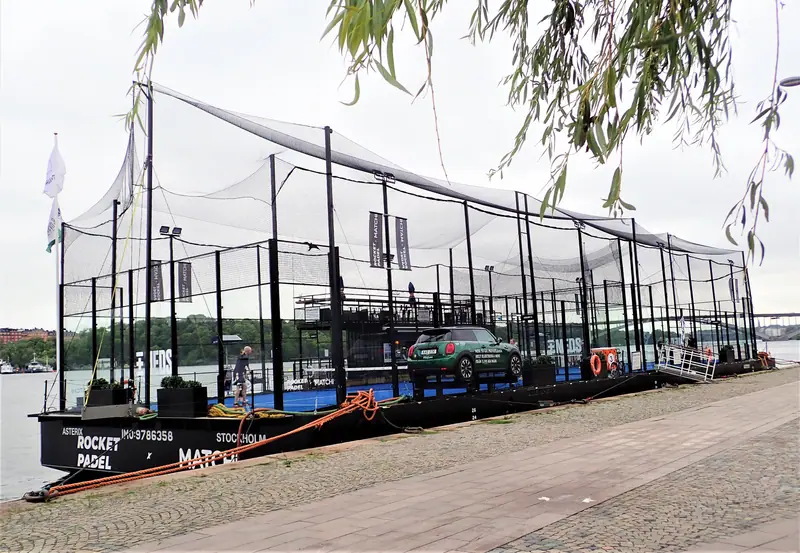
A 360 g racket with a high balance can feel heavier than a 370 g racket with a low balance, because what you feel when swinging is the weight's distance from your hand. That is why a diamond racket of the same weight as a round one feels more demanding. If you want a racket that feels light but has some mass, look for a low balance at 355 to 365 g. The padel racket balance guide covers this.
Adjusting the weight you already have
Small changes are possible. Each overgrip adds a few grams to the handle, which shifts the balance slightly towards your hand. Frame protector tape adds a little weight at the head. Players sometimes add thin lead tape to the frame to make a racket more head heavy, but this is fiddly and easy to overdo. If a racket feels clearly wrong, a different racket is the better fix.
- 1Weigh it with an overgrip on
Use kitchen scales; that is the weight you actually swing.
- 2Play two full sessions
Judge it in the second hour, not the first ten minutes.
- 3Note late volleys or tired forearms
Both suggest the racket is too heavy or too head heavy.
- 4Change by 10 to 20 g
That is enough to feel; bigger jumps can upset your timing.
Our rackets by weight
Lark is the lightest adult racket in the Lobwell range at about 335 to 345 g. Fen and Tor sit at 350 to 365 g, Ridge and Arc at 360 to 370 g, and Crag at 365 to 375 g. Pip, for juniors, is 280 to 300 g. If you are unsure, compare them in all padel rackets or use the racket finder.
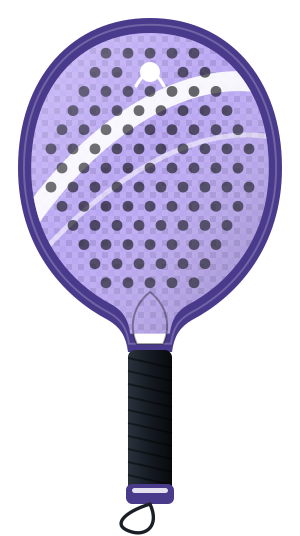
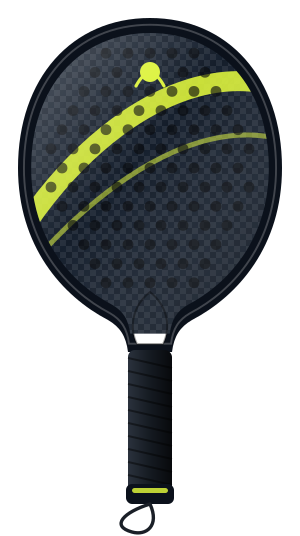
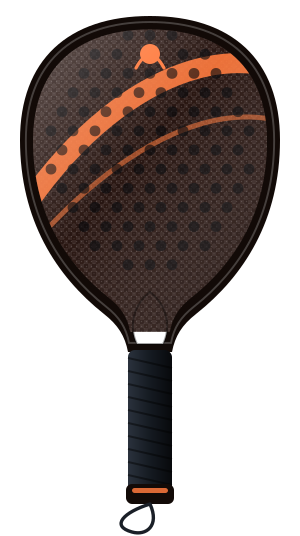
Lobwell Tor
Round 3K carbon racket for your first year and well beyond it
- Round
- 3K carbon
- 355 to 365 g
Questions people ask
Is 370 g too heavy for a padel racket?
Not for a strong, regular player, but most club players find 350 to 365 g easier to handle over a full session.
What weight padel racket should a woman use?
Choose by strength and experience, not gender. Many women start well with 340 to 355 g, but a strong regular player may prefer 360 g or more.
Do padel rackets have a weight limit?
No. The FIP rules limit length, width, thickness and holes, but not weight.
How much does an overgrip add?
A thin overgrip adds a few grams to the handle and slightly lowers the balance point.
Should I buy a lighter racket as a beginner?
A light to mid weight racket of 340 to 360 g is a good start. It is easier to control while you learn the walls, and it leaves room to move up later.
Sources
Keep reading
 GuidePadel racket balance: head light, even or head heavy, and how it changes your gameBalance is where a padel racket's weight sits along its length.
 Buying guideThe best lightweight padel rackets: who should go light, and how light is too lightA lightweight padel racket weighs roughly 335 to 350 g, against the usual 355 to 375 g, and is best for lighter players, older juniors, players returning to sport and anyone who tires late in a session.
 GuideHow to choose a padel racket: shape, weight, core and face in six decisionsChoose a padel racket by your level first, then shape, weight and core.
 GuidePadel racket shapes explained: round, teardrop, diamond and what each does to the ballPadel rackets come in three main shapes.
 GuideJunior padel rackets: what size and weight a child needs, and when to move upMost children aged about 7 to 12 play best with a junior padel racket of around 280 to 300 g, with a round head, a soft core and a slightly shorter handle.