The best padel rackets for control: specs for defenders, builders and right side players
By the Lobwell Padel team. Updated 1 November 2026.
Short answer: A control padel racket has a round head, a low (head light) balance, a soft to medium EVA core and a 3K carbon or glass fibre face, usually at 340 to 365 g. That gives a large, central sweet spot, quick handling at the net and depth on lobs without a big swing. It suits beginners, defenders and right side players who build points. In our range, Tor (£79), Lark (£79) and Fen (£59) are control rackets, and Ridge (£89) is control with a little more pace.

What control means in padel
Control is the ability to put the ball where you mean to, at the pace you mean to, under pressure. In padel that matters more than in most racket sports, because so many points are won and lost on soft shots: the lob that lands in the last metre, the chiquita that dips at the net player's feet, the block volley that goes deep instead of popping up. A control racket helps by being forgiving when you miss the centre, predictable in how much depth it gives and quick to move into position.
The control spec
| Spec | Control version | Why it helps |
|---|---|---|
| Shape | Round | Sweet spot large and central, close to the hand |
| Balance | Low (head light) | Quick at the net, easy to steer the face |
| Core | Soft or medium EVA | Consistent depth on slow and mid pace balls |
| Face | 3K carbon or glass fibre | Forgiving flex with a predictable response |
| Weight | 340 to 365 g | Light enough to react, stable enough to block |
| Surface | Smooth or lightly textured | Predictable contact; light texture for slice |

Who should choose a control racket
Control rackets are not only for learners. Many experienced players, particularly on the right side, stay with round rackets because their job in the pair is to keep the ball in play and set up their partner. See padel doubles tactics for how the two roles differ.
- Beginners and improvers learning the walls.
- Right side players (drive side for right handers) who build points with lobs and low balls.
- Defensive players who spend a lot of time at the back.
- Players who value consistency over winners.
- Anyone who finds stiff, head heavy rackets tiring.
Our control picks
Tor (£79) is the core control racket in our range: round, low balance, soft EVA, 3K carbon, 355 to 365 g. It gives depth on lobs with a short swing and enough firmness from the carbon face to volley cleanly. Lark (£79) is the same recipe at about 340 g, for players who want quicker hands at the net. Fen (£59) is the softest, with glass fibre faces that flex more for an easy, comfortable rebound.
For a control player who wants a little more on overheads, Ridge (£89) is a teardrop that stays close to round: even balance, medium EVA and a lightly textured 3K face that helps the bandeja grip.
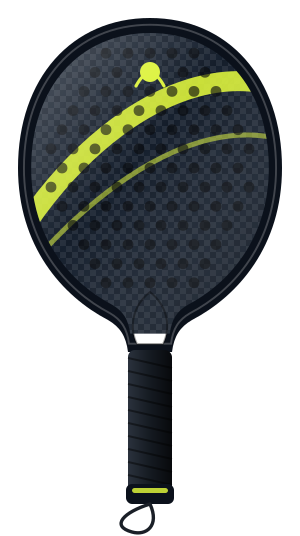
Lobwell Tor
Round 3K carbon racket for your first year and well beyond it
- Round
- 3K carbon
- 355 to 365 g
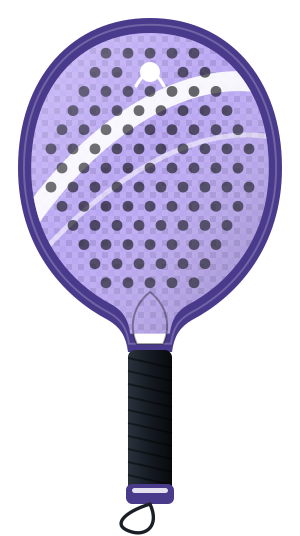
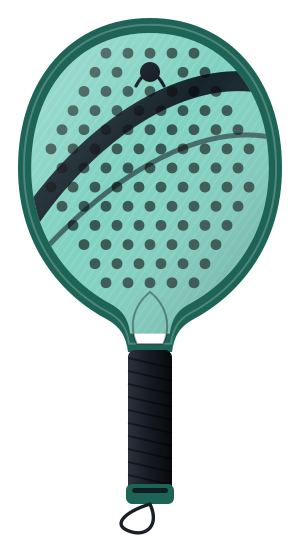
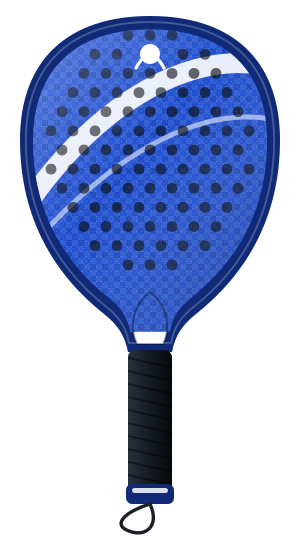
Lobwell Ridge
Teardrop 3K carbon racket for players moving off a round head
- Teardrop
- 3K carbon
- 360 to 370 g
Control picks compared
| Fen | Tor | Lark | Ridge | |
|---|---|---|---|---|
| Price | £59 | £79 | £79 | £89 |
| Shape | Round | Round | Round | Teardrop |
| Balance | Low | Low | Low | Even |
| Core | Soft EVA | Soft EVA | Soft EVA | Medium EVA |
| Face | Glass fibre | 3K carbon | 3K carbon | 3K carbon |
| Weight | 350 to 360 g | 355 to 365 g | 335 to 345 g | 360 to 370 g |
| Best for | Softest feel | All round control | Fast hands | Control with some pace |
Control and power are a trade, not a ladder
It is easy to think of control rackets as the bottom rung and power rackets as the top. In practice they suit different jobs. A strong pair often has one player on each: the right side player with a round or teardrop racket building the point, the left side player with a teardrop or diamond finishing it. If you play the builder's role, upgrading to a power racket can make you worse. If you want more pace while keeping control, moving from a round racket to a teardrop like Ridge is the usual step. Compare the two ends in best padel rackets for power.
Control on cold and fast courts
Court conditions change how much control you need. On a cold outdoor court in winter, EVA cores stiffen and the ball comes off the glass slower, so a soft core racket helps lobs reach the back third. On a warm, fast indoor court with fresh pro balls, the ball arrives quicker and a head light racket helps you get the face in front of it in time.
That is one reason control rackets suit the UK so well. Only about 42.5% of the venues in our court data have an indoor court, so many club players switch between cold outdoor sessions and warm indoor ones through the year. A round, soft cored racket copes with both without changing how you swing.
Getting more control from any racket
A fresh, tacky overgrip stops the face twisting on off centre volleys. A shorter backswing helps more than any spec. Aim for the middle of the court and the last third of the court on lobs. And use balls in good condition: a flat ball skids and dies on the glass, which makes depth harder to judge. Browse round padel rackets, read padel racket shapes explained, or try the racket finder for a single pick.
Questions people ask
What is the best padel racket shape for control?
Round. Its large, central sweet spot and low balance make it the most forgiving and easiest to place.
Is a soft core better for control?
For most club players, yes. A soft or medium core gives consistent depth on the slow and mid pace balls that make up most of a padel game.
Do advanced players use control rackets?
Many do, especially right side players whose job is to build points. Control and power rackets suit different roles.
What weight is best for a control padel racket?
Around 340 to 365 g with a low balance. Lighter rackets react faster at the net; slightly heavier ones block more steadily.
Sources
Keep reading
 Buying guideThe best padel rackets for power: the specs behind a heavy smash, and who should use themA power padel racket combines a diamond or high teardrop head, a high (head heavy) balance, a hard EVA core and a stiff 12K or 18K carbon face, usually at 365 to 375 g.
 GuidePadel racket shapes explained: round, teardrop, diamond and what each does to the ballPadel rackets come in three main shapes.
 GuidePadel doubles tactics: positioning, the net, the lob and the middleThe core padel tactic is simple: the pair at the net usually wins the point, so get both players to the net together and use lobs to push opponents back when they hold it.
 Buying guideThe best padel racket for beginners: the spec to look for after three sessions on a hire racketThe best padel racket for a beginner has a round head, a soft EVA core, a weight of about 340 to 365 g and a low (head light) balance.
 Buying guideThe best lightweight padel rackets: who should go light, and how light is too lightA lightweight padel racket weighs roughly 335 to 350 g, against the usual 355 to 375 g, and is best for lighter players, older juniors, players returning to sport and anyone who tires late in a session.