The best padel rackets for power: the specs behind a heavy smash, and who should use them
By the Lobwell Padel team. Updated 1 November 2026.
Short answer: A power padel racket combines a diamond or high teardrop head, a high (head heavy) balance, a hard EVA core and a stiff 12K or 18K carbon face, usually at 365 to 375 g. It puts more mass and stiffness behind fast swings, so smashes and viboras carry more pace. It only pays off with clean, fast technique; for most club players a teardrop gives more points. In our range, Crag (£149) is the power racket and Arc (£109) is the all rounder with bite.

Where power comes from in a padel racket
A padel racket has no strings, so the power it adds comes from three places: how much mass is moving at the point of contact, how much energy the core stores and returns, and how little the face bends and wastes. A power racket pushes all three. The diamond shape and high balance put more mass near the tip, where you hit overheads. A hard EVA core gives back more energy on fast impacts. A stiff carbon face transfers that energy directly.
| Spec | Power version | What you gain | What you give up |
|---|---|---|---|
| Shape | Diamond | Sweet spot high, where overheads are struck | Smaller sweet spot, less help on low balls |
| Balance | High (head heavy) | Momentum on smashes | Slower at the net, more load on the arm |
| Core | Hard EVA | Energy return on fast swings | Dead feel on slow balls and lobs |
| Face | 12K or 18K carbon | Stiff, precise strike | Less forgiveness |
| Weight | 365 to 375 g | Stability and drive | Tires you faster |
| Surface | Rough | Spin on vibora and kick smash | Wears smoother over time |
Who actually gains from a power racket
Power rackets amplify technique. If you are an advanced player who takes the left side, hits flat smashes that bounce out of the court and finishes points with viboras, a power racket gives you more on each of those shots. If you are still learning to get under the ball, a power racket amplifies the problem: late contact on a small, high sweet spot sends the ball long or into the net, and a head heavy racket is slower to recover at the net.
Ask yourself honestly how many points you win with overheads. If it is a large share, a power racket makes sense. If you win most points with lobs, volleys and patience, a control or all round racket will win you more.
- Good fit: advanced, left side, reliable smash, plays three or more times a week.
- Possible fit: strong intermediate who wants more from overheads, with clean technique.
- Poor fit: beginners, players who defend a lot, anyone who tires late in sessions.

Our power pick: Crag
Crag (£149) is built for finishing. The diamond head puts the sweet spot high on the face and the high balance puts weight towards the tip, so overheads land with real pace. The hard EVA core feels firm on slow shots and comes alive at speed, so flat smashes can bounce out over the side wall, the shot players call por tres. 18K carbon faces give a stiff, precise strike, and the sand textured surface grips the ball for viboras and kick smashes. It weighs 365 to 375 g.
If you are a competitive player at a high level who wants a specific tour weight or balance, a specialist performance brand will offer more options than our single power racket.
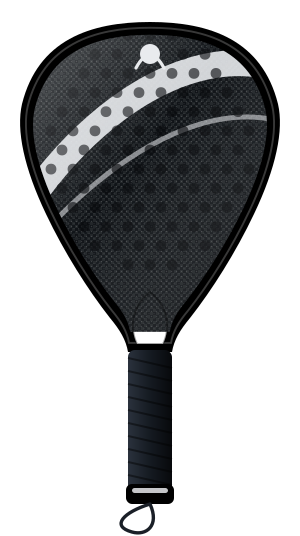
Power with a safety net: Arc
Arc (£109) is a teardrop with a 12K carbon face, a medium EVA core and an even to slightly high balance. It gives noticeably more bite than a round racket on overheads and attacking volleys, while keeping a larger sweet spot than Crag. For most strong intermediates, Arc is the more effective racket: you will hit fewer winners off the wall than with Crag, but you will miss fewer too. See best intermediate padel rackets.
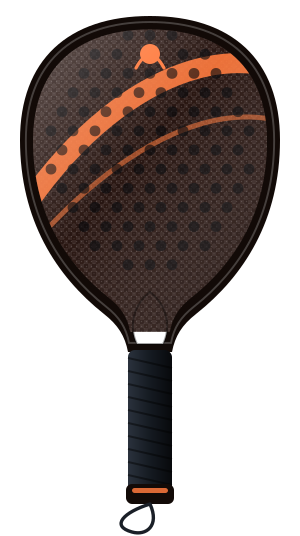
Crag and Arc compared
| Arc | Crag | |
|---|---|---|
| Price | £109 | £149 |
| Shape | Teardrop | Diamond |
| Balance | Even to slightly high | High |
| Core | Medium EVA | Hard EVA |
| Face | 12K carbon | 18K carbon |
| Weight | 360 to 370 g | 365 to 375 g |
| Sweet spot | Medium | Smaller, high |
| Best for | Strong intermediates, all round attack | Advanced finishers |
Getting more power without a new racket
Most club players find more pace through technique before equipment. Get your feet under the ball early, turn your shoulders sideways, and hit the ball in front of you at full reach. Use the bandeja to keep the net until a short ball comes, then smash the short ball, not the deep one. A fresh tube of pro balls such as HEAD Pro+ also plays livelier than a tired club tube.
Our guide to padel shots explained covers the overheads, and padel doubles tactics covers when to go for them.
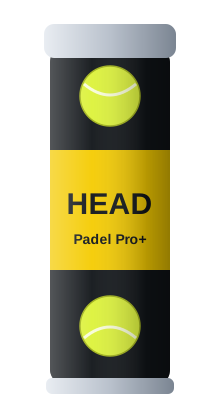
HEAD Padel Pro+ Padel Balls (3 Ball Tube)
Pressurised match ball with a quick, consistent bounce. One of the most used balls in UK clubs.
- HEAD
£5.49
Power, comfort and your arm
Head heavy, stiff rackets transmit more of each impact to your arm, and they are heavier to swing for 90 minutes. If you play long sessions, consider alternating a power racket with an all round one, and choose a comfortable grip size. If you have any arm or shoulder problems, take advice from a professional before moving to a stiffer racket. Compare power and control in round vs teardrop vs diamond and soft vs hard EVA, or browse the diamond padel rackets.
Questions people ask
Which padel racket shape gives the most power?
Diamond, because its high balance and high sweet spot put more mass behind overheads.
Is a hard core padel racket more powerful?
On fast swings, yes. On slow shots it feels firm and gives less help than a soft core.
Should beginners buy a power padel racket?
No. A power racket's small sweet spot and firm core make learning harder. Beginners do better with a round, soft racket.
Do power rackets need more strength?
They need more swing speed and clean timing more than raw strength. Without those, the extra stiffness and head weight work against you.
Sources
Keep reading
 Buying guideThe best padel rackets for control: specs for defenders, builders and right side playersA control padel racket has a round head, a low (head light) balance, a soft to medium EVA core and a 3K carbon or glass fibre face, usually at 340 to 365 g.
 ComparisonRound vs teardrop vs diamond: which padel racket shape wins, shot by shotRound rackets win on control, forgiveness and speed at the net; diamond rackets win on overhead power; teardrops sit in between and are the most common choice for intermediate players.
 ComparisonSoft vs hard EVA: how the core changes a padel racket, and which one you should playSoft EVA cores compress easily and give the ball a lively push on slow and medium shots, which helps lobs, blocks and defence and feels comfortable.
 Buying guideThe best padel rackets for intermediate players: when to move up and what to move toMost intermediate padel players suit a teardrop racket of 360 to 370 g with a medium EVA core, an even balance and a 3K or 12K carbon face.
 GuidePadel shots explained: the 16 strokes you will hear about, and when to play eachThe core padel shots are the groundstroke, the volley, the lob, the bandeja (a controlled sliced overhead), the vibora (a faster, more side spun overhead), the smash, the chiquita (a soft, low ball to the feet of net players) and the back glass return.