What are padel rackets made of? Faces, frames, cores and finishes
By the Lobwell Padel team. Updated 1 November 2026.
Short answer: A padel racket is a solid sandwich: two faces of glass fibre or carbon fibre over a foam core, usually EVA rubber, held in a tubular frame of carbon or glass fibre. Glass fibre faces flex more and feel forgiving; carbon faces are stiffer, more precise and keep their feel longer. Soft EVA cores give an easy push, hard EVA rewards fast swings.

The parts of a padel racket
Strip a padel racket down and there are four layers that matter. The frame is a hollow tube that runs round the head and into the handle, giving the racket its shape and strength. Inside the head sits the core, a slab of foam roughly 38 mm thick at most, which is the FIP limit for the whole racket. Bonded to each side of the core is a face, a thin skin of woven fibre set in resin. Finally there is the surface finish, smooth or rough, and the holes drilled through the whole head, 9 to 13 mm in the centre area under FIP rules.
Each layer changes the feel. Get the combination right for your level and you will notice it more than any brand name.
| Layer | Common materials | What it controls |
|---|---|---|
| Frame | Tubular carbon, or glass fibre and carbon | Stiffness, durability, torsion on off-centre hits |
| Faces | Glass fibre, 3K, 12K or 18K carbon | Flex, precision, feel |
| Core | Soft, medium or hard EVA, or softer foam | Rebound, comfort, power at speed |
| Finish | Smooth, or rough with sand or 3D texture | Grip on the ball for spin |
Glass fibre faces
Glass fibre, often called fibreglass, is heavier for its stiffness than carbon and more flexible. On a slow ball the face bends a little and springs back, so the ball leaves the racket easily. That makes glass fibre faces forgiving and comfortable, which suits beginners and occasional players. The downside is that they tend to soften with time, and they feel less crisp on volleys. Fen and Pip use glass fibre faces.
Carbon faces and the K numbers
Carbon fibre is stiffer and lighter for its strength. It gives a firmer, more direct strike, so the ball goes where the face points, and it holds that feel longer than glass fibre. Carbon faces are labelled by the number of filaments in each strand of the weave: 3K is 3,000 filaments, 12K is 12,000 and 18K is 18,000. In general, higher numbers mean a tighter, stiffer face. The full breakdown is in 3K vs 12K vs 18K carbon, and the head to head of the two families is in carbon vs fibreglass.
The core
The core is where most of the feel comes from. EVA (ethylene vinyl acetate) is the standard: it comes in soft, medium and hard densities. Soft EVA compresses easily, gives a bouncy, comfortable response and makes slow balls travel. Hard EVA hardly compresses on a slow shot, so it feels dead at low pace, but on a full speed smash it stores and returns more energy. Some junior and entry rackets use softer foam for an even easier rebound. More in the padel racket core guide.

Rough or smooth surface
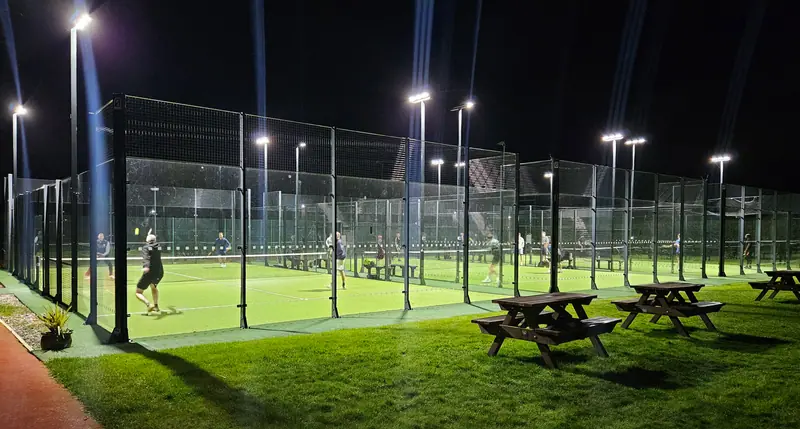
The FIP rules allow faces to be smooth or rough as long as they are flat. Rough faces have sand or a raised pattern in the top coat, which grips the ball on slice shots such as the bandeja and vibora. Smooth faces are more predictable for players who do not yet brush the ball on purpose. A rough finish does wear down with use, so its effect fades over months.
How materials map to price and level
Materials explain most of the price ladder. Glass fibre with soft EVA is the entry point; 3K carbon with soft EVA is the most common choice for improving club players; 12K and 18K carbon with medium or hard EVA appear on rackets aimed at intermediate and advanced players. Stiffer is not better for everyone: it is better for players with fast, clean swings.
| Racket | Face | Frame | Core | Surface |
|---|---|---|---|---|
| Fen | Glass fibre | Glass fibre and carbon | Soft EVA | Smooth |
| Tor | 3K carbon | Tubular carbon | Soft EVA | Smooth |
| Lark | 3K carbon | Tubular carbon | Soft EVA | Smooth |
| Ridge | 3K carbon | Tubular carbon | Medium EVA | Lightly textured |
| Arc | 12K carbon | Tubular carbon | Medium EVA | Rough |
| Crag | 18K carbon | Tubular carbon | Hard EVA | Rough |
| Pip Junior | Glass fibre | Glass fibre | Soft foam | Smooth |
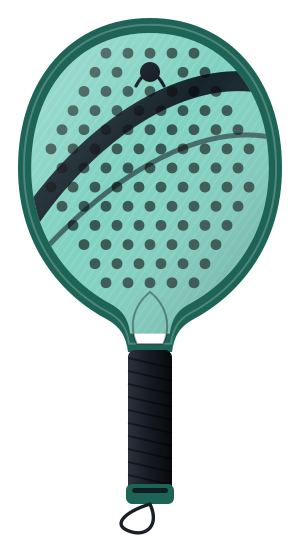
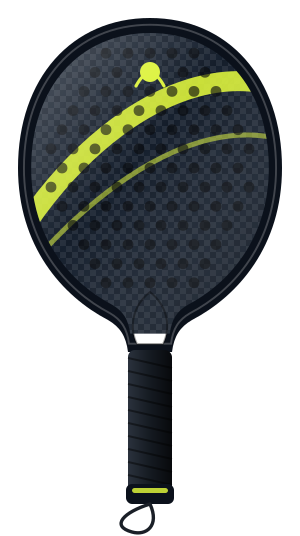
Lobwell Tor
Round 3K carbon racket for your first year and well beyond it
- Round
- 3K carbon
- 355 to 365 g
Materials and how long a racket lasts
Foam cores lose some liveliness over time, and faces can crack or delaminate after hard knocks on the glass. Heat also softens EVA, so do not leave a racket in a hot car. A thermal racket cover and frame tape help. See when to replace a padel racket for the signs that a racket has gone.
Questions people ask
What is the best material for a padel racket?
It depends on level. Glass fibre with soft EVA suits beginners; 3K carbon suits most club players; 12K and 18K carbon suit stronger players with fast swings.
Are carbon padel rackets better than fibreglass?
Carbon is stiffer, more precise and longer lasting; fibreglass is softer and more forgiving. Neither is better for every player.
What does EVA mean on a padel racket?
EVA is ethylene vinyl acetate, the rubber foam used in most racket cores. It comes in soft, medium and hard versions.
Do padel rackets have strings?
No. They are solid with drilled holes, and the FIP rules specify hole sizes of 9 to 13 mm in the central area.
Sources
Keep reading
 GuidePadel racket cores: what is inside your racket and why it decides the feelThe core is the foam slab inside a padel racket, usually EVA rubber, sitting between the two faces in a racket no thicker than 38 mm.
 ComparisonCarbon vs fibreglass padel rackets: feel, power, durability and who should choose whichFibreglass (glass fibre) faces flex more, so they feel soft, springy and forgiving, which suits beginners and occasional players.
 Comparison3K vs 12K vs 18K carbon: what the numbers mean on a padel racketThe K number is how many thousand carbon filaments are bundled into each strand of the weave: 3K is 3,000, 12K is 12,000 and 18K is 18,000.
 ComparisonSoft vs hard EVA: how the core changes a padel racket, and which one you should playSoft EVA cores compress easily and give the ball a lively push on slow and medium shots, which helps lobs, blocks and defence and feels comfortable.
 GuideHow to choose a padel racket: shape, weight, core and face in six decisionsChoose a padel racket by your level first, then shape, weight and core.