The padel serve: the rules, the faults and a serve that gets you to the net
By the Lobwell Padel team. Updated 1 November 2026.
Short answer: In padel you serve underarm: bounce the ball behind your service line, hit it at or below waist height with at least one foot on the ground, and send it diagonally into the receiver's box. It may hit the glass after bouncing, but a serve that bounces and then hits the mesh is a fault. You get two attempts, and a net cord that lands in is a let.

The serve rules in full
The FIP Rules of Padel set out the serve precisely. The server stands behind the service line, between the centre line extension and the side wall. They bounce the ball on the ground within that area and hit it after the bounce. At the moment of contact the ball must be at or below waist level and the server must have at least one foot on the ground. The serve must cross the net and bounce in the receiver's service box, diagonally opposite.
Each game starts with a serve from the right half of the court, then alternates sides each point. The receiver must let the ball bounce before returning it.
- 1Position
Behind the service line, between centre line and side wall.
- 2Bounce
Drop the ball and let it bounce once in your area.
- 3Contact
Ball at or below waist level, at least one foot on the ground.
- 4Direction
Diagonally into the receiver's box.
- 5Result
It must bounce in the box. It may then hit the glass, but not the mesh.
Faults and lets
Two faults in a row is a double fault, and the point goes to the receivers.
| What happens | Ruling |
|---|---|
| Ball lands outside the receiver's box or on a line outside it | Fault |
| Ball bounces in the box, then hits the mesh | Fault |
| Ball hits the server's own walls before crossing | Fault |
| Ball struck above waist height | Fault |
| Server jumps or both feet leave the ground | Fault |
| Server misses the ball completely | Fault |
| Ball clips the net and lands in the box | Let, replay that serve |
| Ball clips the net, lands in, then hits the mesh | Fault |
| Ball hits the receiver's partner before bouncing | Point to the server |
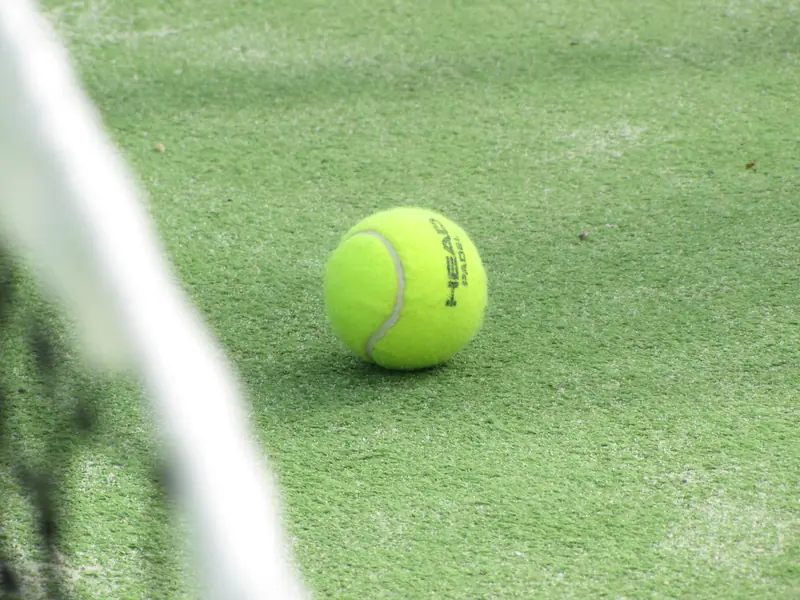
Technique: a serve that works
The padel serve is not a weapon in the way a tennis serve is. Its job is to start the point on your terms and get you to the net. Stand side on, with your front foot pointing at the target. Drop the ball beside and slightly in front of your front foot, so it bounces up to about hip height. Use a continental grip and swing from low to slightly high, finishing towards the target.
Slice is your friend. Brushing under and across the ball makes it skid low after it bounces, and low off the glass, which makes it harder to attack. Most good club servers hit at about three quarters pace and spend the rest of their effort walking forward to the net behind it.
Where to aim
- At the receiver's body, especially the hip on their backhand side: it cramps the return.
- Deep into the glass at the T junction of the centre line and back wall: the ball rebounds awkwardly to the middle.
- Wide to the side glass, so the ball runs into the corner: good for right handers serving to the left side.
- Mix them up. A predictable serve gets attacked even at club level.

After the serve
The server's partner already stands at the net, a couple of metres back from it on the other half. Once you serve, walk forward diagonally to join them, stopping with a split step as the receiver hits. Do not sprint and do not stop on the service line; you want to be level with your partner by the time you play your first volley. Our padel doubles tactics guide covers what happens next.
The receiver's best options are a lob over the net player or a low ball at the server's feet as they come in. Expect both.
Practising the serve
Take a tube of older balls and serve 20 from each side, aiming at a towel placed at each target. Count how many land within a metre. When you get above half, add slice. Ten minutes of this before a game will do more for your match play than practising smashes. Our padel balls range has club balls that suit drills, and the Ball Saver Tube keeps them usable for longer.
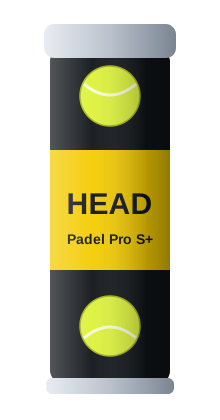
HEAD Padel Pro S+ Padel Balls (3 Ball Tube)
A slightly slower ball than the Pro+, popular for club and league play.
- HEAD
£4.99
Common serve mistakes
Hitting too high is the most common fault. If you are tall, bend your knees so contact is at hip height. Rushing is the second: take a breath, bounce, then hit. The third is serving hard and staying back. Even a perfect serve is wasted if you are still at the service line when the return comes. For the rules around the rest of the point, see padel rules, and for the scoring, padel scoring.
Questions people ask
Is the padel serve underarm?
Yes. The ball must be at or below waist height when you hit it, after you have bounced it on your side.
Can a padel serve hit the side glass?
Yes, if it bounces in the correct box first. A serve that bounces and then hits the mesh is a fault.
How many serves do you get in padel?
Two. If both are faults, it is a double fault and the receivers win the point.
Can you volley the serve in padel?
No. The receiver must let the serve bounce in their box before returning it.
Sources
Keep reading
 GuidePadel rules: every rule you need for doubles, from the serve to the fencePadel rules come from the International Padel Federation.
 GuidePadel scoring: points, golden point, Star Point, tie-breaks and setsPadel is scored like tennis: 15, 30, 40, then game, with sets won at six games by a two game margin and a tie-break at 6-6 (first to 7 points, two clear).
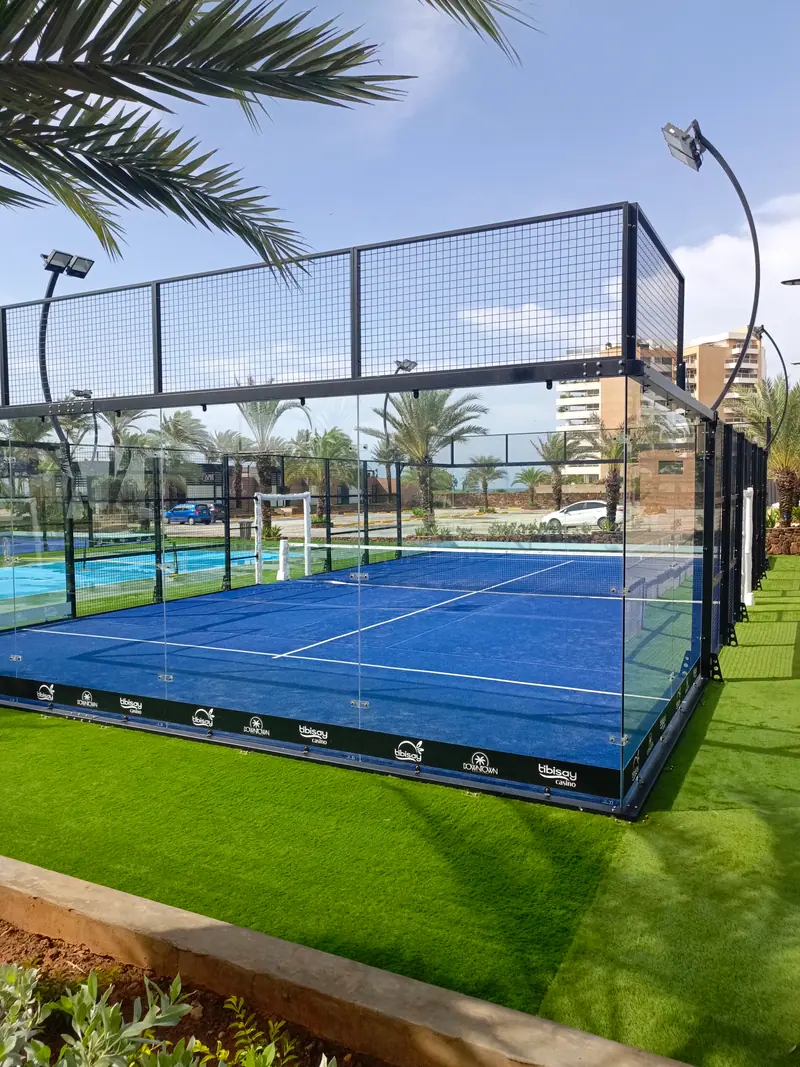 GuidePadel doubles tactics: positioning, the net, the lob and the middleThe core padel tactic is simple: the pair at the net usually wins the point, so get both players to the net together and use lobs to push opponents back when they hold it.
 GuideHow to play padel: the serve, the walls and the first ralliesTo play padel, two pairs face each other on a 10 by 20 metre walled court.
 GuidePadel shots explained: the 16 strokes you will hear about, and when to play eachThe core padel shots are the groundstroke, the volley, the lob, the bandeja (a controlled sliced overhead), the vibora (a faster, more side spun overhead), the smash, the chiquita (a soft, low ball to the feet of net players) and the back glass return.