How to regrip a padel racket: fitting an overgrip in two minutes
By the Lobwell Padel team. Updated 1 November 2026.
Short answer: To regrip a padel racket, peel off the old overgrip, start the new one at the butt of the handle with the tapered end, wrap upwards with a slight overlap of a few millimetres while keeping tension, and finish just below the throat with the finishing tape. It takes about two minutes. Change the overgrip as soon as it looks shiny or starts to tear, which for a twice weekly player is roughly once a month.

Overgrip or replacement grip?
A padel handle has two layers. The base, or replacement, grip is the thicker cushioned wrap fitted at the factory, around 1.8 mm on our Cushion grip. The overgrip is the thin layer you wrap on top, around 0.6 mm on our Tack overgrip. You change the overgrip often, because it takes the sweat and wear. You only change the base grip when it goes flat, hard or starts to come loose.
Almost every padel player uses an overgrip. It is cheap, it keeps the handle tacky so the racket does not twist on volleys, and it lets you fine tune the handle size.
| Overgrip | Base grip | |
|---|---|---|
| Thickness (Lobwell) | 0.6 mm | 1.8 mm |
| Length (Lobwell) | 110 cm | 120 cm |
| Change | Every few weeks | Every year or so, or when flat |
| Job | Tack and sweat | Cushion and shape |
Fitting an overgrip step by step
Right handers usually wrap clockwise when looking down from the butt, and left handers the other way, so the overlap edges do not catch the fingers. Try both if it feels odd: there is no rule.
- 1Remove the old one
Unpeel the finishing tape and unwrap from the top down. Check the base grip underneath is clean and not torn.
- 2Peel the backing
Remove the plastic film from the new overgrip. Leave the strip on the adhesive end until you are ready.
- 3Start at the butt
Place the tapered end at the bottom of the handle, on the flat side, just above the wrist cord exit, angled so it wraps upwards.
- 4Wrap with tension
Turn the racket with one hand and keep the grip taut with the other. Overlap each turn by a few millimetres, evenly all the way up.
- 5Stop below the throat
Finish about where the base grip ends. Cut any excess at an angle so the edge lies flat.
- 6Tape it
Wrap the finishing tape round twice to hold the end. Press it down firmly.

The wrist cord gets in the way
Unlike tennis, every padel racket has a wrist cord fixed into the handle, and the FIP rules say it must be worn. It exits at the butt, so start your overgrip just above it or wrap neatly around the cord's base. Do not wrap the cord inside the grip. If the cord is frayed, it is worth replacing it at the same time.
Grip size and how many overgrips
Padel handles are fairly standard in size, so most players adjust with overgrips rather than buying a different handle. One overgrip is normal. Two add a little thickness for larger hands and move the balance slightly towards your hand. If the handle feels too thin, you tend to squeeze, which tires the forearm. If it feels too thick, you lose some wrist action for slice.
A quick test: hold the racket in your normal grip. There should be roughly a finger's width between your fingertips and the base of your thumb. Less than that and the handle is too thick; more and it is thin.

When to change your overgrip
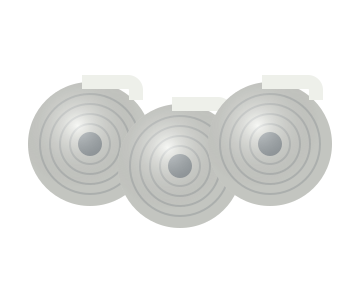
For a player on court twice a week, roughly one overgrip a month is typical, which is why our Tack 3 pack is sized that way and the 12 pack covers a season at about £1.58 a grip.
- It looks shiny or feels smooth instead of tacky.
- It has torn, usually near the top where your index finger sits.
- The racket starts twisting on off centre volleys.
- It stays damp or smells after sessions.
- You are about to play a match and the grip is more than a few weeks old.
Sweaty hands
Indoor courts in summer can make any grip slippery. A tacky overgrip helps, and a wristband stops sweat running down your arm onto the handle. Dry your hand and handle with a towel at each change of ends. Some players carry a spare racket with a fresh grip for long sessions. See the full padel overgrips and grips range.


Replacing the base grip
If the handle feels hard, the cushioning has gone or the base grip is peeling, replace it. Unwrap the old base grip fully, clean any adhesive residue, then wrap the new one the same way as an overgrip but with less overlap, since it is thicker. Finish with tape and add a fresh overgrip on top. Our guide to padel racket care covers the rest of the racket.
Questions people ask
How often should I change my padel overgrip?
When it goes shiny, tears or stops feeling tacky. For a twice weekly player that is usually about once a month.
Can you use a tennis overgrip on a padel racket?
Yes. Tennis overgrips fit padel handles; padel specific ones are sometimes slightly shorter.
Which way do you wrap a padel grip?
Right handers usually wrap clockwise looking from the butt, left handers anticlockwise, so the overlaps sit the right way under the fingers.
Does an overgrip make the handle bigger?
Slightly. A thin overgrip of about 0.6 mm adds a little to the handle size; two overgrips add more.
Sources
Keep reading
 GuidePadel racket care: how to make a racket last, and what can be repairedMost padel racket damage comes from three things: scraping the top of the frame on the glass or turf, heat from a car boot, and hard knocks between rackets.
 GuidePadel racket balance: head light, even or head heavy, and how it changes your gameBalance is where a padel racket's weight sits along its length.
 GuideWhen to replace a padel racket: seven signs it has had its dayReplace a padel racket when the frame is cracked through, the face is lifting from the core, or the racket has lost so much liveliness that your lobs land short and it sounds dull.
 GuidePadel racket protector tape: why it is worth it and how to fit it neatlyA padel racket protector is a strip of tough, clear or coloured film that you stick over the top of the frame, where most damage happens when the racket scrapes the glass or the turf.
 Buying guidePadel gifts: useful ideas for every budget, for him, for her and for juniorsThe best padel gifts are things players use up or replace often: overgrips (£5.99 for three), tubes of balls (£4.49 to £5.49), a ball pressuriser (£14.99), a thermal racket cover (£12.99) or a bag (£29 to £69).