Padel vs pickleball: two fast growing sports with very different courts
By the Lobwell Padel team. Updated 1 November 2026.
Short answer: Padel is played on an enclosed 20 by 10 metre court with glass walls you can use, a perforated foam core racket and a pressurised felt ball. Pickleball is played on an open 13.4 by 6.1 metre court with a solid paddle, a plastic ball with holes and a 2.1 metre no volley zone by the net. Both have underarm serves; padel uses tennis scoring, while pickleball games are usually played to 11.

Side by side
| Padel | Pickleball | |
|---|---|---|
| Court | 20 m by 10 m, enclosed | 13.4 m by 6.1 m (44 by 20 ft), open |
| Walls in play | Yes, after the bounce | No |
| Net height (centre) | 0.88 m | 0.86 m (34 in) |
| Net height (ends) | 0.92 m | 0.91 m (36 in) at the sidelines |
| No volley zone | None | 2.1 m (7 ft) each side of the net |
| Bat | Foam core racket with holes, max 45.5 cm | Solid paddle |
| Ball | Pressurised felt ball, 6.35 to 6.77 cm, 56 to 59.4 g | Perforated plastic, 73 to 75 mm, 22.1 to 26.5 g |
| Serve | Underarm after a bounce, at or below the waist | Underarm, or a drop serve |
| Scoring | 15, 30, 40, game; sets to six | Games usually to 11, win by two |
| Format | Doubles almost always | Singles or doubles |
The court
A padel court is 200 square metres of playing area inside 3 to 4 metre walls. A pickleball court is 13.4 by 6.1 metres, about 82 square metres, with no walls, about the size of a badminton doubles court. Pickleball courts are often marked on existing sports hall floors or tennis courts, which makes them cheap to set up; a padel court needs its own glass and mesh enclosure.
That difference shapes each game. In padel the walls keep balls in play and turn defence into a skill. In pickleball the ball is dead once it passes you, and points are won and lost around the net.

The kitchen versus the walls
Each sport has one signature rule. Pickleball's is the non volley zone, nicknamed the kitchen: a 2.1 metre strip either side of the net where you cannot volley. It stops players camping on the net and creates the soft dink rallies pickleball is known for.
Padel has no such zone. Instead, the walls are its signature: after a bounce, the ball can come off the back or side glass and still be played. So padel players fight to get to the net, while pickleball players are kept back from it until the ball bounces. Read playing off the walls for how padel's rule works.
Racket, paddle and ball
A padel racket is a foam core sandwich with drilled holes, a wrist cord and a weight of about 340 to 375 g. A pickleball paddle is solid with no holes and is usually lighter. The balls are completely different: padel uses a pressurised felt ball much like a tennis ball, while pickleball uses a light plastic ball with 26 to 40 holes that moves slowly through the air and does not bounce as high.
So padel has more pace, more spin off the felt and longer rallies off the glass. Pickleball has more touch at the net and less running. For the padel racket side of things, see how to choose a padel racket.

Serve and scoring
Both sports serve underarm. In padel you bounce the ball and strike it at or below the waist into the diagonal box; scoring follows tennis, with sets to six and golden point or Star Point at deuce. In pickleball the serve is underarm with contact below the waist, or a drop serve after a bounce, and games are traditionally played to 11, win by two, with only the serving side able to score. Our padel scoring guide covers padel's system.
Kit and cost to start
Pickleball kit is simple: a paddle, a few plastic balls and indoor court shoes, and many sessions run in sports halls on courts marked over badminton lines. Padel needs a dedicated court, which is why court hire is the main cost. From 79 UK venues' published price lists, the median padel court costs £28 per court per hour off-peak and £40 at peak, split between four players, as shown in our court price index.
Padel kit beyond the racket is modest. Balls cost about £4.50 to £5.50 a tube of three and last a few sessions, and a pair of court shoes with a herringbone sole makes a real difference on sand filled turf. Racket hire is common at venues, so you can try a few sessions before buying anything.
Which should you try?
In the UK, padel has the bigger footprint: the LTA counted 1.5 million padel players in Britain in October 2026, and we found 916 padel venues across the UK. See the padel court finder for courts near you.
- You want long rallies, a sociable doubles game and something that feels close to tennis: padel.
- You prefer touch and reaction at the net, and want something you can play in a sports hall: pickleball.
- You play tennis: both transfer, but padel's volleying and scoring will feel more familiar.
- You want an easy start: both are beginner friendly; padel's walls keep rallies going, pickleball's slow ball gives time.
Starting padel
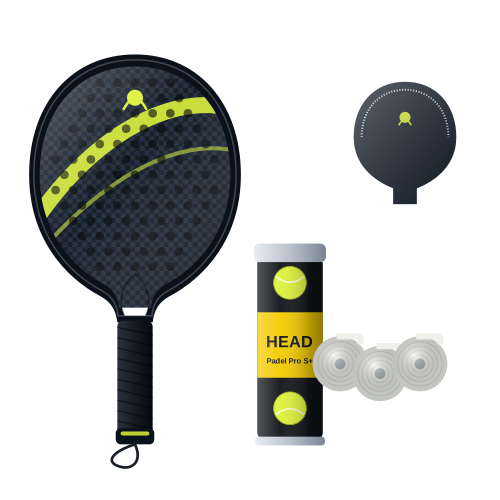
Most padel venues hire rackets, so you can try it before buying. If you enjoy it, a round, soft cored racket is the best first buy. Our padel starter kits combine a racket with balls and grips, and the what is padel guide explains the basics in a few minutes.
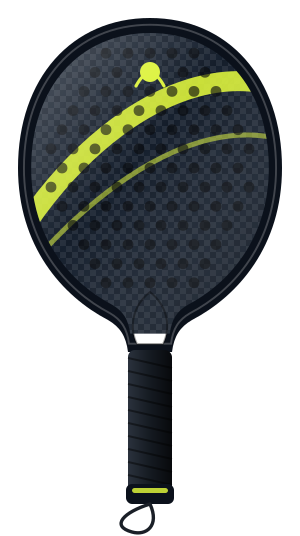
Lobwell Tor
Round 3K carbon racket for your first year and well beyond it
- Round
- 3K carbon
- 355 to 365 g
Questions people ask
Is padel bigger than pickleball?
Yes. A padel court is 20 by 10 metres; a pickleball court is 13.4 by 6.1 metres.
Can you play padel on a pickleball court?
No. Padel needs its own enclosed court with glass and mesh walls.
Is padel or pickleball easier?
Both are easy to start. Padel's walls keep rallies going; pickleball's slow plastic ball gives you time at the net.
Do padel and pickleball use the same ball?
No. Padel uses a pressurised felt ball like a tennis ball; pickleball uses a light plastic ball with holes.
Sources
Keep reading
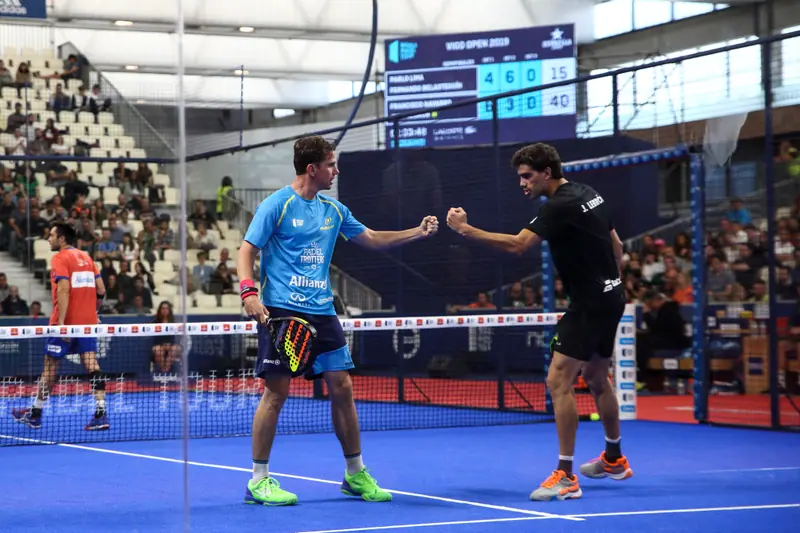 ComparisonPadel vs tennis: the court, racket, ball, rules and cost comparedPadel is played on a walled 20 by 10 metre court, almost always as doubles, with a solid stringless racket, a slightly smaller, lower pressure ball and an underarm serve; the ball can be played off the glass.
 ComparisonPadel vs squash: walls, courts, intensity and which suits youBoth sports use walls, but very differently.
 GuideWhat is padel? A plain guide to the sport filling up UK courtsPadel is a doubles racket sport played on an enclosed court 10 metres wide and 20 metres long, with glass walls you can play the ball off.
 GuidePadel court size: every dimension in metres, from the net to the roofA padel court is 10 metres wide and 20 metres long, measured inside the walls, with a 0.5% tolerance.
 GuidePadel scoring: points, golden point, Star Point, tie-breaks and setsPadel is scored like tennis: 15, 30, 40, then game, with sets won at six games by a two game margin and a tie-break at 6-6 (first to 7 points, two clear).