Padel vs tennis: the court, racket, ball, rules and cost compared
By the Lobwell Padel team. Updated 1 November 2026.
Short answer: Padel is played on a walled 20 by 10 metre court, almost always as doubles, with a solid stringless racket, a slightly smaller, lower pressure ball and an underarm serve; the ball can be played off the glass. Tennis uses a 23.77 metre open court, a strung racket and an overarm serve. Scoring is the same, but padel is quicker to learn, and the LTA says two thirds of British padel players also play tennis.
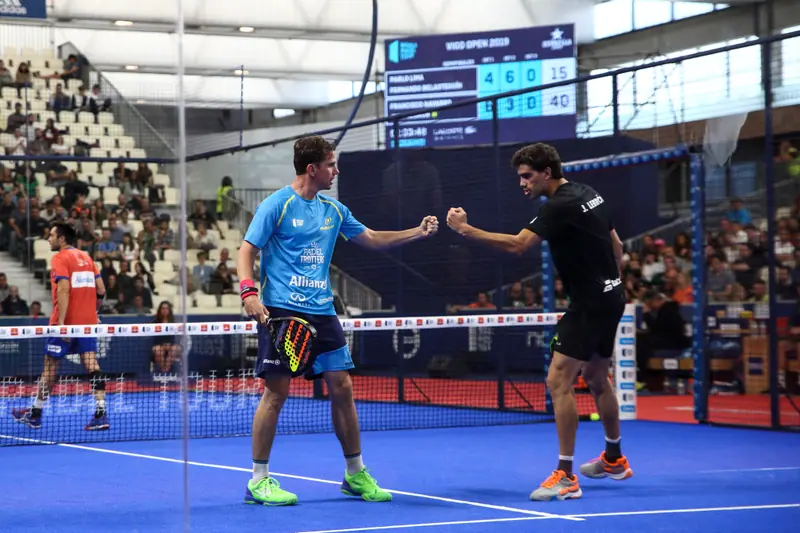
Side by side
| Padel | Tennis | |
|---|---|---|
| Court | 20 m by 10 m, enclosed by glass and mesh | 23.77 m by 10.97 m (doubles), open |
| Net height (centre) | 0.88 m | 0.914 m |
| Service line from net | 6.95 m | 6.40 m |
| Walls in play | Yes, after the bounce | No |
| Format | Almost always doubles | Singles or doubles |
| Racket | Solid, stringless, max 45.5 cm long | Strung, longer |
| Ball | 6.35 to 6.77 cm, lower pressure | 6.54 to 6.86 cm, higher pressure |
| Serve | Underarm, after a bounce, at or below the waist | Overarm, ball tossed |
| Scoring | 15, 30, 40, game; golden point or Star Point common | 15, 30, 40, game; advantage usual |
| Learning curve | Rallying within the first hour | Takes longer to rally consistently |
The court
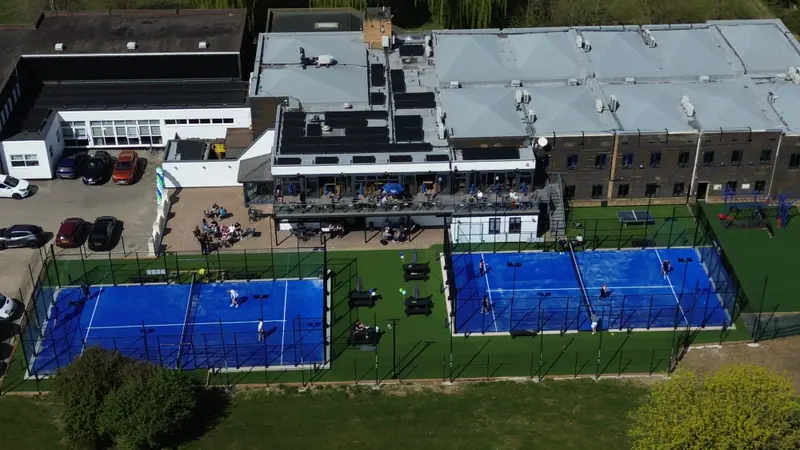
A padel court is 20 by 10 metres inside its walls, so 200 square metres of playing area. A tennis doubles court is 23.77 by 10.97 metres, about 261 square metres between the lines, and needs plenty of run off behind the baselines. In practice clubs often fit two or three padel courts in the footprint of one tennis court with its surround.
The bigger difference is the enclosure. Padel's back walls are 3 metres of glass topped with a metre of mesh, and the side walls are glass near the ends and mesh in the middle. After the ball bounces on your side, it can rebound off those walls and stay in play. In tennis, a ball that passes you is gone. That single rule changes how the whole game is played: see playing off the walls.

The racket
A tennis racket has a large strung head and a long handle. A padel racket is solid: a foam core between carbon or glass fibre faces, perforated with holes, no more than 45.5 cm long and 38 mm thick under FIP rules, with a compulsory wrist cord. It weighs about 340 to 375 g, so it is heavier for its size, and because there are no strings the ball comes off with less spin and less trampoline effect.
The result is a shorter, more compact swing. Tennis players who bring a full backswing to padel send the ball into the back fence. The right padel racket for a tennis player is covered in best padel rackets for tennis players.
The ball
The two balls look almost identical but play differently. A padel ball is 6.35 to 6.77 cm across against 6.54 to 6.86 cm for a tennis ball, with the same weight band of 56.0 to 59.4 g. The padel ball has lower internal pressure, so it travels slower and sits up off the glass. Tennis balls on a padel court make rallies faster and send rebounds off the back wall much further. Full detail in padel balls vs tennis balls.
Rules and scoring
The scoring is shared: 15, 30, 40 and game, sets to six with a tie-break at 6-6. Padel more often settles deuce with golden point, a single deciding point, or the FIP's newer Star Point format, which keeps social bookings on time. The serve is the other big difference: underarm in padel, at or below the waist after a bounce, so there are almost no aces and no big serving advantage.
For the full rules see padel rules.
Which is easier, and which is better exercise?
Padel is easier to start. The short court, slower ball, underarm serve and walls mean most beginners rally in their first hour, and mixed ability groups can still have long points. Tennis takes longer to rally consistently, especially the serve. At a high level, both are demanding, and padel's quick changes of direction and long rallies work the legs hard.
In terms of running, tennis covers more ground per point on its bigger, open court. Padel has shorter, more frequent bursts. Both are good exercise; which suits you is about the kind of movement you enjoy.
Cost and access in the UK
Padel courts are hired per court and split four ways. From 79 UK venues' published price lists, the median is £28 per court per hour off-peak and £40 at peak, or £7 to £10 each. Tennis courts are often cheaper per court, and many park courts are free or low cost, but singles splits the fee only two ways. See our court price index for padel prices by region.
Kit costs are similar. A sensible first padel racket costs £59 to £79, against a broadly similar range for a beginner tennis racket. Padel needs a wrist cord and no restringing.
Lobwell Tor
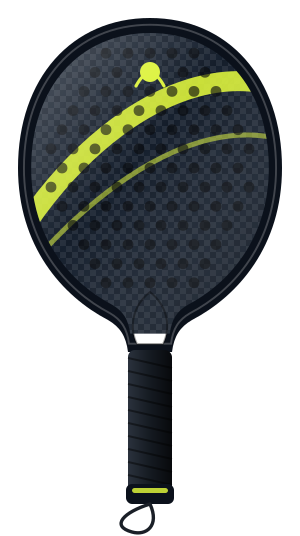
Round 3K carbon racket for your first year and well beyond it
- Round
- 3K carbon
- 355 to 365 g
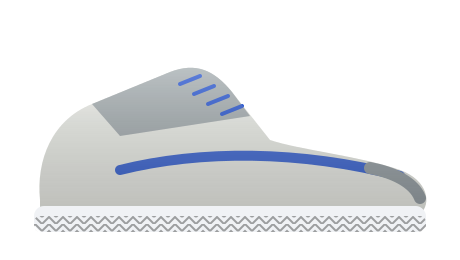
Lobwell Grip Padel Shoe
Herringbone sole court shoe for sand filled artificial grass
- Lobwell
- 2 colours
Can you play both?
Yes, and most British padel players do: the LTA reports that two thirds of them also play tennis. Volleying and footwork transfer well. The habits to change are the big swing, the overarm serve and chasing the ball before it reaches the back glass. Clay court tennis shoes with a herringbone sole work for both sports. If you are a tennis player trying padel for the first time, our first padel session guide is the place to start.
Questions people ask
Is padel easier than tennis?
It is easier to start. The court is smaller, the serve is underarm and the walls keep rallies going, so beginners rally sooner.
Is a padel court smaller than a tennis court?
Yes. Padel is 20 by 10 metres; a tennis doubles court is 23.77 by 10.97 metres plus run off.
Can you use a tennis racket for padel?
No. Padel requires a solid, stringless racket within FIP limits, with a wrist cord.
Is padel scored like tennis?
Yes, with 15, 30, 40 and game. Padel more often uses golden point or Star Point at deuce.
Sources
Keep reading
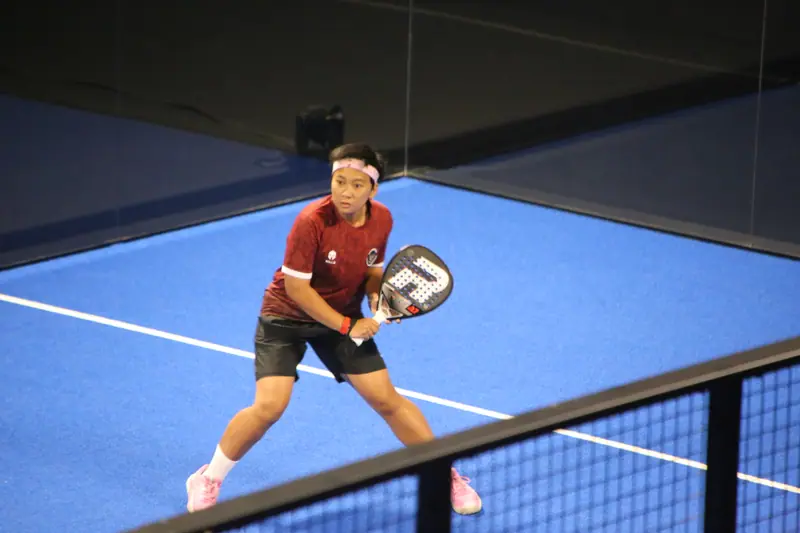 Buying guideThe best padel racket for tennis players: what transfers, what does not, and what to buyMost tennis players should start padel with a round or gentle teardrop racket of about 355 to 370 g with a soft or medium core, even if they are strong tennis players.
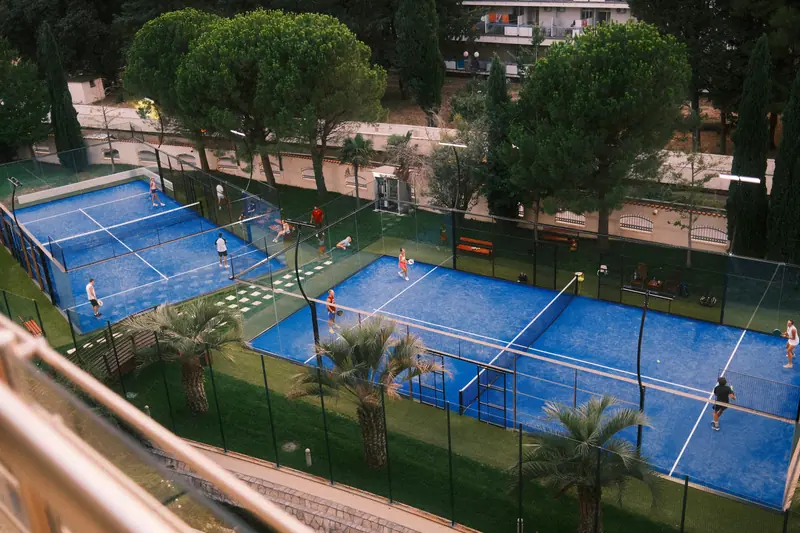 ComparisonPadel balls vs tennis balls: size, pressure, bounce and why you should not swap themA padel ball is slightly smaller than a tennis ball (6.35 to 6.77 cm across against 6.54 to 6.86 cm) and has lower internal pressure, though both weigh 56.0 to 59.4 g.
 GuidePadel court size: every dimension in metres, from the net to the roofA padel court is 10 metres wide and 20 metres long, measured inside the walls, with a 0.5% tolerance.
 GuideWhat is padel? A plain guide to the sport filling up UK courtsPadel is a doubles racket sport played on an enclosed court 10 metres wide and 20 metres long, with glass walls you can play the ball off.
 ComparisonPadel vs pickleball: two fast growing sports with very different courtsPadel is played on an enclosed 20 by 10 metre court with glass walls you can use, a perforated foam core racket and a pressurised felt ball.